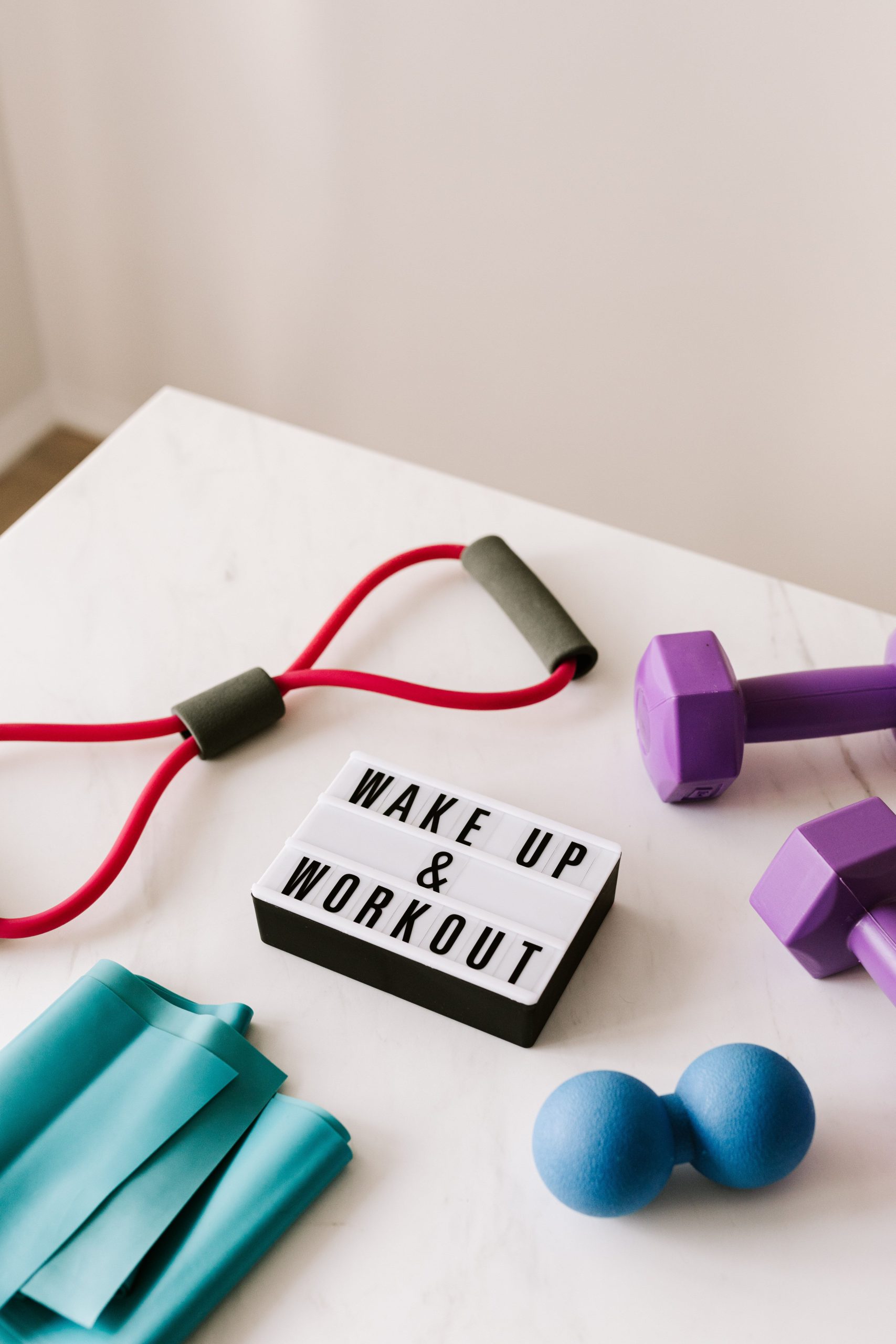
 Photo by Karolina Grabowska www.kaboompics.com
Picture a normal day: you’re carrying groceries in from the car, climbing two flights of stairs, or crouching down to pick up a kid who wants one more hug. None of that feels like “cardio,” but your heart still has to do the work.
That’s where strength training for heart health shines. When your legs, hips, back, and arms are stronger, everyday effort costs less. Your heart doesn’t need to race as hard for the same task.
It also helps in quieter ways. Muscle acts like a “sugar sponge,” pulling glucose out of your blood to use as fuel. Over time, strength training can support healthier blood pressure, improve how your body handles fats in the blood, and make brisk walks feel smoother when you pair lifting with steady cardio.
This article gives you two full-body routines (beginner-friendly and intermediate), including sets, reps, rest times, and safe breathing cues. Quick safety note: if you have chest pain, uncontrolled blood pressure, a recent heart event, or you get dizzy with exercise, get medical clearance before starting.
How strength training supports heart health (and what it doesn’t do)
Your heart is a pump. The more “work” your body asks for, the harder that pump has to push. Strength training lowers the cost of many daily tasks by making your muscles more capable. Stronger legs and hips make stairs, rising from a chair, and long walks feel lighter. That often means a lower heart rate for the same pace.
Muscle also changes your metabolism in a helpful direction. More active muscle tissue improves insulin use, which can support steadier blood sugar. That matters for heart health because blood sugar swings and insulin resistance are closely tied to higher heart risk over time.
Posture and core strength matter too. A stronger upper back helps you stand taller, so your ribs can move better as you breathe. When breathing is easier under effort, your workouts feel calmer, and your heart rate tends to behave better.
What strength training doesn’t do: it doesn’t replace cardio. Walking, cycling, swimming, and other steady activities train your heart and blood vessels in a direct way. Lifting supports that system, but it’s still best as a partner, not a substitute.
If you want simple feedback during workouts, track these heart-friendly signals:
- Breathing rate: you should be able to regain control within a minute or two after a set.
- Talk test: you can speak in short sentences between sets.
- Recovery: your pulse and breathing settle more quickly as you get fitter.
The 3 rules that keep lifting heart-safe: steady effort, smart rest, clean form
Heart-supportive lifting looks different than “max effort” lifting. You’re not trying to prove strength in one rep. You’re building useful strength that your body can repeat, week after week.
First, choose loads that feel challenging but controlled. A good target is where the last 2 reps feel hard but you could still do them with solid form. Most sets should land around an RPE 6 to 8 out of 10. If your face tightens and you start grinding, it’s too heavy for today.
Second, stop 1 to 2 reps before failure. That small buffer keeps your blood pressure response lower and helps you avoid breath holding. It also reduces the “aftershock” fatigue that can make sleep worse and appetite harder to manage.
Third, rest long enough to calm your breathing. Many people rush rest because they want a sweat. For heart-friendly strength, the goal is smooth breathing and clean movement. If your breath is still high, take another 30 seconds.
Clean form is the last guardrail. Move through a comfortable range of motion, control the lowering phase, and avoid jerky reps. Your joints and your heart both like steady effort.
Breathing cues that protect your blood pressure during lifts
The most common mistake in strength training is silent and sneaky: holding your breath. Powerlifters sometimes use a hard brace (Valsalva maneuver) to lift maximal loads. That can spike blood pressure. For heart-focused training, skip it.
Use this simple pattern: inhale on the easier part, exhale on the hardest part.
- In a squat, inhale as you lower, exhale as you stand.
- In a press, inhale as the weight comes down, exhale as you push it away.
- In a hinge or deadlift pattern, inhale as you lower, exhale as you drive hips forward.
Three cues that work in real time:
- “Blow out as you stand.” Make the exhale audible if you need to.
- “Ribs down, don’t brace like a powerlifter.” Think firm core, not locked.
- “Reset your breath before the next rep.” A small pause is fine.
Stop exercising and get medical advice if you notice warning signs like chest pressure, sudden severe shortness of breath, faint or “about to faint” feeling, an irregular pounding heartbeat that feels new, or pain that spreads to your jaw or arm. Normal muscle burn in the legs is not the same thing as chest symptoms.
Before you start: a quick warm-up, the right weight, and a simple pace
A good warm-up should feel like turning up a dimmer switch. Your body temperature rises, joints loosen, and your breathing gets a little quicker, but you’re not tired.
Use this 6 to 8 minute warm-up:
- 2 minutes easy march, treadmill walk, or bike
- 10 arm circles each direction
- 8 hip hinges (hands on thighs, push hips back)
- 8 bodyweight squats to a comfortable depth
- 8 glute bridges
- 8 wall push-ups (or hands on a countertop)
Then do one lighter “practice set” of your first two exercises.
To pick the right weight, use two filters: RPE and the talk test. You want moderate effort where you can still speak a short sentence between sets. If you’re gasping, lighten the load or extend rest.
A weekly plan that fits most people:
- 2 to 3 strength days
- 2 to 5 easy cardio days (walks count)
- at least 1 full rest day
Equipment can be simple: dumbbells, resistance bands, a kettlebell, or machines. Consistency matters more than the tool.
Rest times and tempo: the heart-friendly sweet spot
Rest is part of the workout. It lets your pulse come down so each set starts with control, not panic breathing.
A simple guide:
- Most exercises: 60 to 90 seconds rest
- Bigger leg moves (squats, split squats, step-ups): 90 to 120 seconds if your breathing spikes
For tempo, keep it smooth: lower for about 2 seconds, pause briefly, then come up with control. This reduces momentum, protects joints, and keeps effort steady.
If you’re choosing between longer rest and rushing, choose longer rest. Heart-supportive training should feel like steady hills, not sprints.
Modifications for common issues (knees, back, and high blood pressure concerns)
Pain and fear stop more workouts than lack of motivation. Small swaps can keep you moving without poking the same sore spot.
For cranky knees, shorten the range and add support. Try a squat to a box or chair, or do step-ups instead of lunges. Keep your shin more vertical and move slowly.
For a sensitive low back, reduce load and focus on a tight hinge. Use a light Romanian deadlift with a shorter range, or do glute bridges and hip thrusts instead. Supported rows (hand on a bench) often feel better than free-bending rows.
For high blood pressure concerns, avoid breath holds and grinding reps. Use slightly higher reps with moderate load, keep your exhale steady, and take longer rests. If you take blood pressure meds, ask a clinician about timing, especially if you’ve had dizziness when standing up.
Two full-body strength routines built to support your heart
These two routines are designed to build full-body strength while keeping breathing smooth and effort steady. Do them on non-back-to-back days, for example Monday and Thursday. Most sessions take about 35 to 50 minutes, including warm-up.
Quality reps come first. If your form breaks or your breathing turns ragged, stop early, lighten the load, or extend rest. You should leave the gym feeling worked, not wrecked.

This session is calm on purpose. It builds the legs, hips, push muscles, and pulling muscles that make walking, carrying, and posture easier. Between sets, you should be able to talk in short sentences.
| Exercise | Sets x Reps | Rest | Breathing cue | Notes |
| — | — | — | — | — |
| Goblet squat to a box | 2 to 3 x 8 to 10 | 90 sec | Inhale down, exhale up | Use a chair height that feels stable |
| Dumbbell Romanian deadlift | 2 to 3 x 8 to 10 | 90 sec | Exhale as hips drive forward | Keep weight close to legs |
| Incline push-up (bench or wall) | 2 to 3 x 8 to 12 | 60 to 90 sec | Exhale as you push away | Higher hands equals easier |
| One-arm dumbbell row (supported) | 2 to 3 x 10 to 12 per side | 60 to 90 sec | Exhale as elbow pulls back | Don’t twist, keep ribs calm |
| Step-ups (low step) | 2 x 8 per leg | 90 sec | Exhale as you stand tall | Light hand support is fine |
| Dead bug or plank | 2 x 6 to 8 per side or 2 x 20 to 30 sec | 45 to 60 sec | Slow nasal inhale, long mouth exhale | Stop before your low back arches |
Finish option: 5 minutes of easy walking to cool down and help your breathing settle.
Routine B: full-body strength with a light cardio feel (intermediate, still joint-friendly)
This routine has a bit more density, but the goal stays the same: smooth reps, controlled breathing, and no breath holds. If you can’t keep a steady breath, lighten the load or shorten the work time.
| Exercise | Sets x Reps | Rest | Breathing cue | Notes |
| — | — | — | — | — |
| Reverse lunge or front-foot elevated split squat | 3 x 8 per leg | 90 to 120 sec | Exhale as you rise | Use a shorter step if knees complain |
| Dumbbell floor press or machine chest press | 3 x 8 to 12 | 60 to 90 sec | Exhale as you press | Keep shoulders down and back |
| Lat pulldown or band pulldown | 3 x 10 to 12 | 60 to 90 sec | Exhale as you pull down | Stop when elbows reach ribs |
| Hip thrust or weighted glute bridge | 3 x 10 | 90 sec | Exhale at the top | Pause 1 second at lockout |
| Farmer carry | 3 rounds of 30 to 45 sec | 60 to 90 sec | Breathe like a fast walk | No breath holds, tall posture |
| Optional easy finisher | 6 minutes | Easy pace | Nose in, slow out | Incline walk or cycling |
The farmer carry is sneaky-good for heart support. It trains posture, grip, and trunk stability while your breathing stays rhythmic, like a brisk walk with purpose.
Progress without pushing your heart too hard
Progress doesn’t need drama. When your goal is heart support, you build strength the way you build good food habits: small steps that you can repeat.
Start by adding reps, not weight. If your plan says 8 to 10 reps, aim to reach the top of the range with clean form and calm breathing. Then add a small weight jump, usually 2 to 5 lb per dumbbell, or a slightly stronger band. Only after that should you add a set.
Recovery matters as much as the training. Eat protein at meals to support muscle repair, drink enough water that your urine stays pale yellow, and protect sleep like it’s part of the program. On off days, light walks help circulation and keep your legs from feeling stiff.
Monitor intensity with three checks: RPE (6 to 8), the talk test, and how you feel the next day. Mild muscle soreness is normal. Heavy fatigue, poor sleep, and a “wired but tired” feeling are signs to back off.
A simple progression plan you can follow for 4 weeks
This plan keeps your heart and joints in mind while still moving forward.
- Week 1: Pick conservative weights, stop 2 reps early on each set.
- Week 2: Add 1 rep per set on the main lifts (squat pattern, hinge, press, row).
- Week 3: Add a small weight increase (2 to 5 lb) or move up one band level.
- Week 4: Keep the weight, add one extra set to 1 or 2 moves, or shorten rest by 10 to 15 seconds only if breathing stays calm.
Deload option: if fatigue is high, reduce sets by about 30 to 40 percent for one week, keep the movement quality, and let your body catch up.
When to slow down or get checked (red flags you shouldn’t ignore)
Stop the workout and seek medical advice if you have chest pain or pressure, pain that spreads to the jaw or arm, fainting or near-fainting, severe shortness of breath that is new, new irregular pounding heartbeat, or swelling in the legs.
Muscle burn in the thighs or shoulders during a set is normal. Chest symptoms are not something to “push through.”
If you have known heart disease, follow clinician guidance and consider supervised exercise like cardiac rehab style support, at least until you learn your limits and cues.
Conclusion
Strength training can support your heart when you lift with control, rest enough, and breathe on purpose. Strong muscles make daily life cheaper, so your heart doesn’t have to overpay. Start with Routine A for two weeks, then add Routine B when your breathing stays steady. Pick two days this week, write the plan, and keep the weights light enough that you can exhale through every hard rep.
Keep reading
For the wider picture, see our heart-healthy foods hub. Related reading in Exercise & Fitness: 12-Week Beginner Strength Training Plan For Heart Health, Isometric Handgrip Exercises for Blood Pressure: A Practical 4-Week Plan, Heart Healthy Exercises That Fit Real Life (and Make Stairs Feel Easier).



0 Comments