Your cholesterol results can feel like a tiny argument on a page. LDL Cholesterol sits there like the headline number, but Apolipoprotein B whispers, “Count the particles, not just the cholesterol.” If you’ve ever wondered which one actually tracks heart risk better, you’re not alone.
Here’s the simple way to think about ApoB vs LDL: LDL-C tells you how much cholesterol is being carried, ApoB tells you how many cholesterol-carrying “boats” are floating in your blood. And more boats means more chances for one to bump into an artery wall, better predicting heart disease risk and long-term outcomes.
This guide explains which number matters most for many people, and gives a simple 4-week food checklist you can actually follow, managing these numbers as a key step in preventing cardiovascular disease.
Apolipoprotein B vs LDL Cholesterol, What Each Test Is Really Measuring
LDL Cholesterol (LDL-C) measures the amount of cholesterol inside LDL particles. Apolipoprotein B (ApoB) measures a protein that sits on the surface of certain lipoproteins. These tests are often included in an Advanced Lipid Panel for a more detailed view of risk. The key detail is this: each “bad” particle (LDL, VLDL remnants, IDL, and Lp(a)) carries one Apolipoprotein B. So ApoB is a practical proxy for particle number.
Why does particle number matter? Because Plaque Formation starts with atherogenic particles entering the artery wall. A person can have “normal” LDL Cholesterol but still have lots of smaller particles, including Small Dense LDL. These drive the Atherosclerosis Cascade. Think of it like this: one moving truck can carry a lot of boxes, or you can have ten small cars each carrying one box as atherogenic particles. LDL Cholesterol is the total boxes. ApoB is the count of vehicles on the road.
This mismatch is called “discordance.” It shows up often when Triglycerides run high, or when someone has Insulin Resistance, type 2 diabetes, excess belly fat, or metabolic syndrome. In those cases, LDL Cholesterol can look fine while ApoB stays stubbornly high.
Researchers have laid out the biology behind ApoB’s advantage in papers like this Journal of the American Heart Association review on ApoB’s superiority, which explains why particle count can track risk more closely than cholesterol content alone.
Which number matters more for Heart Disease Risk, and when to ask for ApoB
ApoB often matters more for assessing Heart Disease Risk and Cardiovascular Disease, particularly Atherosclerotic Cardiovascular Disease (ASCVD), as evidenced by Mendelian Randomization studies. The artery wall does not “see” LDL-C. It gets hit by particles. More particles means more traffic, more crashes, more repair work, and over years, more plaque.
LDL-C still matters. It is a proven treatment target, and lowering it lowers risk. But ApoB can be the sharper lens when:
- triglycerides are elevated,
- LDL-C and Non-HDL Cholesterol do not match the rest of your risk picture,
- there is a strong family history,
- you already have heart disease, or you are managing diabetes.
ApoB is also a practical way to compare progress when you change your heart healthy diet or start medication. It does not bounce around as much as some cholesterol calculations can.
What are the Optimal Ranges for Apolipoprotein B?
Targets depend on your risk level and your clinician’s guidance, but many guidelines and expert groups use Apolipoprotein B thresholds around 80 mg/dL for higher-risk people and lower targets for very high risk. The direction is the point: lower particle counts usually mean fewer opportunities for plaque buildup. A Coronary Artery Calcium scan is a valuable tool for visualizing plaque formation.
If you are wondering whether ApoB testing is “reliable,” standardization has improved a lot. This JAHA article on ApoB and LDL-C measurement standardization explains why ApoB is considered well-standardized for clinical use.
One more marker to ask about: Lipoprotein(a). It is another ApoB-containing particle that can raise risk even in people who eat well and train hard. Consider checking High-Sensitivity C-Reactive Protein as an additional indicator of inflammation.
How to Lower ApoB with Food: A Simple 4-Week Checklist You Can Stick To
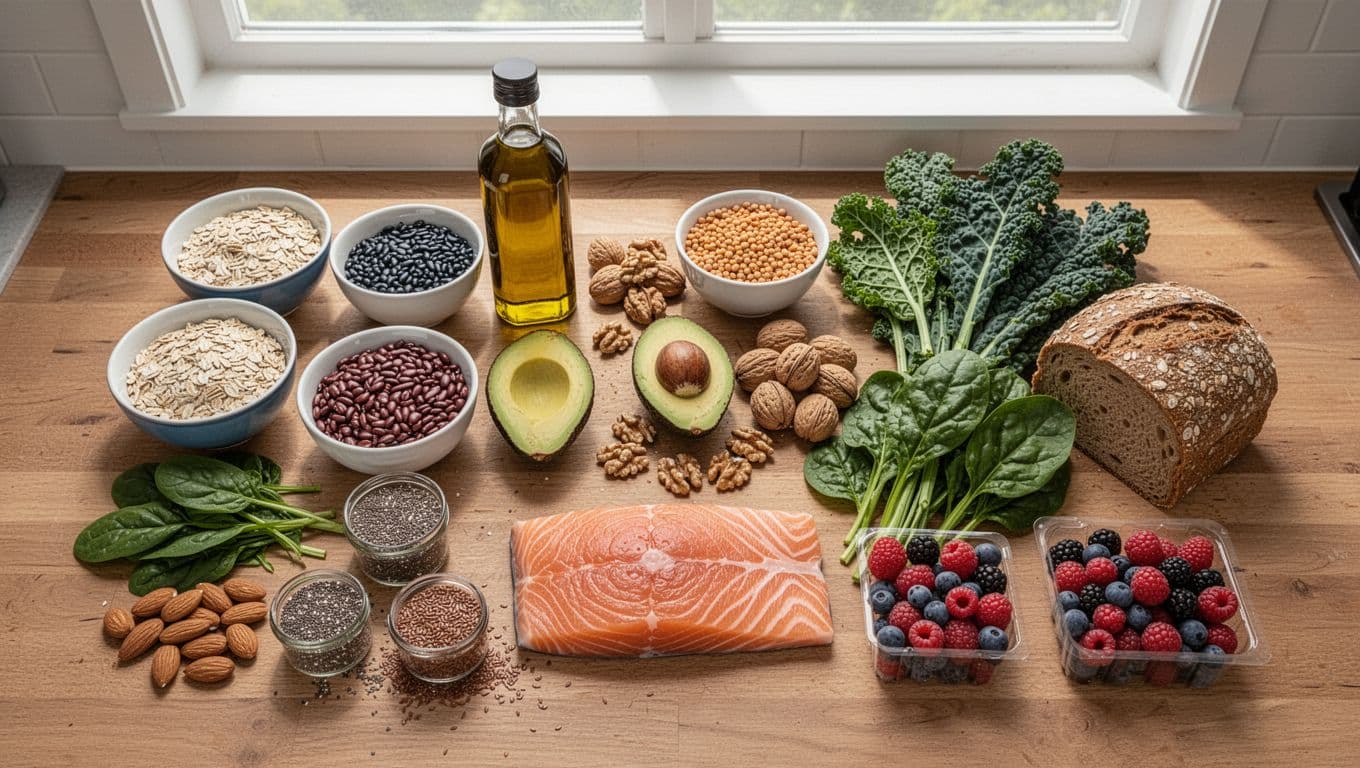
Lowering ApoB with food isn’t about a perfect menu. It’s about repeating a few moves that reduce atherogenic particles, support metabolic health, and minimize lifetime exposure to these harmful particles: more viscous fiber, fewer saturated fats, better carb quality, and steady weight control if needed. This is healthy nutrition that also supports energy, recovery, and nutrition to prevent illness.
The 4-Week ApoB-Lowering Checklist (Simple, Not Strict)
| Week | Main focus | What to do most days |
|---|---|---|
| 1 | Build the viscous fiber base | Add oats or barley, plus beans or lentils once daily |
| 2 | Swap the fats | Replace butter, fatty meats, and cheese-heavy meals with olive oil, nuts, seeds, avocado |
| 3 | Upgrade protein and carbs | Choose fish, soy, and legumes, swap refined grains for whole grains |
| 4 | Lock in the routine | Repeat your best meals, tighten snacks, limit alcohol and sugary drinks |
Keep it “small and daily.” In a healthy food diet, consistency beats intensity.
What to Put on Your Plate (The Easy Defaults)
Follow a Mediterranean Diet or Whole-Food Plant-Based Diet for best results with these building blocks in your healthy food routine:
- Viscous fiber every day: oats, barley, beans, lentils, chickpeas, apples. Viscous fiber helps pull cholesterol out through the gut, which can reduce particle production over time.
- Unsaturated fats as the main fats: extra-virgin olive oil, walnuts, almonds, chia, flax, avocado. These swaps often lower ApoB more than people expect.
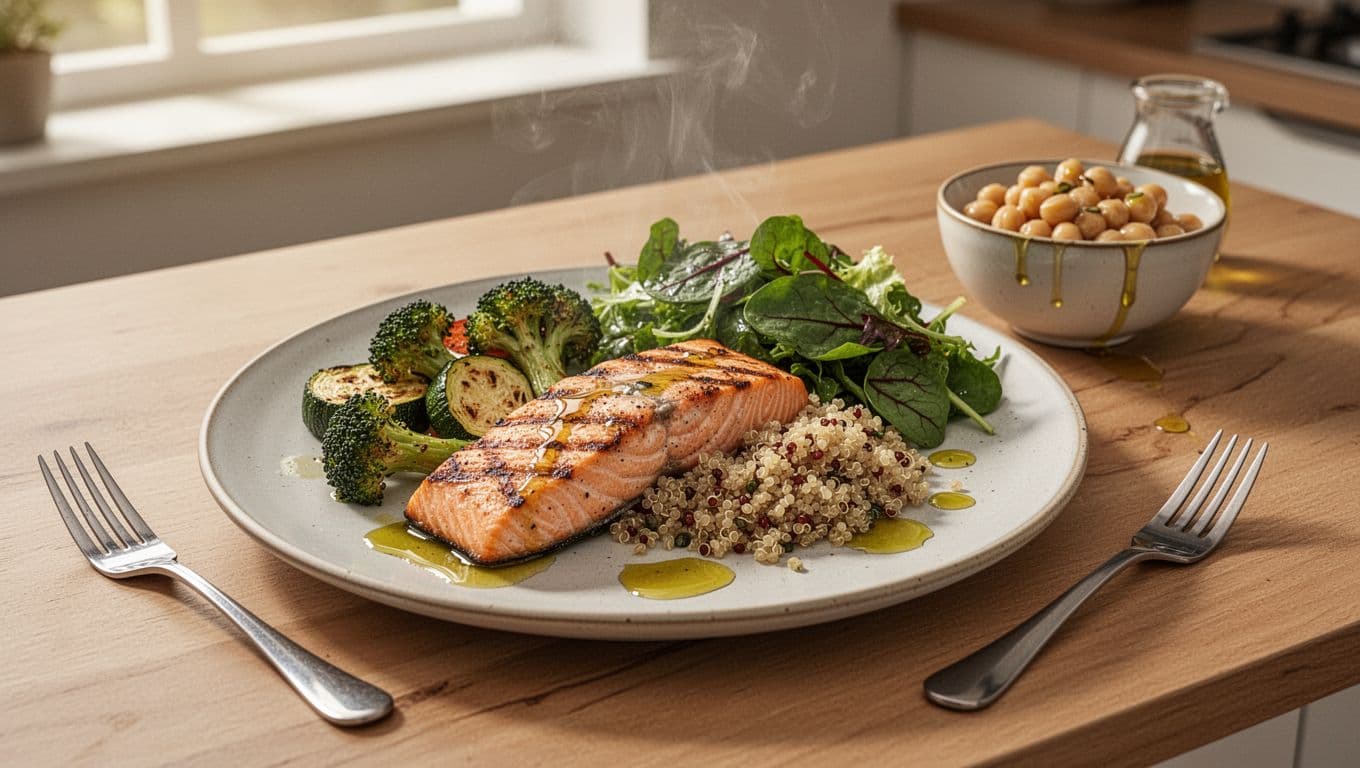
- Protein that doesn’t drag saturated fat along: salmon, sardines, trout, tofu, edamame, lentils. Aim for fatty fish twice a week if you like it, prioritizing omega-3 fatty acids found in these sources.
- Cut the “liquid sugar” habit: soda, sweet coffee drinks, juice, and frequent desserts can raise triglycerides, which often pairs with higher ApoB.
For some individuals, this approach works alongside statins or PCSK9 inhibitors to reach target levels.
If you want a reminder that ApoB can outperform LDL-C in certain high-triglyceride settings, this open-access study on ApoB and coronary artery calcification shows how ApoB tracked risk where LDL-C did not in a specific group.
Don’t Skip Movement, It Supports the Food Plan
Food does a lot, but heart disease risk is best managed through a combined healthy living diet and exercise approach that tends to move numbers faster. Regular training improves insulin sensitivity and helps shift triglycerides and particle patterns.
Keep it simple: brisk walking, cycling, swimming, or strength training you enjoy. Think sports and exercise for long life, not punishment. A steady weekly routine (cardio plus two strength sessions) makes the “lower ApoB” food changes easier to maintain because appetite and energy feel more stable.
Conclusion
If your lab report feels confusing, remember the practical takeaway from ApoB vs LDL: LDL Cholesterol (LDL-C) is the cholesterol load, Apolipoprotein B (ApoB) is the particle count, and particle count often matches risk more closely. You don’t need a perfect diet to improve it. You need a repeatable heart healthy diet pattern built on fiber, better fats, and smarter carbs, plus steady movement. Pick one change to start today, then retest with your clinician and let the trend guide you. Early intervention reduces the overall risk of Cardiovascular Disease and Heart Disease Risk over a lifetime.
Keep reading
For the wider picture, see our heart-healthy foods hub. Related reading in Heart Health Tests: Non-HDL Cholesterol Explained: What It Is, Why It Matters, and How to Lower It With a 2-Week Food Plan, Lipoprotein(a) Test Explained: What Lp(a) Means for Your Heart, Who Should Get Checked, and Habits That Still Matter, Waist Circumference and Heart Risk: How to Measure It Right (and What Your Number Means).



0 Comments