You can eat “pretty well” and still get a cholesterol result that feels like a cold splash of water. That’s because one number on your lab report often tells a fuller story than LDL alone: non-HDL cholesterol. Tracking it helps reduce heart disease risk, and this article includes a 2-week food plan to lower it.
Think of LDL cholesterol (often called bad cholesterol) as one delivery truck carrying fat through your bloodstream. Non-HDL is the whole fleet, LDL plus other particles that can slip into artery walls and help build plaque. If you care about healthy nutrition, training, and a longer, stronger life, this is a number worth understanding.
What non-HDL cholesterol is (and where it hides on your lab report)
Non-HDL cholesterol is simple math: total cholesterol minus HDL cholesterol (your good cholesterol). What’s left is everything considered “atherogenic,” meaning it can contribute to artery plaque. That includes LDL, VLDL cholesterol, Intermediate-density lipoprotein, and remnant particles.
Why does that matter? Because those other particles are not rare side characters. If your triglycerides run high (often from excess sugar, refined carbs, alcohol, or extra body fat), VLDL cholesterol and remnants can rise too. Non-HDL cholesterol captures them in one number, without extra testing.
Many lipid profiles now list non-HDL cholesterol directly. If yours doesn’t, you can still calculate it in seconds. Example: Total cholesterol 210 mg/dL minus HDL 55 mg/dL equals non-HDL cholesterol 155 mg/dL.
For a clear, patient-friendly explanation, see Cleveland Clinic’s guide to what non-HDL cholesterol is and typical ranges.
Why non-HDL cholesterol matters for heart risk (especially if you train hard)
Non-HDL cholesterol matters because it tracks the particles most likely to end up in the wrong place: inside artery walls. Over time, that buildup causes atherosclerosis, which can narrow blood flow and raise the risk of cardiovascular disease, including heart attack and stroke.
Targets depend on your risk level (blood pressure, obesity, smoking, diabetes, family history, past heart disease). Current guidance still commonly uses a practical rule: non-HDL goals are often set about 30 mg/dL higher than your LDL cholesterol goal. In plain terms, if your LDL cholesterol target is under 100 mg/dL, your non-HDL cholesterol target is often under 130 mg/dL.
Here’s a simple way clinicians often frame it (mg/dL):
| Risk level (simplified) | Common LDL goal | Common non-HDL goal |
|---|---|---|
| Lower risk | <160 | <190 |
| Moderate risk | <130 | <160 |
| High risk (often diabetes, high 10-year risk) | <100 | <130 |
| Very high risk (known heart disease) | <70 (sometimes lower) | <100 (sometimes lower) |
If you want extra context on what shows up on a lipid panel and how non-HDL cholesterol fits in, Healthline’s overview of non-HDL cholesterol and lipid testing is a helpful read.
How to lower non-HDL cholesterol with food, movement, and repeatable habits
Lowering non-HDL cholesterol isn’t about a perfect menu. It’s about lifestyle changes you make most days, so your bloodstream carries fewer “sticky” particles and more protective ones. The Mediterranean diet, a gold-standard heart-healthy pattern, often improves non-HDL cholesterol within weeks, and the biggest wins come from a few boring (but powerful) habits.
Start with food. High-fiber foods act like a gentle sponge in your gut, helping pull cholesterol out of circulation. That’s why whole grains like oats and barley, plus beans, lentils, chickpeas, and apples show up again and again in nutrition to prevent illness. This is also where “healthy food” stops being a slogan and becomes a tool.
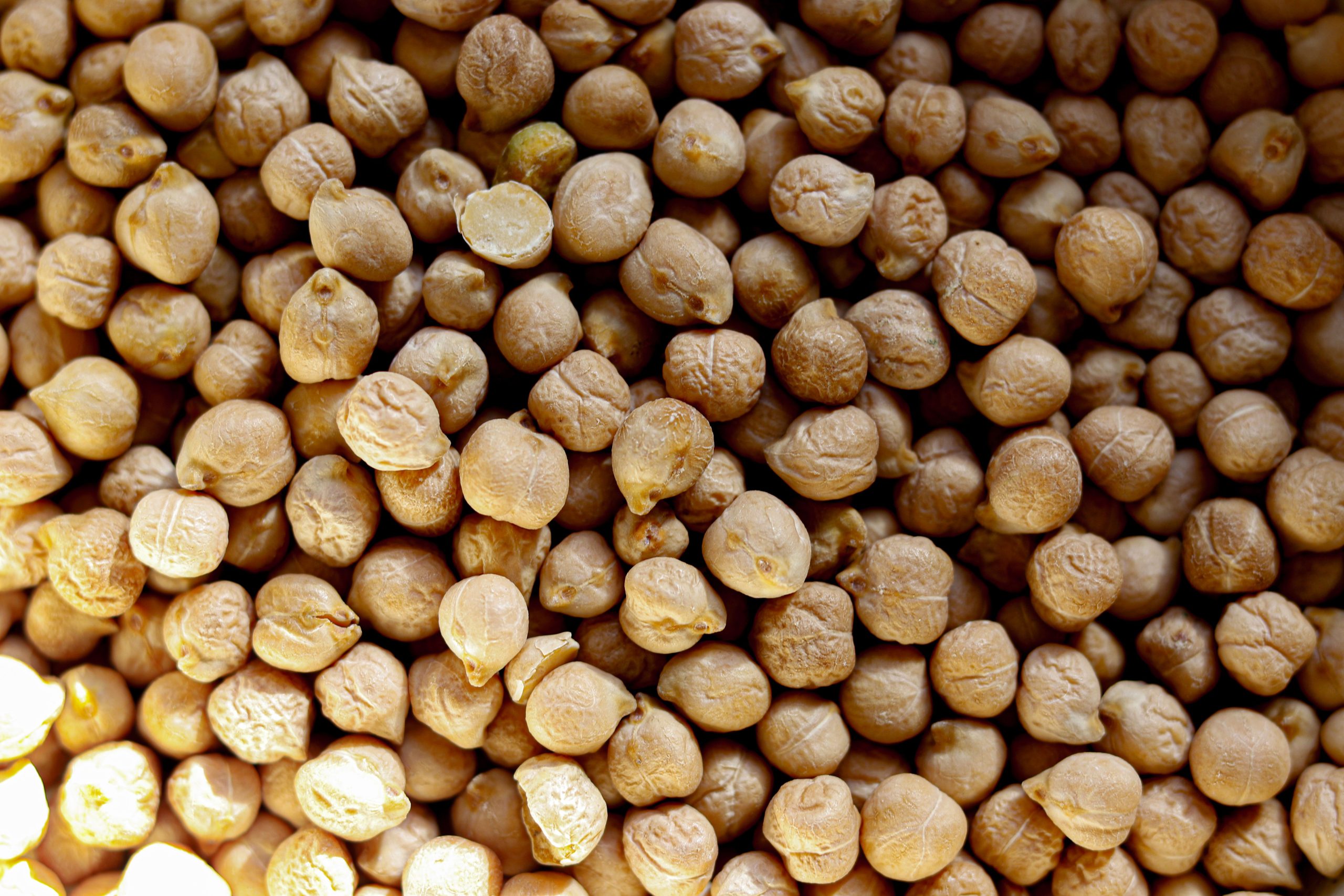 Photo by Mélodie Lochon
Next, swap fats, don’t fear them. Limit saturated fat and trans fats from butter, fatty processed meats, and fried foods. Replace them with unsaturated fats and healthy fats from olive oil, nuts, seeds, avocado, and fatty fish. Those choices support a healthier lipid pattern and make a healthy food diet feel satisfying instead of restrictive.
Then look at the “quiet” drivers: sugary drinks, sweets, and refined carbs. These can push triglycerides up, which can raise non-HDL. You don’t need to ban carbs, just choose higher-fiber ones more often.
Finally, add physical activity. A healthy living diet and exercise routine helps because it improves insulin sensitivity, supports weight loss if needed, and can raise HDL. You don’t have to become a marathoner. Consistent walking, strength training, and intervals you can recover from are the backbone of sports and exercise for long life.
For more lifestyle ideas that can support lowering non-HDL cholesterol, Medical News Today summarizes ways to lower non-HDL cholesterol naturally.
A simple 2-week food plan to lower non-HDL cholesterol (no complicated recipes)
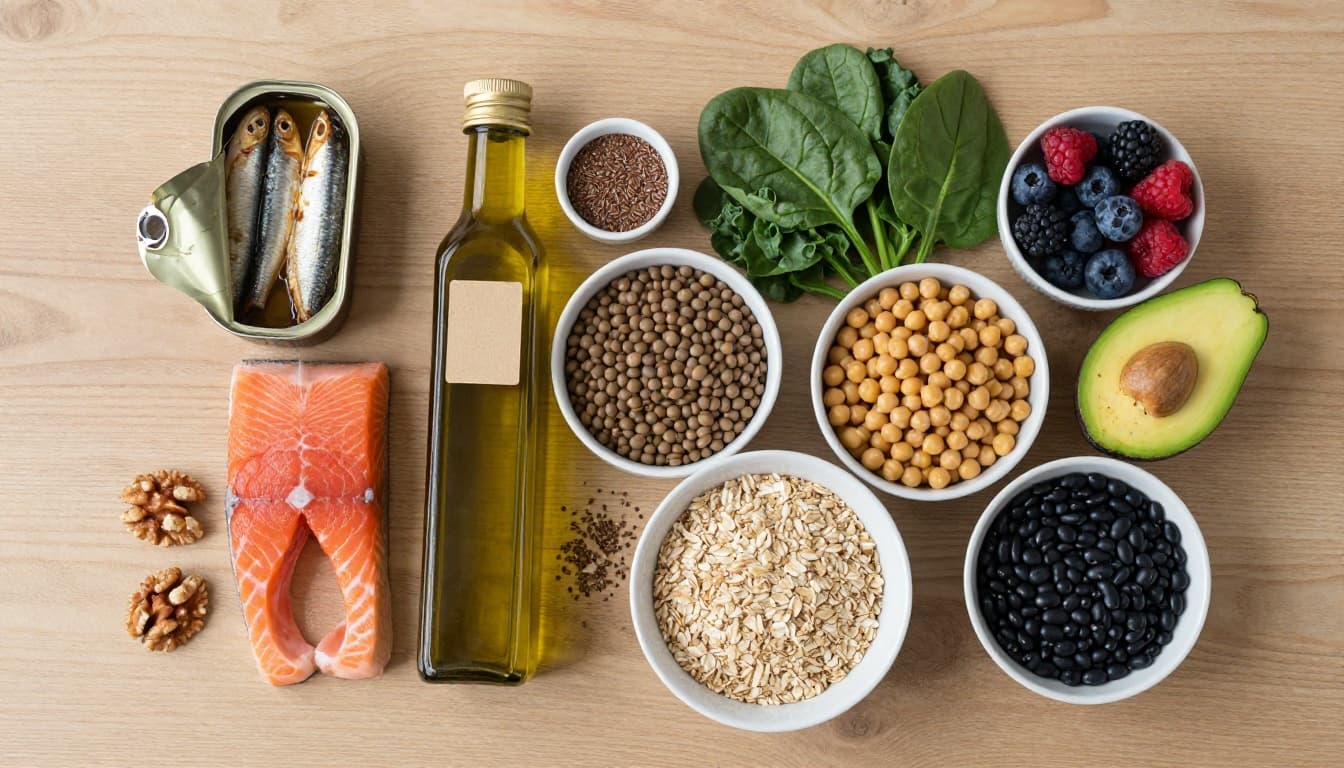
This 2-week food plan to lower non-HDL cholesterol repeats simple building blocks (repetition is what makes healthy nutrition stick). It features healthy fats from nuts and seeds, plus plant sterols in foods like oats, nuts, and veggies that help block cholesterol absorption. Use water, coffee, or unsweetened tea. If you snack, pick one: fruit plus nuts, plain yogurt plus berries, or veggies plus hummus.
| Day | Breakfast | Lunch | Dinner |
|---|---|---|---|
| 1 | Oats, berries, chia | Lentil soup, salad | Salmon, quinoa, broccoli |
| 2 | Yogurt, walnuts, fruit | Chickpea salad wrap | Bean chili, avocado |
| 3 | Veggie omelet, toast | Leftover chili, greens | Sardines, brown rice, veg |
| 4 | Oats, apple, cinnamon | Tuna-bean salad | Tofu stir-fry, mixed veg |
| 5 | Smoothie (berries, spinach, flax) | Lentils, roasted veg | Chicken, sweet potato, salad |
| 6 | Yogurt, oats, berries | Hummus bowl, whole grain | Salmon, roasted veg |
| 7 | Oats, pear, walnuts | Bean soup, side salad | Turkey veggie skillet, quinoa |
| 8 | Veggie omelet, toast | Chickpea salad, fruit | Lentil curry, brown rice |
| 9 | Oats, berries, chia | Leftover curry, greens | Fish tacos (grilled), slaw |
| 10 | Yogurt, walnuts, fruit | Tuna-bean salad | Bean stew, sautéed spinach |
| 11 | Smoothie (berries, spinach, flax) | Lentil soup, salad | Salmon, quinoa, asparagus |
| 12 | Oats, apple, cinnamon | Hummus bowl, whole grain | Tofu stir-fry, mixed veg |
| 13 | Yogurt, oats, berries | Chickpea salad wrap | Chicken, roasted veg, salad |
| 14 | Oats, pear, walnuts | Bean chili, greens | Sardines, brown rice, veg |
This 2-week food plan helps lower non-HDL cholesterol. When making substitutions, avoid saturated fat and trans fats.
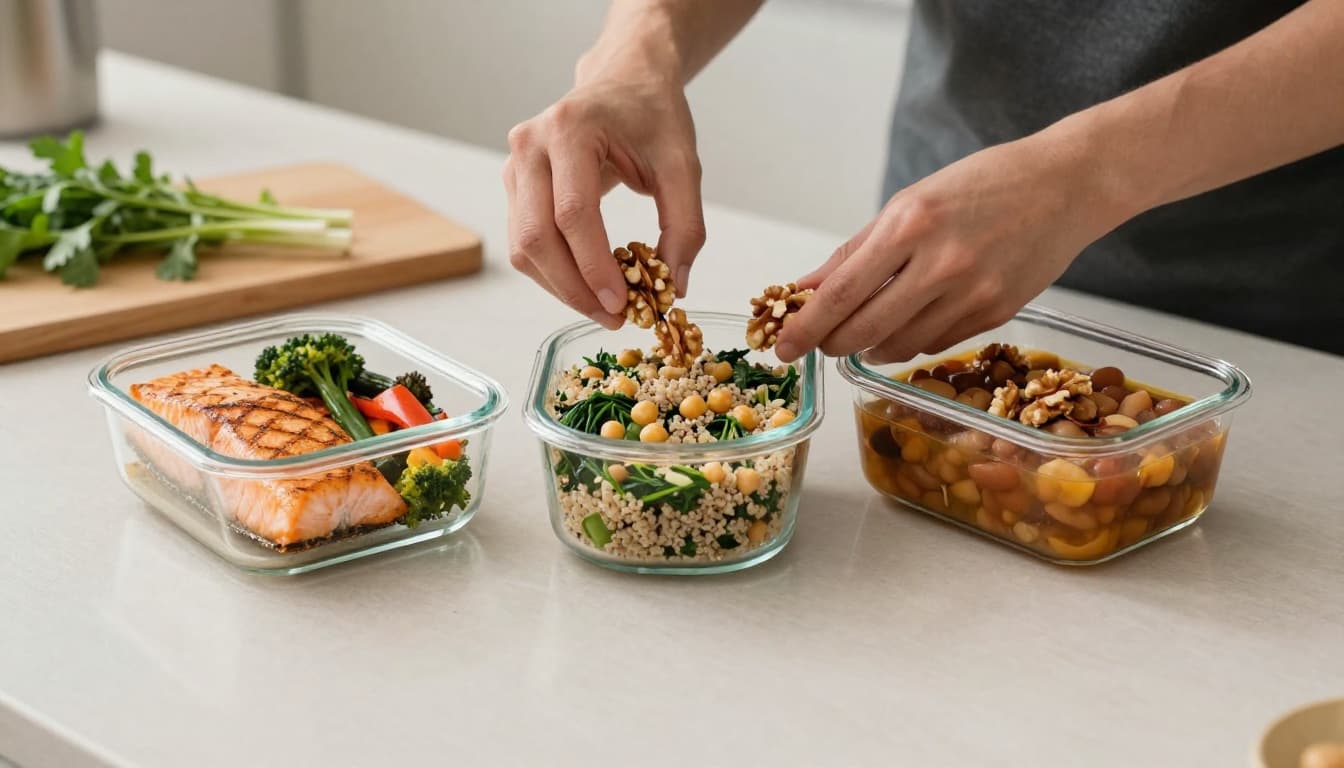
If you want this to work fast, keep it practical: cook a pot of lentils or beans, bake a tray of vegetables, and portion lunches for 3 to 4 days. That routine does more for your numbers than chasing “perfect” meals once a week.
Conclusion
Non-HDL cholesterol is the “whole fleet” number for bad cholesterol, and it often tells a clearer story than LDL alone. Implementing lifestyle changes by building meals around fiber, plants, and unsaturated fats, paired with consistent training, supports heart disease prevention and gives your arteries a calmer environment to heal. These dietary efforts can complement medical interventions like statins if prescribed by your clinician. Keep the plan simple, repeat it for two weeks, then re-check with your clinician if advised. Your next lab result can be a signal that your daily habits are working, not a mystery you have to fear.
Keep reading
For the wider picture, see our heart-healthy foods hub. Related reading in Heart Health Tests: hs-CRP explained for heart risk: What Your Number Means, What Raises It, and a 14-day anti-inflammatory food checklist, Lipid Panel Results Explained: One Simple One-Page Guide, Lipoprotein(a) Test Explained: What Lp(a) Means for Your Heart, Who Should Get Checked, and Habits That Still Matter.



0 Comments