A lab report can feel like a weather forecast for your body. One number looks calm, another looks stormy, and suddenly you’re wondering what’s coming next. The homocysteine test often lands in that second category, because it’s tied to heart and blood vessel health, yet it’s not a routine test for most people.
Here’s the clear truth: homocysteine can signal a vitamin problem (often folate, B12, or B6), and higher levels are linked with higher cardiovascular risk in many studies. Still, lowering the number doesn’t always translate into fewer heart attacks or strokes. So the best approach is practical, not panicked.
What homocysteine is, and why it matters to your arteries
Homocysteine is an amino acid your body makes when it breaks down methionine (a building block from protein foods). Under normal conditions, your body “recycles” homocysteine using nutrients, mainly folate, vitamin B12, and vitamin B6.
When that recycling slows down, homocysteine can rise. Over time, higher homocysteine is linked with problems like artery stiffness and blood clot risk in observational research. It’s one of those signals that can point to stress in the system, like a check engine light. It doesn’t name the exact problem, but it suggests where to look.
For a plain-language overview of what homocysteine does in the body, see Cleveland Clinic's explanation of homocysteine levels.
The homocysteine test: what it checks and when it’s worth asking for
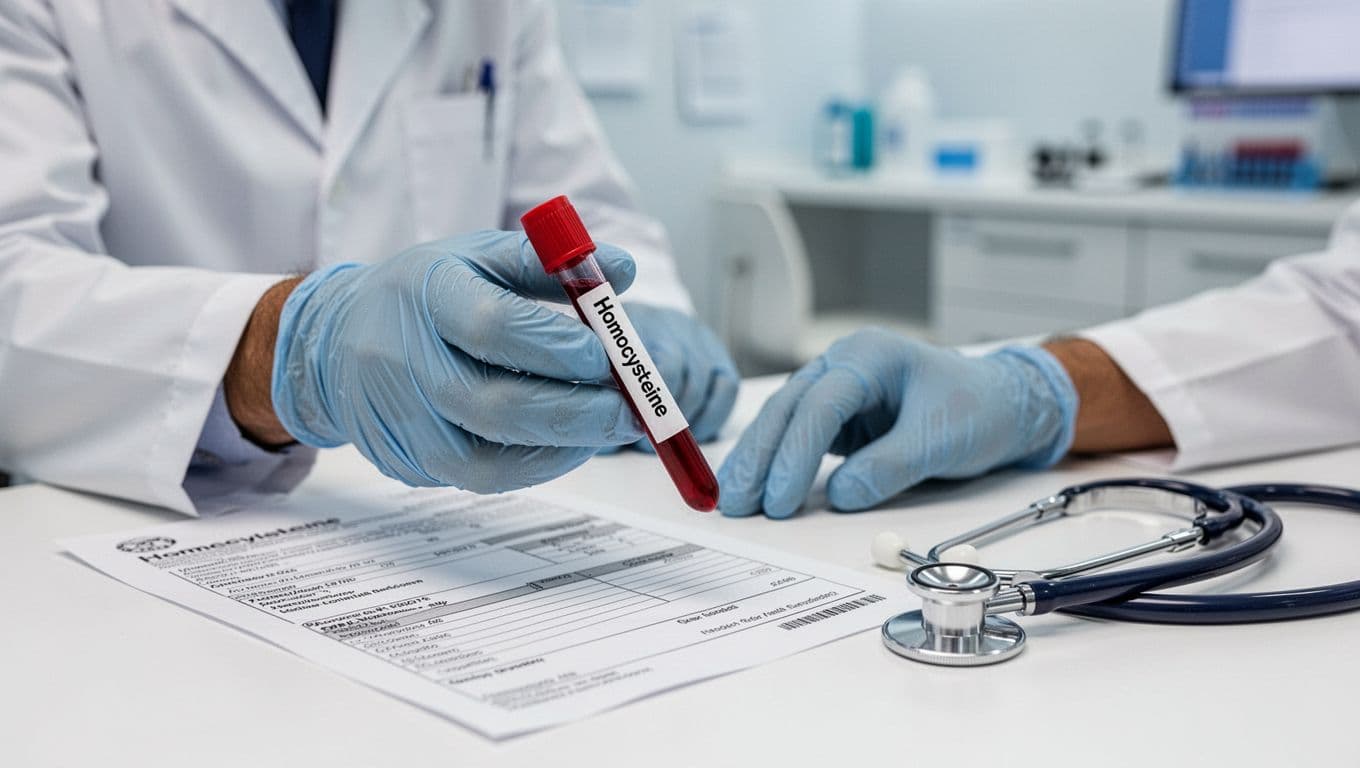
A homocysteine test is a standard blood draw. Some clinicians prefer a fasting sample, because recent meals and supplements can muddy the picture. If you take B vitamins, your clinician may tell you whether to pause them before testing.
As of February 2026, major guidance does not support routine homocysteine screening for general heart risk in healthy people. Testing tends to be more selective, used when the result could change care.
A homocysteine result is most useful when it helps explain “why,” for example a B12 deficiency, not when it’s ordered out of curiosity.
Situations where clinicians often consider testing include:
- Early or unexplained cardiovascular disease (premature artery disease)
- Unexplained blood clots or strong clotting history
- Suspected vitamin deficiencies, especially B12 or folate
- Certain health conditions that can raise levels, such as kidney disease (your clinician will interpret this in context)
If you want another patient-friendly explanation of how high homocysteine can affect blood vessels, read FamilyDoctor.org's overview.
Understanding results: normal range, borderline numbers, and “high”
Labs may use slightly different reference ranges. Still, many clinicians use these general cutoffs (in µmol/L). This quick table helps you place the number before you interpret the story behind it.
| Homocysteine level (µmol/L) | Common interpretation | What it often suggests |
|---|---|---|
| Under 15 | Typical range | Usual “recycling” with B vitamins is working |
| 15 to 30 | Moderately elevated | Possible vitamin shortfall, lifestyle factors, or medical conditions |
| Over 30 | High | Stronger concern for deficiency or underlying issues |
| Over 100 | Very high | Possible genetic disorder or severe deficiency, needs prompt clinical attention |
A single result isn’t the full picture. Your clinician may pair it with labs like B12, folate, methylmalonic acid (for B12 status), kidney function, and a full cardiovascular risk review.
To compare how different organizations describe levels and causes, see UMass Memorial Health's homocysteine overview.
Does high homocysteine automatically mean higher heart risk?
Higher homocysteine is associated with cardiovascular disease risk in many studies, yet association isn’t the same as cause. Large clinical trials show an important twist: B-vitamin supplements can lower homocysteine, but they haven’t consistently reduced major cardiovascular events in broad populations.
So what’s the point of knowing the number? It can still be useful because it may uncover something fixable, especially a nutrient deficiency. Correcting a true B12 or folate deficiency supports nerve health, red blood cells, pregnancy outcomes, and overall function, even if the “heart protection” benefit is not guaranteed.
Harvard’s quick summary of the evidence gives helpful perspective in B vitamins and homocysteine.
How to lower homocysteine safely (food first, then targeted supplements)
Lowering homocysteine works best when you treat the reason it’s high. For many people, that means improving B vitamin intake and tightening a few lifestyle basics.
Start with food. Think of folate, B6, and B12 as the tools that keep the assembly line moving. A healthy food diet that repeats the same nourishing ingredients tends to work better than a perfect week followed by a chaotic one.
Focus on these habits:
- Folate most days: leafy greens, beans, lentils, asparagus, and citrus.
- B12 regularly: fish, eggs, dairy, and meat. If you eat fully plant-based, talk with a clinician about B12 supplements.
- B6 sources: poultry, fish, potatoes, bananas, chickpeas, and nuts.
- Less smoking and less heavy alcohol: both can push homocysteine upward.
- Move consistently: a healthy living diet and exercise routine supports vascular health even when lab numbers lag behind.
This is where a heart healthy diet pattern shines: plenty of plants, beans, whole grains, olive oil, and fish. If you want practical shopping ideas, use this heart-healthy foods guide as a simple starting point. If fiber is the missing piece in your routine, this high-fiber meal plan for heart health makes daily choices easier.
Supplements can help, but they’re not a free pass. If your clinician confirms a deficiency, they may recommend folic acid, B6, or B12 at a dose matched to your labs and symptoms. Don’t self-prescribe high doses long-term, especially if you have kidney disease or take medications that interact with B vitamins.
The goal isn’t chasing a perfect homocysteine number. The goal is fixing deficiencies and building habits that support your arteries for decades.
Regular movement matters here too. Choose sports and exercise for long life: brisk walking, cycling, swimming, and strength training you can repeat. Exercise won’t replace folate or B12, but it helps the whole heart risk picture. Pair that with healthy nutrition and a steady sleep schedule, and you’re practicing nutrition to prevent illness in the most realistic way.
If you also want royalty-free photos for your own wellness plan or meal prep posts, browse Unsplash organic label photos.
Conclusion
The homocysteine test is a useful clue, not a verdict. High levels can point to B vitamin gaps, lifestyle factors, or medical conditions that deserve attention. Build your plan around real food, smart supplementation when needed, and a repeatable routine that supports your heart for the long run. If you retest in a few months, look for a trend, not a single “perfect” day on paper.




0 Comments