Blood pressure can feel like a silent metronome in the background, steady when life is calm, loud when stress, sleep, and salty convenience foods pile up. The good news is that your plate can help.
Focusing on magnesium rich foods is one of the simplest upgrades you can make, because magnesium supports normal blood vessel function and works best when it shows up as part of an overall pattern. Think of it like adding sturdy bricks to a wall, not painting over cracks.
This guide breaks down what to eat, why it matters, and a simple 7-day menu built around real, repeatable meals.
Why magnesium-rich foods can support healthier blood pressure
Magnesium helps blood vessels relax and plays a role in how your body handles calcium in muscle tissue, including the smooth muscle around arteries. When magnesium intake is low, blood vessels may stay a little more “tense” than they need to be.
Research often looks at magnesium supplements, yet the bigger picture still points toward food patterns. A detailed overview in the NIH review on magnesium and hypertension describes several ways magnesium may support cardiovascular health, including effects on the vessel wall. Meanwhile, a large analysis in the journal Hypertension found that supplementation can produce modest blood pressure reductions in some groups (results vary by dose and person), see the AHA meta-analysis on magnesium and blood pressure.
Food matters because it is rarely “just magnesium.” Beans bring fiber, seeds bring healthy fats, leafy greens bring potassium, and fish brings omega-3s. That combination is classic healthy nutrition and fits a heart healthy diet far better than chasing a single nutrient.
If you’re already treating high blood pressure, keep doing what works. Food supports the plan, it doesn’t replace medical care.
If you want a broader view of diet patterns that tend to help, this review of nutrition factors in hypertension management is a helpful, evidence-based read.
The magnesium-rich foods that make meal planning easy
A smart week starts with a short list you can reuse. When your kitchen has a few basics, building a healthy food diet becomes almost automatic, like reaching for a jacket when it’s cold.
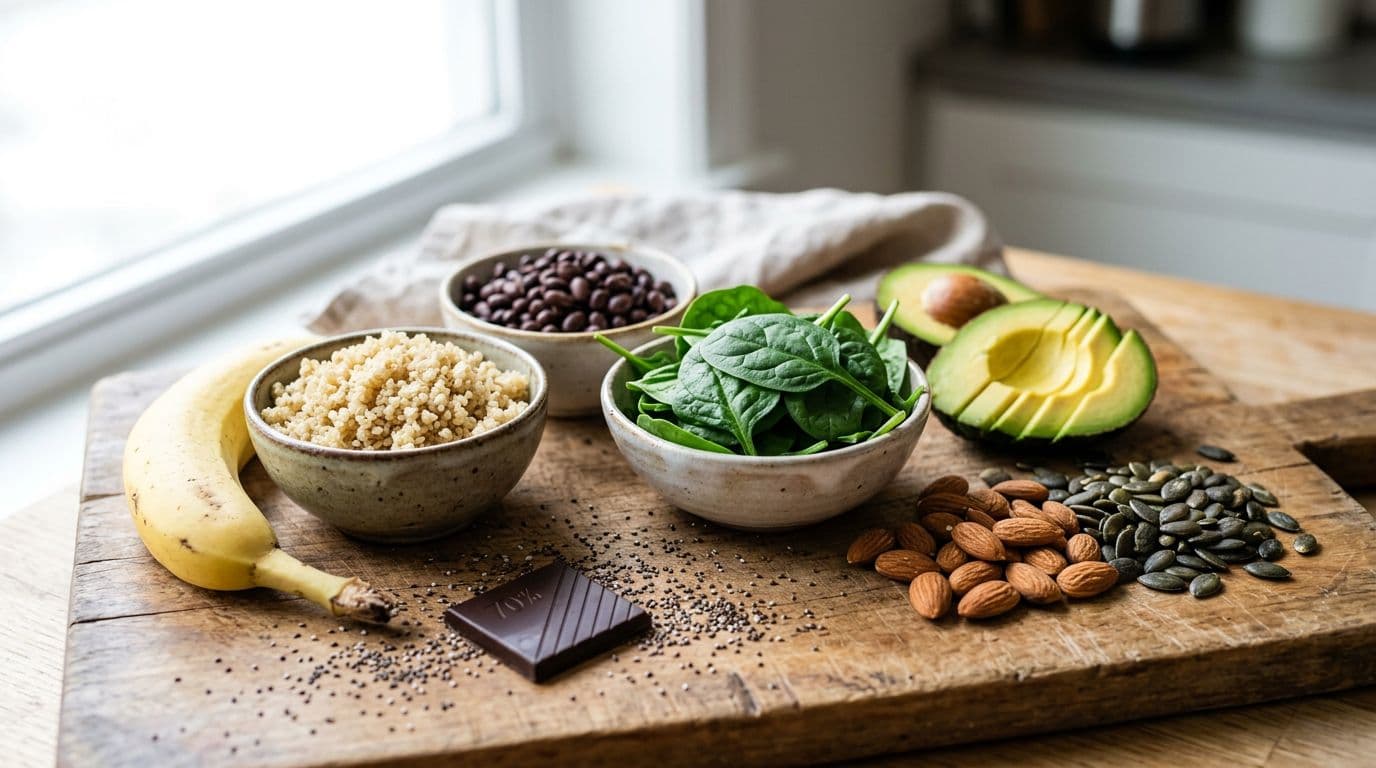
Here are the staples that pull the most weight for blood-pressure-friendly meals:
- Leafy greens (spinach, chard, kale): Easy to toss into eggs, soups, and grain bowls.
- Beans and lentils (black beans, chickpeas, lentils): High in magnesium and fiber. Choose low-sodium canned beans and rinse them.
- Whole grains (oats, quinoa, brown rice): A steady base that pairs with almost anything.
- Nuts and seeds (pumpkin seeds, almonds, cashews, chia): Small portions add crunch and minerals fast.
- Avocado and bananas: Simple, no-cook options that work for snacks and breakfast.
- Tofu and edamame: Plant proteins that help keep saturated fat lower.
- Salmon: Not a magnesium “bomb,” but a strong ally in a heart-supporting pattern.
- Dark chocolate (70%+): A square or two can fit, especially when it replaces sugary desserts.
This is also where label-reading pays off. Many “healthy” packaged foods run high in sodium, which can nudge blood pressure up. If your goal is healthy food, keep it simple most days: more whole foods, fewer sauces, fewer salty snack cycles.
For more kitchen-friendly ideas that support steady blood pressure, this internal heart-healthy foods guide is a great companion read.
A simple 7-day menu built around magnesium-rich foods
The menu below keeps meals familiar: oats, bowls, sheet-pan dinners, and snack plates. It’s designed to be flexible, so you can swap lunches and repeat favorites without breaking the rhythm.
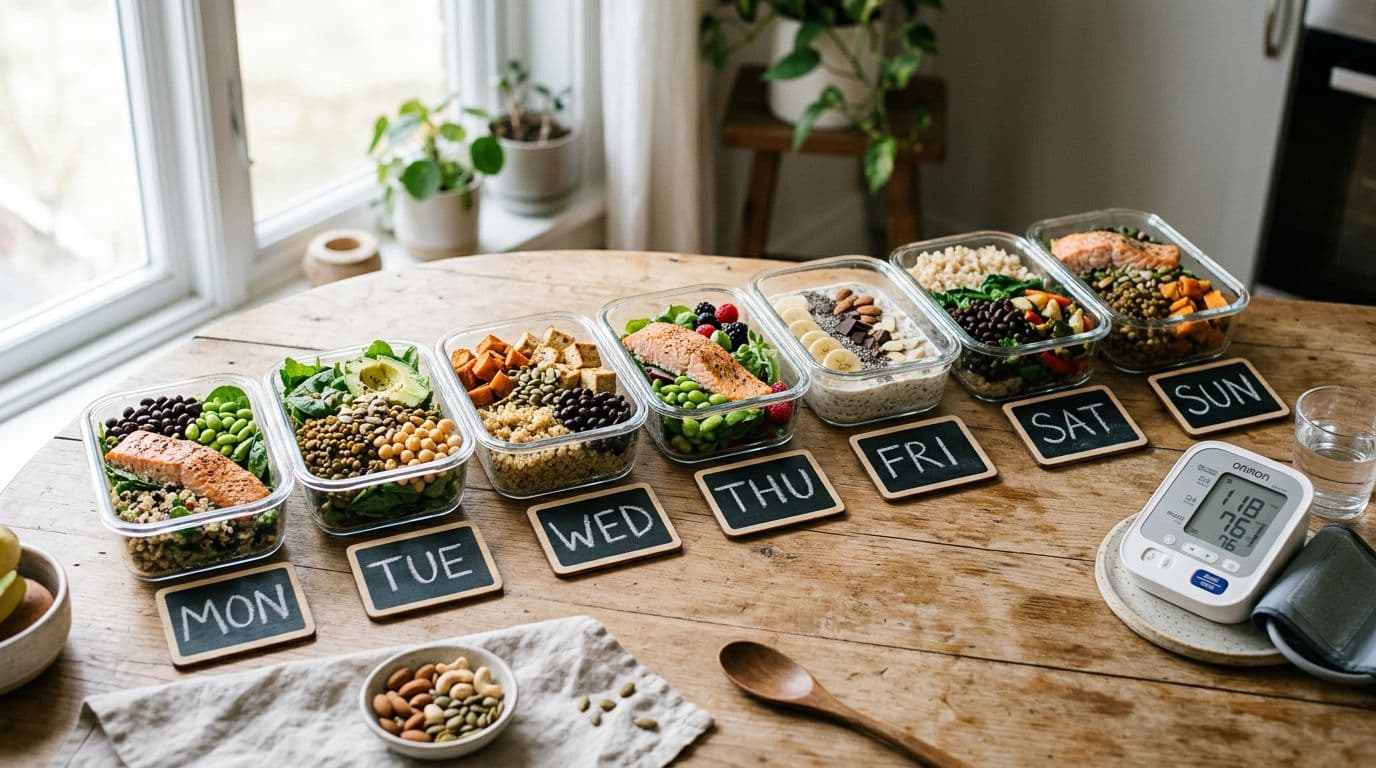
Here’s a clear, repeatable week at a glance:
| Day | Breakfast | Lunch | Dinner | Snack |
|---|---|---|---|---|
| Mon | Oats + chia + berries + pumpkin seeds | Quinoa salad with chickpeas, spinach, olive oil, lemon | Baked salmon + sweet potato + sautéed greens | Greek yogurt + sliced banana |
| Tue | Greek yogurt + berries + almonds | Lentil soup + side spinach salad | Tofu and veggie stir-fry over brown rice | Dark chocolate (1 to 2 squares) + cashews |
| Wed | Smoothie (spinach, banana, yogurt) + chia | Black bean bowl with quinoa, avocado, salsa (low-sodium) | Sheet-pan roasted veggies + chickpeas | Edamame (steamed) |
| Thu | Overnight oats + cinnamon + walnuts | Leftover tofu stir-fry bowl | Salmon or tofu tacos with cabbage and avocado | Berries + pumpkin seeds |
| Fri | Scrambled eggs + spinach + whole-grain toast | Lentil and veggie salad with olive oil | Sweet potato stuffed with black beans and greens | Greek yogurt + cocoa powder (unsweetened) |
| Sat | Oats + banana + almond butter | Chickpea “tuna” salad wrap + leafy greens | Roasted vegetable quinoa bowl + tahini | Handful of almonds |
| Sun | Yogurt parfait (berries, chia, oats) | Big spinach salad with edamame, quinoa, avocado | Lentil pasta with garlicky sautéed greens | Dark chocolate + strawberries |
Two small rules make this plan work better for blood pressure. First, keep sodium in check by rinsing canned beans and choosing unsalted or lightly salted nuts. Second, build flavor with lemon, vinegar, garlic, and herbs so you don’t miss salty sauces.
Finally, pair your meals with movement. A healthy living diet and exercise routine does not need fancy equipment. Brisk walking, cycling, swimming, and strength training all fit. Over time, consistent sports and exercise for long life supports your heart, your vessels, your sleep, and your stress response, which all affect blood pressure.
Conclusion
If you want a calmer blood pressure trend, don’t hunt for a miracle food. Stock your kitchen with magnesium rich foods, keep sodium modest, and repeat a few easy meals until they feel normal. The 7-day menu gives you a starting rhythm, but the real win is the pattern you can live with. What’s one meal from the week you’ll repeat first as part of your nutrition to prevent illness plan?



0 Comments