Your resting heart rate is like your body’s idle speed. It’s the beat count when you’re not walking, talking, or worrying about your inbox. Lower isn’t always “better,” and higher isn’t always “bad,” but the pattern can tell a useful story.
If you track it over time, you’ll spot trends that a single reading can’t show. That makes it one of the simplest health signals you can check at home, in under a minute.
What resting heart rate actually measures (and why it changes)
Resting heart rate is the number of beats per minute (bpm) your heart needs to move blood when demand is low. When your heart muscle gets stronger, it can pump more blood with each beat. As a result, it often doesn’t need to beat as often.
That’s why people who do regular endurance training frequently see lower numbers. According to Cleveland Clinic's guide to normal heart rate, a typical adult resting heart rate falls between 60 and 100 bpm, and many healthy adults sit closer to the middle.
Still, your number can swing day to day for normal reasons. Think of it like a thermometer for overall “load” on your system. Common causes of a temporary bump include:
- Poor sleep or late nights
- Stress, anxiety, or pain
- Dehydration, alcohol, or lots of caffeine
- Fever or infection
- Some medicines (including stimulants, thyroid meds, and decongestants)
On the other hand, a lower resting heart rate can show up with good fitness, but also with some rhythm problems or medication effects. Context matters.
A single reading is a snapshot. A week of readings is a story.
If you want a clinician’s plain-language explanation, Yale Medicine's overview of "normal" resting heart rate is a clear, up-to-date reference (January 2026).
Normal resting heart rate ranges (adults, kids, and athletes)
Most adults land in the 60 to 100 bpm range, but “normal” has a wide gate. Your age, fitness, body size, and even the season can nudge the number.
Here’s a quick reference for typical resting ranges by age (children run higher because their bodies are growing fast):
| Age group | Typical resting range (bpm) |
|---|---|
| Newborns (0 to 4 weeks) | 100 to 205 |
| Infants (4 weeks to 1 year) | 100 to 180 |
| Toddlers (1 to 3 years) | 80 to 130 |
| Preschoolers (3 to 5 years) | 80 to 120 |
| School-age children (5 to 12 years) | 75 to 118 |
| Teens (13 to 18 years) | 60 to 100 |
| Adults (18+) | 60 to 100 |
So what about athletes? Well-trained endurance athletes may sit in the 40s (or even lower). That can be normal for them, especially if they feel fine. If you are not training hard and your resting heart rate is consistently below 60, it’s smart to check in with a clinician, especially if you feel dizzy or unusually tired.
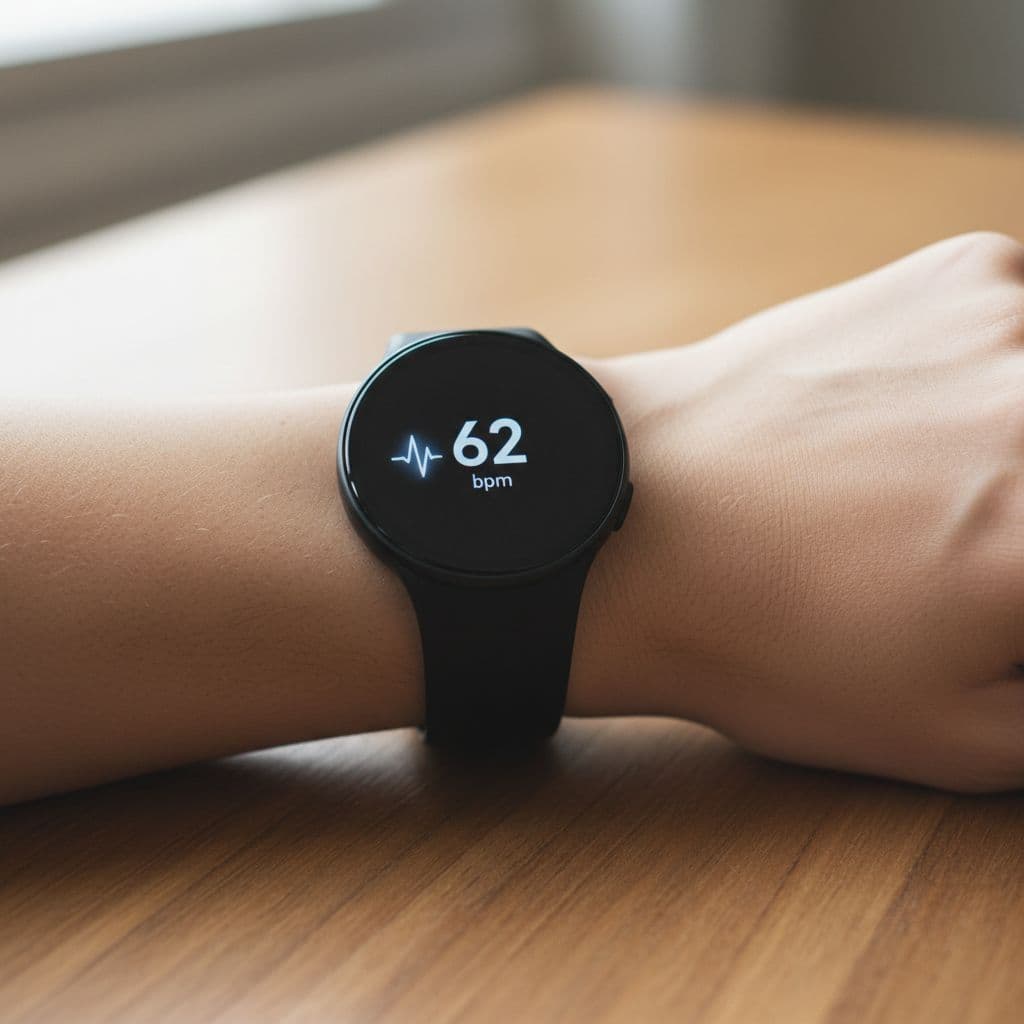
Also, don’t over-interpret tiny shifts. A change from 62 to 66 bpm might just be a rough night of sleep. A steady climb of 8 to 12 bpm over a couple of weeks is more meaningful.
How to measure your resting heart rate, then use it to guide healthier habits
The best time to measure is when your body is truly at rest. Early morning works well, before caffeine, before scrolling, and before the day speeds up.

Use either method:
- Manual pulse: two fingers on the thumb side of your wrist, count beats for 30 seconds, then double it (or count for 60 seconds for best accuracy).
- Wearable: use a tracker reading after you’ve been still for several minutes.
Write it down for a week. You’ll learn your “usual” number fast.
What your number might suggest
A lower resting heart rate often points to better aerobic fitness and recovery. A higher one can mean your body is under more strain, or simply less conditioned. The key is pairing the number with how you feel and what’s changed lately.
If you want to plan workouts based on heart rate zones (instead of guessing), Johns Hopkins' target heart rate guide helps you match effort to purpose.
Improving resting heart rate with food, movement, and recovery
If your goal is a calmer baseline, think in layers, not hacks.
Start with a heart healthy diet you can repeat. The most reliable pattern looks a lot like “ordinary” healthy nutrition: more plants, more fiber, better fats, and less ultra-processed food. Keep it simple by building meals from healthy food you already like, then upgrading one piece at a time. For practical ideas, this heart-healthy foods guide makes shopping and meals feel straightforward.
Small food choices can support the bigger goal of nutrition to prevent illness, especially when they lower blood pressure strain and improve cholesterol over time. For example, swapping butter-heavy cooking for olive oil can be a quiet win. This article on extra virgin olive oil for heart health explains how to use it without adding “extra” calories by accident.
Movement matters too, but it doesn’t need to be extreme. Brisk walking, cycling, swimming, and steady cardio teach the heart to do more with less. Add some strength work and daily life often feels easier, which can also lower your working heart rate. If you want a plan that’s realistic, see this guide on strength training for heart health.

Finally, don’t ignore fiber. Many people feel better and snack less when fiber goes up, which supports a steady healthy food diet. This high-fiber meal plan for heart health is a good “plug-and-play” week.
A free visual reminder for better grocery choices
Sometimes the best habit is the one you see. If buying more whole foods is your next step, a simple cue like “organic label” shopping photos can keep the idea concrete.

That mix of healthy living diet and exercise is what holds up over years. It’s also the heart of sports and exercise for long life: steady effort you can still do next decade.
When to get medical help
Check in promptly if your resting heart rate is consistently above 100 bpm, or unusually low for you with symptoms like faintness, chest pain, shortness of breath, or new irregular beats. Those aren’t numbers to “power through.”
Conclusion
Your resting heart rate isn’t a grade, it’s feedback. Track it calmly, look for trends, and match changes to sleep, stress, training, and food. Build meals around healthy nutrition, move most days, and recover like it counts, because it does. Over time, the beat you measure at rest often becomes a quiet sign that your whole system is running smoother.



0 Comments