A cholesterol report can feel like a tiny scorecard for your future. One number looks fine, another looks odd, and suddenly you’re doing mental math at the kitchen table.
The cholesterol hdl ratio (also called the total cholesterol to HDL ratio) turns several lipid numbers into one quick snapshot. It doesn’t replace LDL or non-HDL targets, but it can help you spot when “overall cholesterol” is high compared with your protective HDL.
Let’s break down what the ratio means, what range to aim for in 2026, and what habits tend to move it in the right direction.
What the total cholesterol to HDL ratio actually measures
Think of total cholesterol as the whole traffic flow on a highway. HDL is the cleanup crew that helps carry cholesterol away from artery walls. The ratio compares those two forces.
To calculate it, you divide:
Total cholesterol ÷ HDL cholesterol = total cholesterol to HDL ratio
So if your total cholesterol is 200 mg/dL and your HDL is 60 mg/dL, your ratio is 3.3. That’s generally considered a strong result for many adults.
This number matters because it’s a simple way to ask: “How much total cholesterol do I have, relative to the part that tends to be protective?” It’s also why some people with “normal” total cholesterol still get flagged if HDL is low.

A helpful nuance is that many clinicians now weigh LDL cholesterol and non-HDL cholesterol heavily when assessing risk. The ratio can still add context, but it’s not the only lens. Mayo Clinic explains that trade-off in its discussion of cholesterol ratio vs non-HDL cholesterol.
A ratio is a snapshot, not a diagnosis. It’s most useful when you read it alongside LDL, non-HDL, triglycerides, blood pressure, and family history.
If you want a deeper walk-through of how the cholesterol hdl ratio is interpreted, this overview of the TC/HDL ratio basics is a clear reference.
What ratio should you aim for (and what’s considered “good”)?
Most current guidance (as of 2026) still frames the total cholesterol to HDL ratio like this: lower is usually better, because it often reflects lower atherogenic cholesterol, higher HDL, or both.
Here’s a simple way to interpret common ranges:
| Total cholesterol to HDL ratio | Common interpretation | What it can suggest |
|---|---|---|
| Under 3.0 | Optimal | Often seen with strong metabolic and heart markers |
| 3.0 to 3.5 | Very good | A practical target for many health-focused adults |
| 3.6 to 5.0 | Acceptable to borderline | Worth improving, especially if other risk factors exist |
| Over 5.0 | Higher risk | Often signals higher cardiovascular risk over time |
These cutoffs don’t mean you’re “safe” or “in trouble” by ratio alone. A low ratio with very high LDL still needs attention. On the other hand, a ratio can look decent while triglycerides are high, which can hint at insulin resistance.
This is where food patterns and daily habits become powerful. A heart healthy diet tends to improve more than one marker at once, because it lowers LDL and triglycerides while supporting HDL function. If you want a practical grocery-first approach, the heart-healthy foods practical guide is a useful companion.
One more reality check: trying to “hack” HDL upward with supplements or shortcuts usually disappoints. Research has repeatedly shown that simply raising HDL numbers doesn’t automatically reduce risk. The better goal is improving the whole lipid picture, because arteries respond to patterns, not tricks.
Why your cholesterol HDL ratio can change (even if you feel fine)
Your ratio can swing with everyday life, sometimes for boring reasons. That’s not bad news, it’s feedback.
HDL often drops with smoking, sedentary weeks, higher body fat around the waist, poor sleep, and high refined-carb intake. Total cholesterol can rise with genetics, saturated fat-heavy eating patterns, thyroid issues, and certain medications. Triglycerides can climb with excess alcohol or added sugar, and that often travels with a more concerning lipid profile.
Movement is one of the most reliable nudges. Regular activity can raise HDL modestly for many people, while also improving insulin sensitivity. That matters because metabolic health and lipid health share the same roots.

If you train hard, remember this: extreme overreaching, poor recovery, and under-eating can backfire. The body doesn’t love chronic stress. A better long-term frame is sports and exercise for long life, meaning workouts you can repeat for decades, not weeks.
Also, don’t ignore timing. Lipids are usually measured after a consistent routine, not after a holiday week, a new diet, or a sudden training change. If your numbers surprised you, re-checking after 8 to 12 weeks of steady habits often gives a clearer picture.
How to improve your cholesterol to HDL ratio with food and lifestyle
A better ratio usually comes from two directions: lowering atherogenic cholesterol (often LDL and non-HDL) and supporting HDL through activity and better fats.
Food first, because it’s the daily lever. A healthy food diet that’s rich in fiber and unsaturated fats tends to reduce LDL over time. Think oats, beans, lentils, vegetables, fruit, nuts, and fish. This is healthy nutrition that feels normal on a plate, not like a punishment.
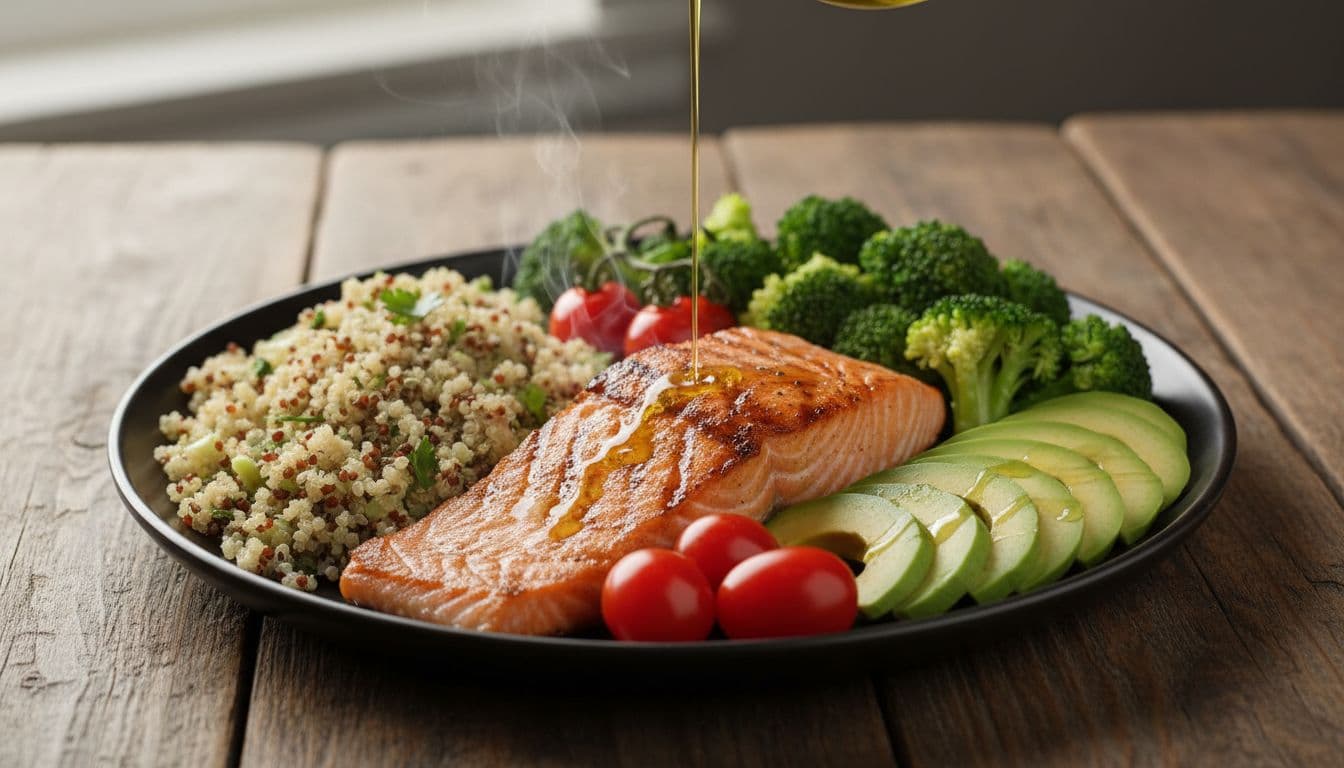
A few changes tend to move the needle for the cholesterol hdl ratio:
- Add soluble fiber daily, especially from oats, beans, lentils, chia, and fruit. If you want a simple start, use this soluble fiber menu to lower LDL cholesterol.
- Swap fats instead of going fat-free, replacing butter and processed meats with olive oil, nuts, seeds, and avocado. For a practical deep dive, see olive oil benefits for heart health.
- Keep added sugar and refined carbs in check, since high triglycerides often pull the overall picture in the wrong direction.
- Build a repeatable routine of healthy living diet and exercise, such as brisk walking plus 2 strength sessions weekly. That combo supports HDL and blood sugar together.
This is also nutrition to prevent illness in the most grounded sense: steady meals, steady movement, and fewer spikes. If you like structure, a high-fiber meal plan for heart health can make the week feel almost automatic.
For readers who want free-to-use food photography ideas for recipe sections, Unsplash has a large set of organic label photos you can browse for context and inspiration.
Don’t chase perfection. Chase “most days.” Your arteries respond to what you repeat.
Conclusion
The total cholesterol hdl ratio is a quick way to see how your total cholesterol stacks up against protective HDL. In 2026, many clinicians still view under 5:1 as a general goal, under 3.5:1 as very good, and under 3:1 as optimal for many people. Pair a heart-friendly eating pattern with consistent movement, and your next lab report often tells a calmer story. The best next step is simple: pick one meal and one daily walk you can repeat, then build from there.

0 Comments