A walk looks small on paper. In the body, it adds up like coins in a jar. The latest research points to a clear daily step goal for heart health, and it’s lower than many people think.
For most adults, aiming for about 7,000 steps a day is a smart target. That number is high enough to help the heart, yet realistic enough to fit a normal week. If you already walk more, great. If you’re starting low, the good news is even better, because small gains still count.
The science-backed daily step goal
For years, 10,000 steps sounded like a rule. It isn’t. A large 2025 systematic review of daily steps and health outcomes found strong benefits for heart health and longevity at around 7,000 steps a day, compared with very low step counts. More movement still helped, but the payoff began to level off as people moved closer to 8,000 to 10,000 steps.
That matters because 7,000 steps is both meaningful and doable. It can help lower heart disease risk, support better blood sugar control, and break up long hours of sitting. According to newer March 2026 summaries of the research, that level is tied to about a 25% lower heart disease risk and a much lower risk of early death versus roughly 2,000 steps a day.
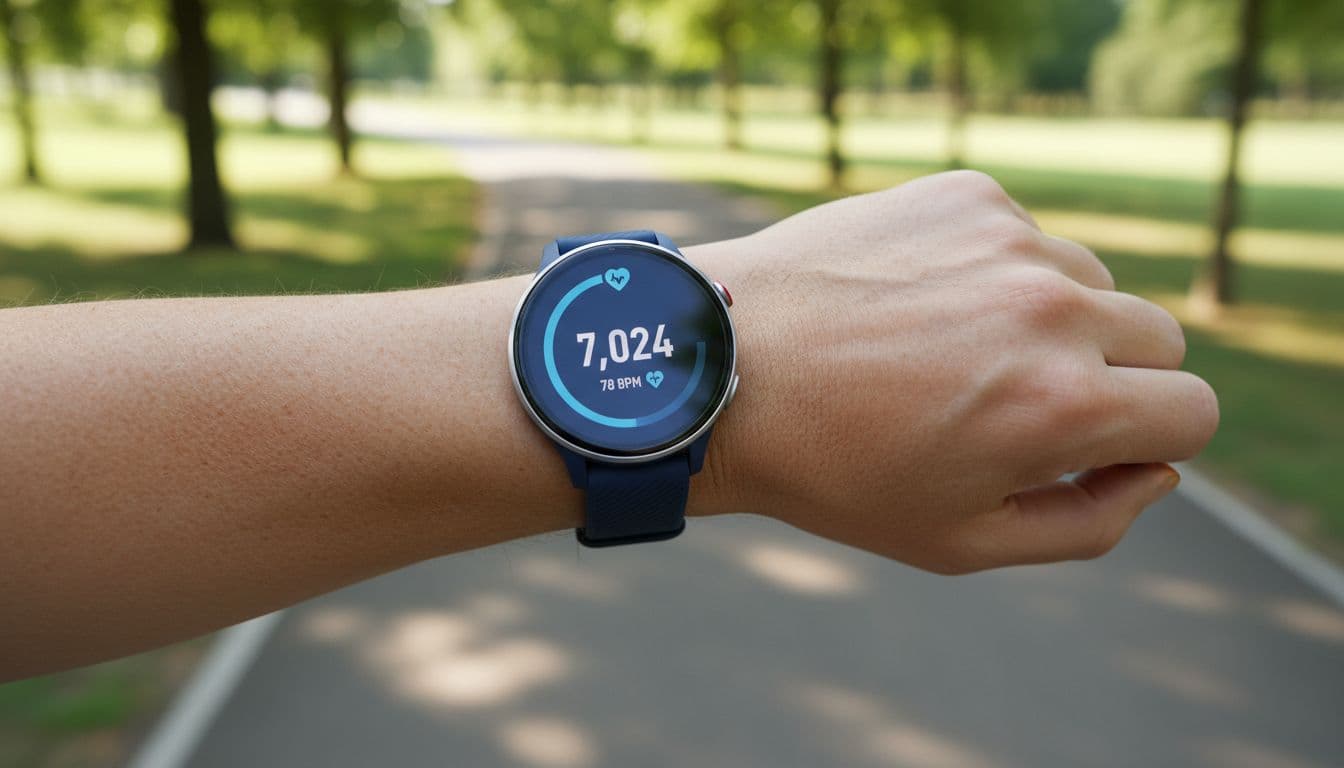
For heart health, consistency matters more than chasing a round number.
Here’s the simplest way to view the range:
| Steps per day | What it likely means for heart health |
|---|---|
| Under 2,000 | Very low movement, highest baseline risk |
| Around 4,500 | Clear benefit begins, especially in older adults |
| 6,000 to 7,000 | Strong, research-backed gains for many adults |
| 8,000 to 10,000 | More benefit, but with smaller returns |
Age changes the target a bit. Adults over 60 often do well in the 6,000 to 8,000 range. Younger adults, or anyone who enjoys longer walks, may benefit from 8,000 to 10,000. Still, the sweet spot for a practical daily step goal sits near 7,000. Also, brisk walking helps, but easy walking still counts.
How to reach 7,000 steps without turning life upside down
If your tracker says 2,800 steps a day, don’t leap straight to 7,000. That’s like trying to sprint up a hill with no warm-up. Instead, find your average over three or four days, then add 500 to 1,000 steps a week. That slow climb is easier on the joints and easier on your schedule.
The Harvard Health summary of the 7,000-step finding makes the same point in plain language: you don’t need perfection, you need a repeatable habit. Short walks count. A few minutes after meals count. Even pacing while on the phone counts.

Photo by Lisa from Pexels
A few simple moves can push your number up fast:
- Walk after meals: Ten minutes after lunch and dinner can add up quickly.
- Park farther away: Those little strips of pavement still count.
- Use movement breaks: Five minutes each hour can wake up both legs and mind.
- Keep one evening walk: A steady loop after dinner often becomes the anchor habit.
Because walking is gentle, it fits most lifestyles. It also works well inside a broader healthy living diet and exercise routine. That’s where the habit gets strong. On busy days, don’t chase a perfect total. Protect the pattern instead. A 10-minute walk is still a win, and over time it keeps the door open.
If you have chest pain, severe shortness of breath, balance issues, or major joint pain, talk with a clinician before pushing your steps much higher.
Steps work better when your plate helps your heart
Walking helps the heart pump better, but food shapes the load the heart carries all day. A heart healthy diet helps manage blood pressure, cholesterol, body weight, and blood sugar. Put simply, your step goal works harder when your meals stop fighting against it.
A simple healthy food diet doesn’t need fancy powders or strict rules. Think oats, beans, fruit, olive oil, nuts, yogurt, fish, and plenty of vegetables. That kind of healthy food supports recovery after walks and keeps energy steadier. For practical meal ideas, this heart-healthy foods guide is a useful place to start.

If cholesterol is part of your heart picture, a plant-forward approach can help. The site’s guide to the portfolio diet to lower LDL shows how fiber, soy, nuts, and healthy oils can work together. That’s healthy nutrition in real life, not theory.
Think of walking as one part of sports and exercise for long life, and your meals as the steady ground beneath it. This is also nutrition to prevent illness at its most ordinary and useful. You don’t need a perfect week. You need repeatable breakfasts, simple lunches, and dinners that don’t leave you back at zero.
A bowl of oats after a morning walk, a bean salad at lunch, or salmon with greens at dinner can do more than fill you up. It turns movement into a lasting pattern.
Conclusion
The best daily step goal for heart health is one you can hit often, and for many adults that means about 7,000 steps a day. Start where you are, build slowly, and pair your walks with a simple, heart-friendly way of eating. Consistency beats intensity here. Check your average this week, then add a little more next week.



0 Comments