If your meals feel like a jumble of “kind of healthy” choices, the DASH diet meal plan brings calm to the plate. It’s not a trendy reset. It’s a steady way of eating that helps many people lower blood pressure, while still enjoying real food.
Think of DASH like building a house with strong materials. Fruits and vegetables are the bricks. Whole grains are the beams. Low-fat dairy and lean proteins are the support posts. Sodium stays low, so the foundation doesn’t crack over time.
Below you’ll find beginner-friendly rules, a simple 7-day plan, and a grocery list you can shop in one trip.
What the DASH diet actually looks like on a normal day
DASH stands for Dietary Approaches to Stop Hypertension. It focuses on plants, fiber, potassium, calcium, and magnesium, while keeping sodium and saturated fat in check. Many people see blood pressure improvements within about two weeks when they follow the pattern and keep sodium lower (2,300 mg per day, or 1,500 mg for a stronger effect).
If you want a quick, beginner-friendly overview of what the plan includes, see DASH diet basics and grocery lists.
Here’s the simple serving framework often used for a 2,000-calorie day:
| Food group | Typical daily target | Simple examples |
|---|---|---|
| Grains (mostly whole) | 6 to 8 servings | oats, brown rice, whole-wheat bread |
| Vegetables | 4 to 5 servings | leafy greens, peppers, broccoli |
| Fruits | 4 to 5 servings | berries, bananas, oranges |
| Low-fat dairy | 2 to 3 servings | milk, yogurt, cottage cheese |
| Lean protein | up to 6 servings | chicken, fish, beans, tofu |
| Fats and oils | 2 to 3 servings | olive oil, avocado |
| Nuts, seeds, beans | 4 to 5 per week | almonds, lentils, chickpeas |
This is a heart healthy diet that still feels like healthy food, not “diet food.” Also, it pairs well with a routine you can repeat, which matters more than motivation.
A helpful DASH shortcut: if most of your cart is produce, beans, whole grains, and plain dairy, your sodium usually drops without obsessive counting.

A 7-day DASH diet meal plan beginners can repeat
Before you plan every bite, set up two “anchors”: a repeatable breakfast and a repeatable lunch. Dinner can rotate, but anchors keep your week from sliding into takeout.
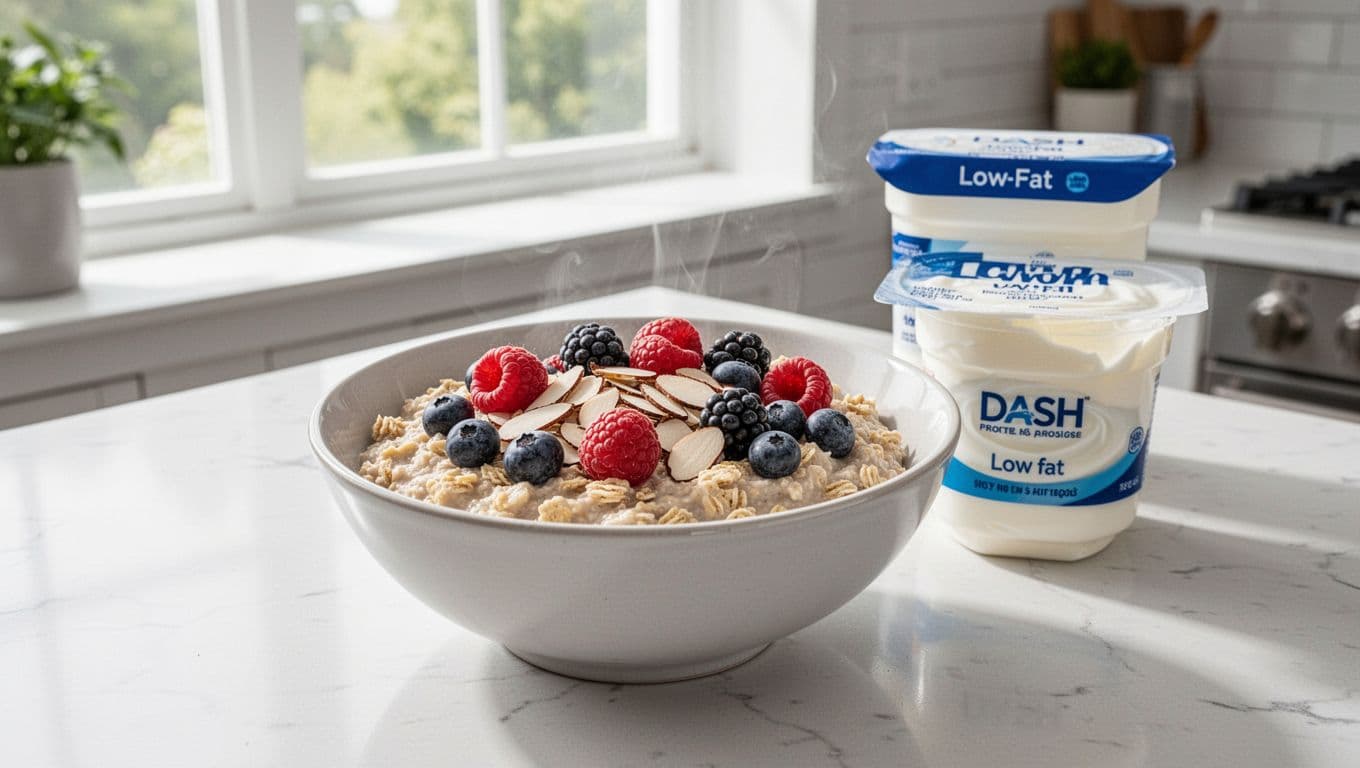
A simple beginner move is to keep snacks predictable: fruit, unsalted nuts, yogurt, or cut veggies with hummus. That way, your healthy nutrition stays steady even on busy days.
Here’s a straightforward 7-day outline. Swap similar foods as needed (salmon for tofu, brown rice for quinoa, etc.).
| Day | Breakfast | Lunch | Dinner | Snack idea |
|---|---|---|---|---|
| 1 | Oatmeal, berries, yogurt | Turkey or hummus wrap, salad | Salmon, brown rice, broccoli | Apple, almonds |
| 2 | Whole-grain toast, peanut butter, orange | Lentil soup, whole-grain bread | Chicken, sweet potato, green beans | Carrots, hummus |
| 3 | Smoothie (milk, banana, berries) | Bean bowl (beans, greens, quinoa) | Tofu stir-fry, mixed veggies, rice | Pear, yogurt |
| 4 | Cereal (low sugar) with milk, fruit | Tuna salad on greens | Turkey chili with beans, side salad | Berries, nuts |
| 5 | Yogurt parfait (fruit, oats) | Leftover chili, extra veggies | Baked fish, quinoa, asparagus | Orange, seeds |
| 6 | Eggs with spinach, whole-grain toast | Chickpea salad sandwich | Sheet-pan chicken, roasted vegetables | Grapes, yogurt |
| 7 | Oatmeal, banana, cinnamon | Lentil salad, tomatoes, cucumbers | Veggie pasta, side salad | Apple, walnuts |
If you want deeper recipe-style structure, EatingWell has a dietitian-built guide: 30-day DASH diet meal plan for beginners.
Two practical notes make this plan feel easier:
- Cook once, eat twice. Make a pot of lentils or chili, then reuse it for lunch.
- Use the “half-plate” rule at dinner. Half vegetables, a quarter protein, a quarter whole grains.
This style of eating supports a healthy food diet without perfection. It also fits a long game approach to energy, recovery, and body composition.
Finally, don’t separate food from movement. A healthy living diet and exercise routine can be as simple as a brisk walk after dinner plus two short strength sessions weekly. That’s the heartbeat of sports and exercise for long life, because it’s realistic enough to keep doing.
For another structured menu that boosts fiber (a key part of nutrition for blood pressure and fullness), bookmark this internal guide: 7-day high-fiber meal plan for heart health.
Simple DASH grocery list (one trip, beginner-friendly)
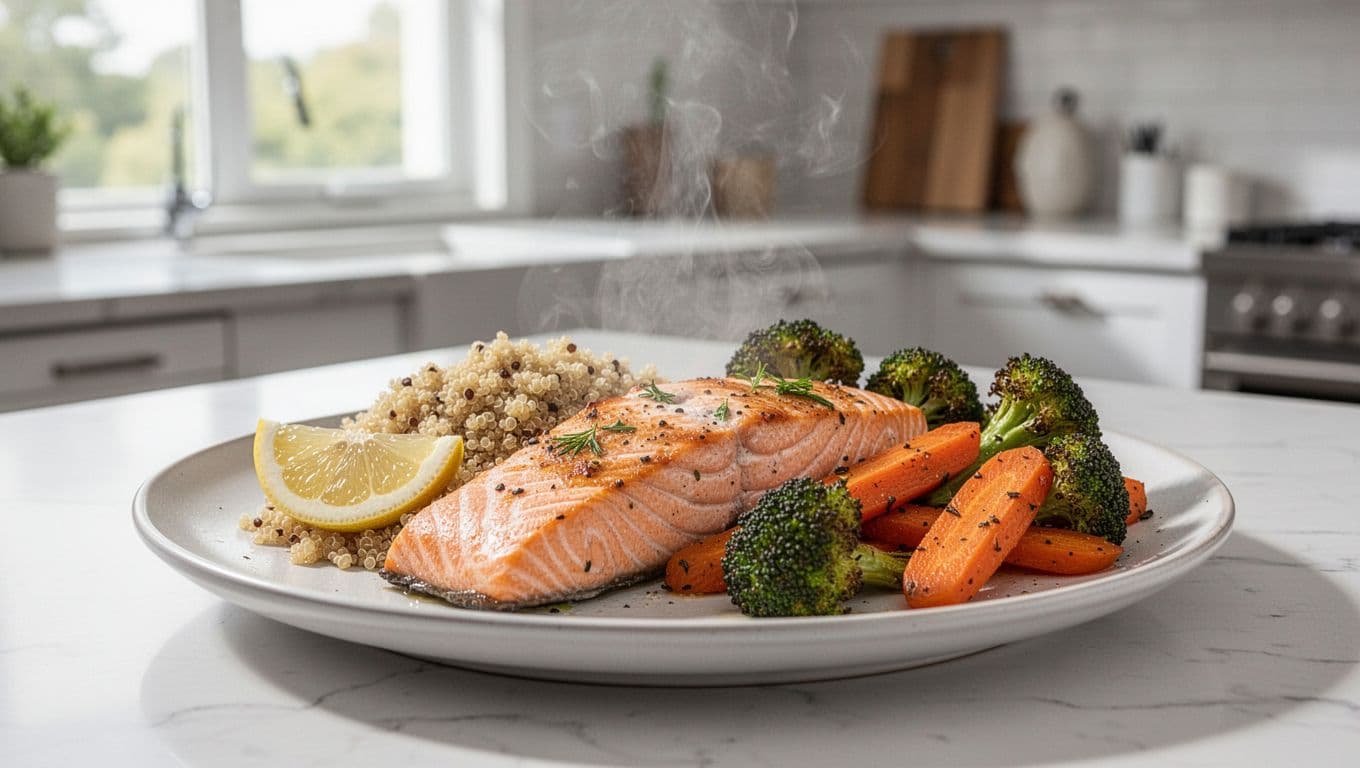
A DASH grocery list works best when it’s built from repeat ingredients, not one-time recipes. You’re stocking building blocks for healthy food: mix, match, and keep moving.
Use this as your starter list for one week (adjust quantities for your household):
- Fruits: apples, bananas, oranges, berries (fresh or frozen), grapes
- Vegetables: spinach or mixed greens, broccoli, carrots, bell peppers, cucumbers, tomatoes, green beans (frozen is fine)
- Whole grains: oats, brown rice, quinoa, whole-grain bread or tortillas, whole-grain pasta
- Proteins: salmon or other fish, chicken breast, eggs, low-sodium canned tuna, low-sodium beans (chickpeas, black beans), tofu (optional)
- Low-fat dairy: plain Greek yogurt, low-fat milk, cottage cheese (optional)
- Healthy fats and flavor: olive oil, unsalted nuts, chia or ground flax, garlic, onions, lemons, vinegar, black pepper, cinnamon, salt-free seasoning blends
- Low-sodium helpers: low-sodium broth, no-salt-added canned tomatoes, hummus
Sodium is the usual “hidden trap” for beginners. Broth, sauces, breads, and canned soups can stack salt fast. If you want a clear set of swaps that keep flavor strong, use this internal resource: low-sodium pantry swaps.
For a printable, doctor-style checklist, this PDF is handy: DASH diet shopping list PDF.
If you want to learn which staples matter most for a heart healthy diet, this internal guide is a strong companion: heart-healthy foods guide.
Conclusion
A beginner DASH diet meal plan doesn’t need fancy recipes. It needs a few repeat meals, a simple grocery list, and a lower-sodium pantry. When your week is built on plants, whole grains, beans, and plain dairy, you’re practicing nutrition to prevent illness in the most normal way possible.
Start with two anchor meals, shop once, and repeat the pattern for seven days. Then ask yourself: which meal felt easiest to keep? That’s the one to build on next week.


0 Comments