You can eat well, stay active, and keep your LDL cholesterol in a decent range, then a heart attack shows up in the family like an uninvited guest, signaling a family history of heart disease. That’s often when people hear a new term: Lipoprotein(a), or Lp(a).
The lipoprotein(a) test is a simple blood test, but it answers a different question than a standard cholesterol panel. It doesn’t measure yesterday’s choices; it often reflects the cards you were dealt at birth. The good news is that even if Lp(a) is high, your daily habits still have real power.
Lp(a) explained in plain English and why it’s different from LDL cholesterol
Think of LDL cholesterol as cargo trucks carrying cholesterol through your bloodstream. Lipoprotein(a), or Lp(a), is like an LDL truck with an extra “sticky” attachment on it (a protein called apolipoprotein(a)). That sticky part makes it more dangerous for the arteries; it promotes inflammation and blood clots, leading to plaque buildup, and it’s harder for the body to clear the mess.
Lp(a) matters because higher levels are linked with a higher lifetime risk of heart attack, stroke, aortic stenosis (a stiffening of the aortic valve), and cardiovascular disease. It’s not just “more cholesterol.” It’s a specific particle that can add risk even when other numbers look fine. The National Heart, Lung, and Blood Institute explains the basics well in this overview of what elevated Lp(a) can mean.
Here’s the part that surprises many health-minded people: Lipoprotein(a), or Lp(a), is mostly genetic. For most of us, it stays fairly stable across life. That’s why a person can follow a careful routine, lots of vegetables, regular workouts, and still have high Lp(a) as an independent risk factor.
So if diet and exercise don’t change it much, why test it? Because knowing your Lp(a) helps you and your clinician decide how aggressive to be with the risk factors you can change, like LDL cholesterol, blood pressure, smoking, and blood sugar.
What the lipoprotein(a) test means, and how to read the result
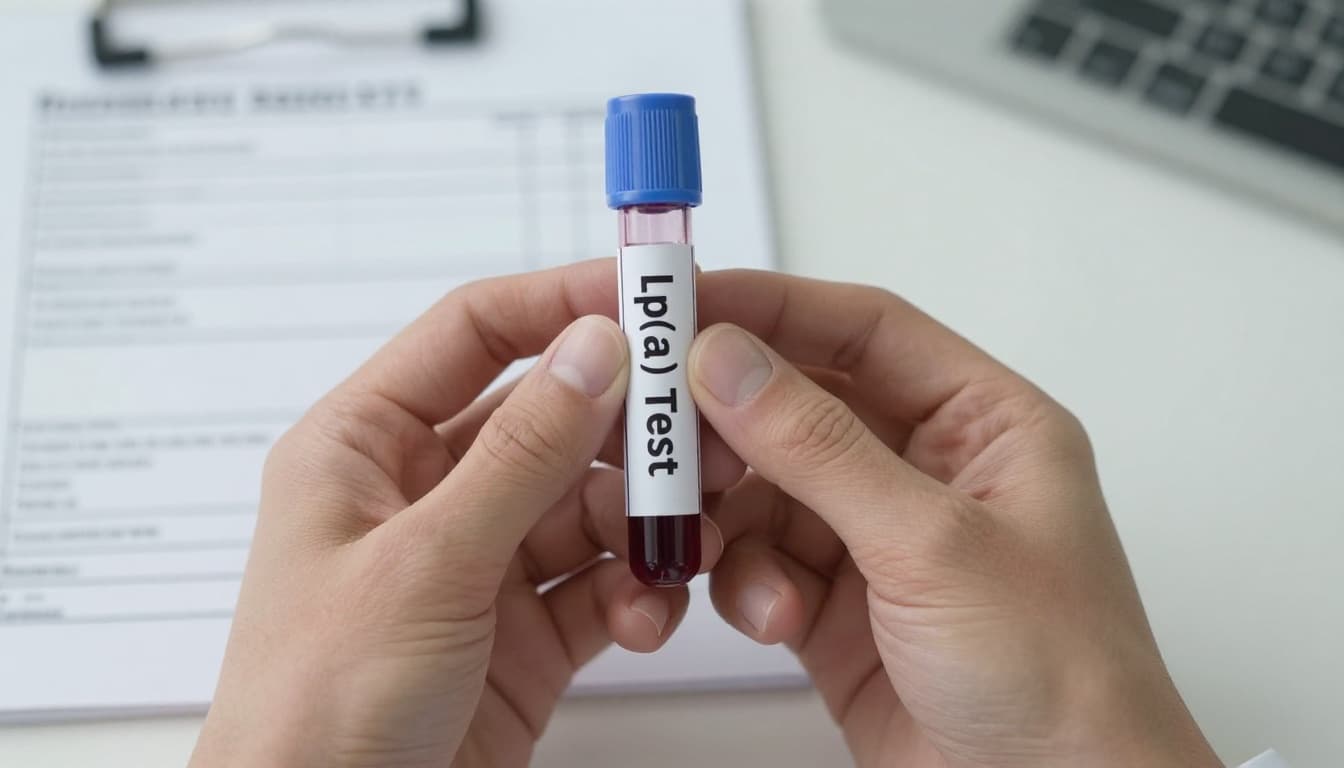
A Lipoprotein(a) blood test, distinct from a standard lipid panel, is usually a standard blood draw for Lp(a) screening. Many labs don’t require fasting, but follow your clinic’s instructions because they may bundle it with other tests.
Why the units can be confusing (mg/dL vs nmol/L)
Lp(a) may be reported as mg/dL or nmol/L. These aren’t interchangeable in a simple way because Lp(a) particles can vary in size between people. If your result is in one unit and your friend’s is in another, it’s not a clean apples-to-apples comparison.
Many experts prefer nmol/L because it reflects particle number more directly, but either unit can be useful if your lab uses a standardized method and your clinician interprets it correctly.
Common cut points clinicians use
Below is a practical reference table used in many guideline summaries and clinical articles:
| Lp(a) risk category | nmol/L | mg/dL | What it suggests |
|---|---|---|---|
| Lower added risk | <75 | <30 | Less extra risk from Lp(a) |
| Intermediate | 75 to 125 | 30 to 50 | Risk may rise, depends on other factors |
| Higher risk | ≥125 | ≥50 | Meaningful added lifetime risk |
A single number isn’t a diagnosis. It’s more like a weather report. A “high” Lp(a) result doesn’t mean something bad will happen tomorrow, but it can mean the long-term forecast is rougher unless you manage Lp(a) and the rest of your risk factors.
For a clinician-focused summary of how Lp(a) can refine cardiovascular risk, see this review on Lp(a) testing for ASCVD risk. For a patient-friendly update, Harvard Health also has a clear explainer on testing and treatment.
Who should ask for Lp(a) testing, and what habits still help if it’s high
Recent guidance shared by major heart organizations has moved toward a simple message: most adults should measure Lipoprotein(a) at least once. Since levels are usually stable, it’s often a one-time check that can sharpen your prevention plan.
Some people have an even stronger reason to ask, including those with a family history of premature heart disease, known familial hypercholesterolemia, unexpected heart disease despite “normal” cholesterol, or early aortic valve problems. The CDC summarizes these family history connections in its page on Lp(a) and inherited risk.
If Lp(a) is high, what can you actually do?
You can’t “out-salad” your genes, but you can lower total risk. Picture Lp(a) as a match and your other risk factors as dry leaves. The fewer dry leaves around, the less likely a spark turns into a fire.
Start with the basics that keep paying off to prevent the progression of heart disease:
- Adopt a healthy lifestyle by building meals around healthy food you actually enjoy, then repeat them. A healthy diet doesn’t need perfection; it needs consistency.
- Follow a heart healthy diet pattern: vegetables, beans, nuts, olive oil, fish when possible, and fewer ultra-processed foods. This is the kind of healthy nutrition that supports better LDL, blood pressure, and blood sugar.
- Pair eating with movement and exercise. A healthy living diet and exercise routine beats short bursts of intensity followed by long gaps.
- Keep activity realistic: walking, cycling, swimming, strength training. Think sports and exercise for long life, not punishment workouts.
- Treat food as prevention. Good nutrition to prevent illness helps you control the risks Lp(a) can’t control.
Clinically, many people with high Lp(a) benefit from more aggressive LDL lowering (often with statins and sometimes PCSK9 inhibitors or additional medications). Some treatments can reduce Lp(a) a bit, and specialized therapies like lipoprotein apheresis exist for select high-risk patients. New Lp(a)-lowering medicines are in late-stage trials, but for now, the strongest, proven strategy is still lowering overall cardiovascular risk.

Conclusion: Use the test to make your plan smarter, not scarier
The Lipoprotein(a) blood test is a powerful tool for prevention, a straightforward way to spot inherited risk that a regular cholesterol panel can miss. If your number is high, it doesn’t erase your good habits; it makes them more important and more targeted. Managing these levels helps reduce the risk of stroke and overall cardiovascular disease. Keep your focus on what moves the needle: LDL, blood pressure, smoking, blood sugar, sleep, and a routine you can live with. While the number is genetic, the outcome is influenced by choices that protect your long-term heart health.


0 Comments