Can a small handful of nuts really change a blood test? In many cases, yes. Research through March 2026 keeps pointing in the same direction: when nuts replace less healthy snacks, LDL cholesterol often moves down.
That doesn’t make nuts magic. It does make them one of the simplest forms of healthy food you can keep in a pantry. Below, you’ll find the best nuts for cholesterol, the amount that fits most people, and easy ways to work them into a healthy food diet without turning meals into math.
Why nuts help lower cholesterol in the first place
Nuts help because they change the fat mix on your plate. Most are rich in unsaturated fats, while also bringing fiber, plant sterols, and antioxidants. In plain terms, they give your body better building blocks.
That matters because LDL, the so-called bad cholesterol, often rises when saturated fat crowds the menu. When you swap pastries, chips, or processed meat snacks for nuts, you usually lower saturated fat and raise the quality of your meals. Mayo Clinic’s guide to nuts and heart health explains this pattern well.
A 2026 meta-analysis of 113 trials found that daily nut intake lowered total cholesterol and LDL, with small triglyceride benefits too. The average study dose was about 45.5 grams a day, which is roughly 1.5 ounces. Still, more isn’t always better in real life.
Nuts work best inside a heart healthy diet, not as a rescue move after a fast-food lunch. That’s why they pair so well with the Portfolio Diet to Lower LDL Cholesterol, which combines nuts, fiber, and plant foods in one repeatable pattern.
This is healthy nutrition in its most useful form, quiet, steady, and practical. That’s what nutrition to prevent illness often looks like.
The best nuts for cholesterol, side by side
Some nuts show up more often in cholesterol research. That doesn’t mean the others are weak. It simply means a few standouts keep earning a place at the table.
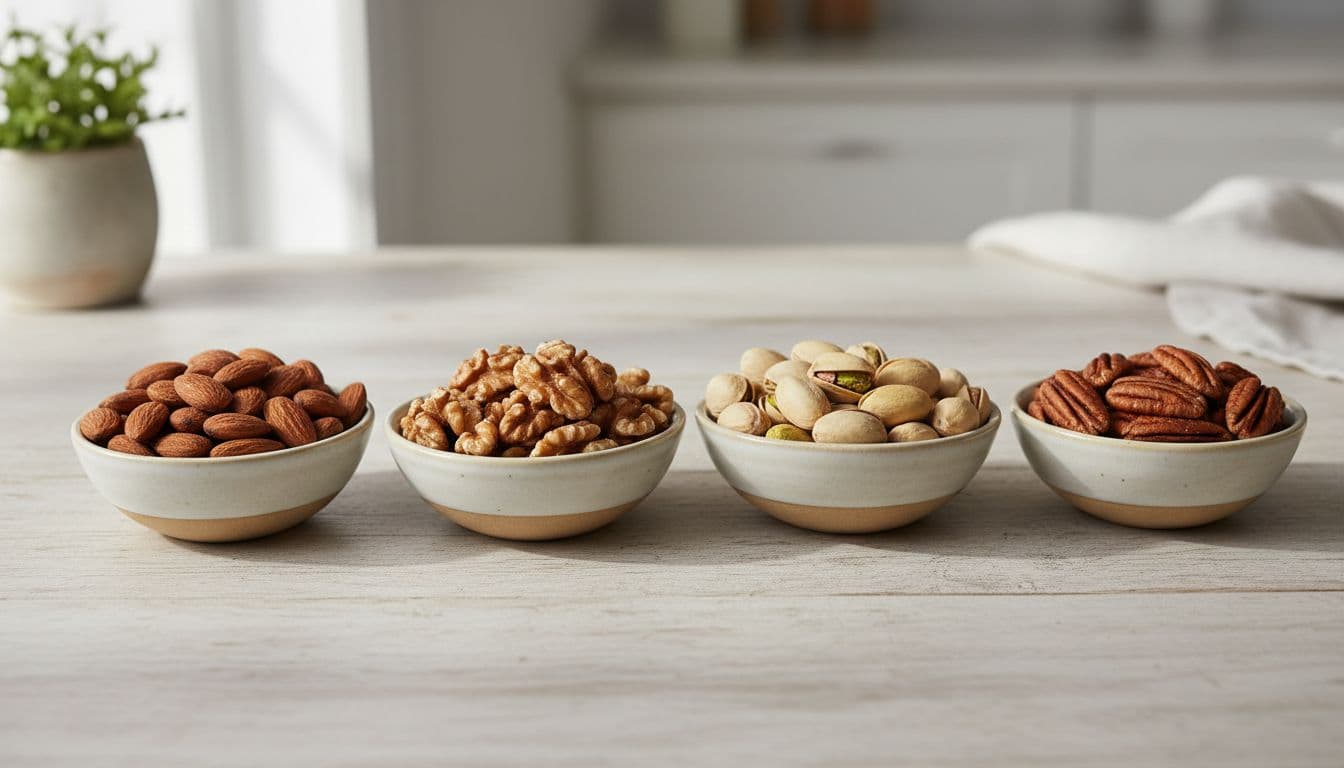
This quick comparison makes the choice easier:
| Nut | Why it stands out | Simple daily amount |
|---|---|---|
| Walnuts | Rich in plant omega-3 fats, often linked with LDL and triglyceride improvement | 1 ounce |
| Almonds | Reliable for LDL lowering, with fiber and monounsaturated fat | 1 ounce |
| Pistachios | A strong mix of unsaturated fat, fiber, and plant sterols | 1 ounce |
| Pecans | Fresh 2026 review data suggests strong LDL and total cholesterol benefits | 1 ounce |
Walnuts often get extra attention because of their omega-3 fat content. Almonds are a close second because they’re easy to find, easy to portion, and well studied. Pistachios bring a nice bonus: shells slow you down, which helps portion control.
Pecans have gained fresh interest after a 25-year review of 52 studies, summarized in this 2026 pecan research report. Still, the big picture matters more than picking a single winner. If you enjoy almonds more than pecans, go with the nut you’ll actually eat.
Raw or dry-roasted nuts are the safest bet. Heavily salted, honey-roasted, or candy-coated versions can blur the benefit fast.
How much to eat each day, and when to stop
For most adults, 1 ounce a day is the sweet spot. That’s about a small handful. It’s enough to help, but not so much that calories sneak up on you.
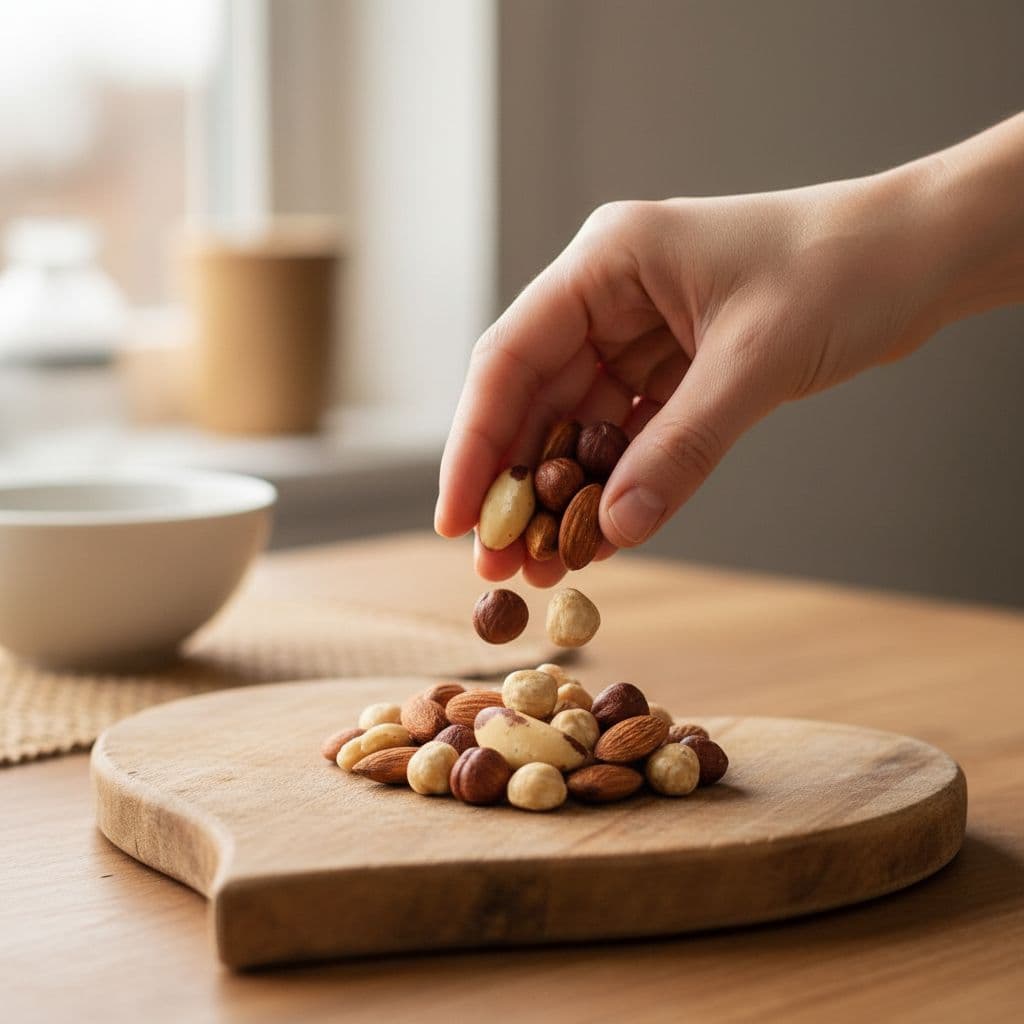
For most people, 1 ounce most days works better than a giant portion once in a while.
Some studies use 1.5 ounces a day, and that can fit well if nuts replace cookies, crackers, or chips. However, tossing nuts on top of an already full diet is like pouring more fuel into a parked car. Good fuel still has calories.
A few simple rules help:
- Use nuts as a swap: Replace a less helpful snack instead of adding extra food.
- Pre-portion them: A bag can turn one serving into four without much warning.
- Choose plain versions: Unsalted or lightly salted nuts usually fit better, especially if blood pressure matters.
Nut butters can count too, but they’re easier to overeat. Measure a spoonful at first so your eye learns what a serving looks like.
This is where nuts for cholesterol connect to a healthy living diet and exercise routine. One smart snack won’t cancel a sedentary week, but it does support a better daily pattern.
Easy ways to fit nuts into everyday meals
Nuts should feel easy, not precious. Sprinkle walnuts over oatmeal, stir almonds into yogurt, add pistachios to a salad, or toss pecans into a grain bowl. A healthy food diet gets easier when these swaps become automatic.

Photo by Andreea Ch
Nuts also work better when they share the plate with fiber-rich foods. Oats, beans, fruit, and vegetables help cholesterol from another angle, which is why this guide to Soluble Fiber for Reducing LDL pairs so well with daily nuts.
A few low-effort ideas work for almost anyone:
- Breakfast: Oatmeal with almonds or walnuts
- Lunch: Salad with pistachios instead of croutons
- Snack: One ounce of mixed nuts with fruit
- Dinner: Pecans on roasted vegetables or brown rice
Keep a jar on the counter, or stash portioned packs in a work bag. The easier the choice, the more likely you’ll repeat it.
Also, don’t forget movement. Nuts support the plan, but sports and exercise for long life still matter. A brisk walk, some cycling, or two weekly strength sessions help the whole picture.
The bottom line
The best nuts for cholesterol are the ones you’ll eat often and in the right amount. Walnuts, almonds, pistachios, and pecans all have a strong case, and 1 ounce a day fits most people well. Pair that habit with fiber-rich meals and regular movement, and a small handful starts pulling real weight.

0 Comments