If your LDL cholesterol is creeping up, the answer may be sitting in your pantry. A small handful of nuts can do more than curb hunger. It can shift the kind of fat you eat, add fiber, and support a steadier heart healthy diet.
Recent evidence through early 2026 points in the same direction: eating nuts most days can help lower LDL, especially when they replace less-helpful snacks. The trick is knowing which nuts to choose, and how much is enough without going overboard.
Why nuts help lower LDL in the first place
Nuts work because they change the chemistry of a meal. They bring mostly unsaturated fats, not much saturated fat, plus fiber, plant sterols, and minerals like magnesium. That mix can help your body handle cholesterol better.
Think of LDL like grease that sticks too easily. Nuts don’t scrub it away on their own, but they help change the cooking oil in the system. Over time, that matters.
A large research summary discussed in early 2026 found that daily nut intake, often around 45 grams, lowered LDL, total cholesterol, triglycerides, and apolipoprotein B. Earlier clinical comparisons of different tree nuts also showed broad lipid benefits across several nut types, as seen in this meta-analysis of clinical trials on tree nuts and blood lipids.
Still, nuts aren’t magic. A bowl of pistachios can’t cancel out a steady stream of pastries, processed meat, and butter-heavy meals. They work best inside a pattern that also includes oats, beans, fruit, and vegetables. If you want a smart pairing, this guide to soluble fiber and LDL-lowering meals fits naturally beside daily nuts.
The best nuts for lowering LDL
When people look for nuts for lowering LDL, they usually want one clear winner. Real life is messier. No single nut wins every study, but a few keep showing up near the front.
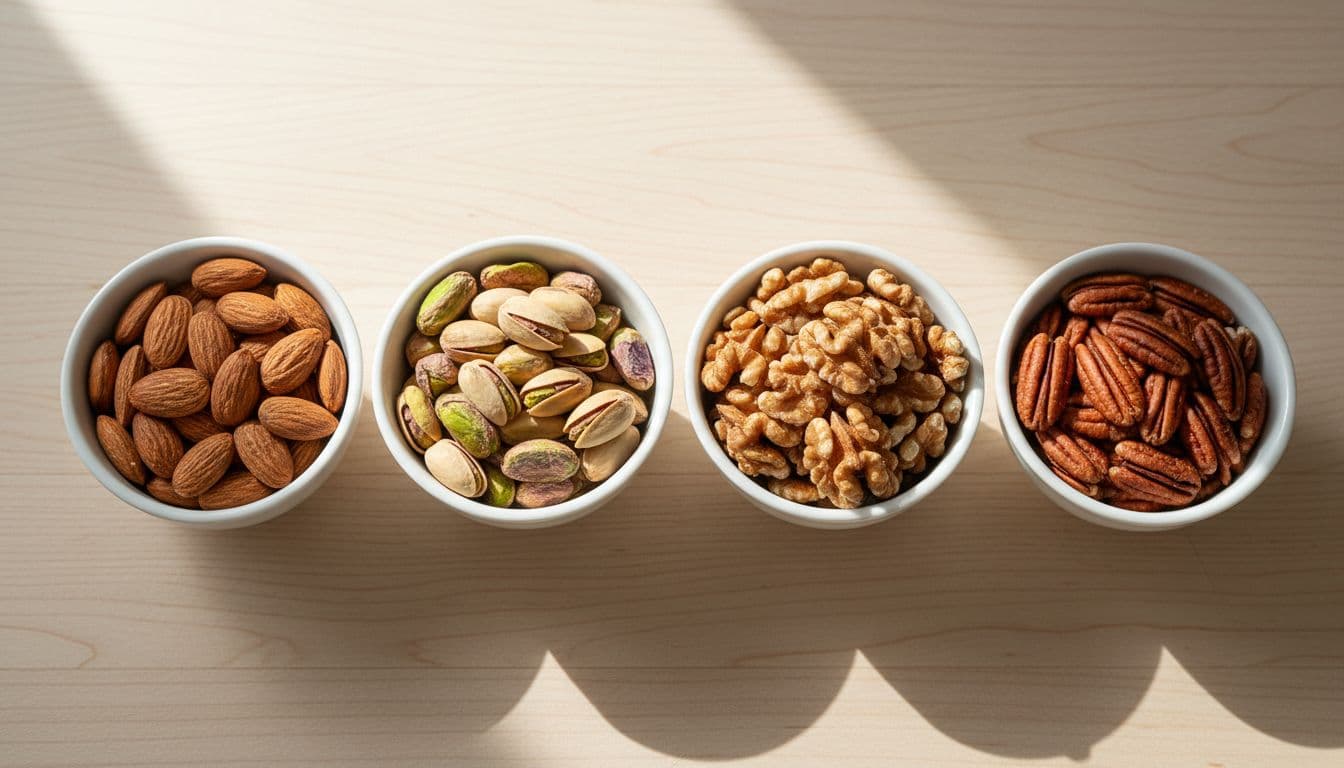
This quick comparison makes the best options easier to scan:
| Nut | Why it stands out | Simple daily portion | | | — | — | | Almonds | Well studied, rich in fiber, vitamin E, and unsaturated fat | 1 ounce, about 23 almonds | | Walnuts | Provide ALA omega-3 fat, helpful in a broader heart-focused pattern | 1 ounce, about 14 halves | | Pistachios | Offer plant protein, fiber, and sterols, plus good crunch for snacking | 1 ounce, about 49 kernels | | Pecans | Rich in monounsaturated fats and polyphenols | 1 ounce, about 19 halves |
Almonds are often the easiest place to start. A 2025 trial in adults with metabolic syndrome found that about 45 almonds a day improved LDL and total cholesterol without causing weight gain.
Walnuts earn their place because they bring a different fat profile. If you don’t eat much fish, walnuts help round out a healthy nutrition plan.
Pistachios are also strong contenders because they’re satisfying and slower to eat, especially in the shell. That can help with portion control.
Pecans have fresh momentum too. A recent review highlighted in ScienceDaily’s report on pecans and cholesterol found regular pecan intake improved LDL and other heart markers over time.
Peanuts deserve a mention as well. They aren’t tree nuts, but they still offer healthy fats and can fit a healthy food diet on a tighter budget. If you want a full eating pattern built around nuts, fiber, and plant foods, this portfolio diet plan for lower LDL is a practical next step.
How much nuts should you eat each day?
For most adults, 30 to 45 grams a day is a smart target. That’s about 1 to 1.5 ounces, or a small handful. Recent research summaries suggest the wider effective range is about 30 to 60 grams daily, but you don’t need to chase the top end to see benefits.
The key is replacement. Swap nuts in for chips, pastries, candy, or processed meat snacks. That’s where the LDL benefit gets stronger.
Best results come when nuts replace less-helpful foods, not when they simply pile on top of the same routine.
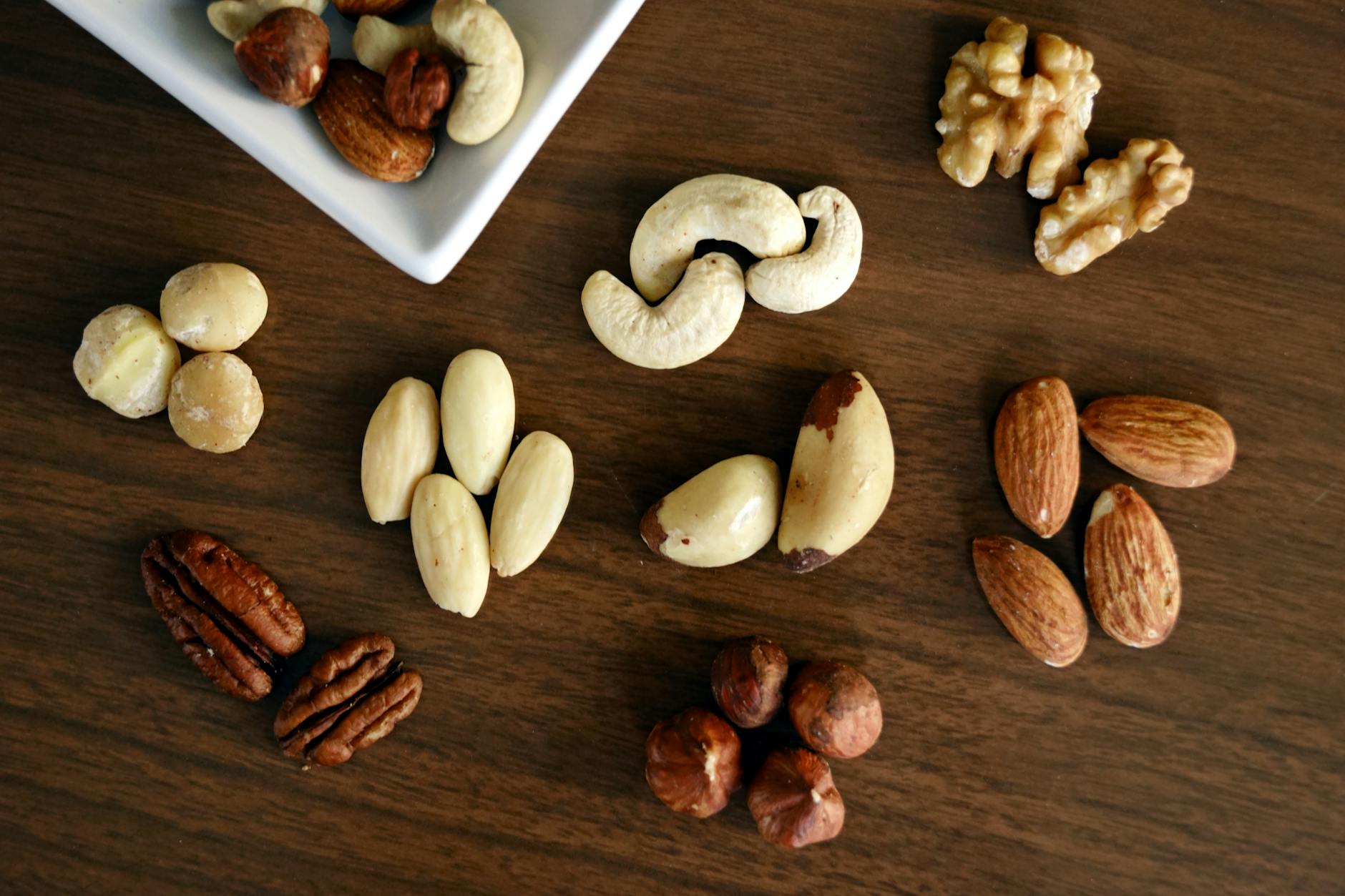
Photo by Marta Branco
Raw and dry-roasted nuts are the easiest picks. Lightly salted is usually fine for many people, but sugar-coated, honey-roasted, or chocolate-covered versions change the picture fast. Nut butters can work too, although it’s easier to overeat them. Two tablespoons is a fair serving.
If you’re watching body weight, pre-portion nuts into small containers. That tiny move helps a lot. Nuts are energy-dense, but studies often show little or no weight gain when they replace less-filling snack foods.
People with a tree nut allergy should obviously avoid them, and anyone with a medical condition that affects diet should get personal advice first.
How to make nuts part of a real heart-healthy routine
In a healthy food plan, nuts are a support beam, not the whole house. They do their best work next to oatmeal, lentils, berries, olive oil, beans, yogurt, and plenty of vegetables.
A simple pattern looks like this: walnuts in oats at breakfast, pistachios as an afternoon snack, or chopped almonds on a salad at lunch. That kind of nutrition to prevent illness feels ordinary, which is exactly why it lasts.
This is also where a healthy living diet and exercise rhythm matters. A 20-minute walk after dinner won’t make headlines, but it’s the sort of sports and exercise for long life habit that people actually keep. When food and movement pull in the same direction, cholesterol numbers often respond better.
If you’re building a wider heart healthy diet, keep nuts in rotation with other kitchen staples. This heart-healthy foods guide can help you set up meals that support LDL from more than one angle.
The bottom line
The best nuts for lowering LDL are the ones you’ll eat often enough to matter. Almonds, walnuts, pistachios, pecans, and even peanuts can all help when they replace less-helpful foods. Start with one daily handful, keep the rest of your meals grounded in healthy nutrition, and let consistency do the heavy lifting.

0 Comments