Your cholesterol report can look “okay” at first glance, yet your heart risk still nags at you. That’s because LDL is only part of the story. Another piece can sit quietly in the background, tied to triglycerides and the leftovers from fat transport in your blood.
That piece is remnant cholesterol. Think of it like the crumbs after a meal. They’re small, easy to ignore, and they still make a mess if they stick around.
This guide breaks down what remnant cholesterol is, why it matters, and how to start lowering it with a simple 2-week food swap plan built around healthy food you’ll actually want to eat.

What remnant cholesterol is (and where it comes from)
Remnant cholesterol is the cholesterol inside triglyceride-rich particles that are “left over” after your body starts clearing them from the blood. These remnants mainly come from VLDL and IDL particles (and chylomicron remnants after meals). In plain terms, they are the leftovers from transporting fat and energy.
Many standard lipid panels don’t list remnant cholesterol. However, it’s often estimated with simple math when you have total cholesterol, LDL-C, and HDL-C.
Here’s the quick idea:
- Total cholesterol includes cholesterol carried by many particles.
- HDL-C is the “return truck” that brings cholesterol back to the liver.
- LDL-C is one major delivery truck, but not the only one.
- Remnant cholesterol is what’s left in certain other delivery particles after they’ve dropped off triglycerides.
This simple table shows the common calculation people use when values are in mg/dL.
| What you want | Simple estimate |
|---|---|
| Remnant cholesterol | Total cholesterol minus LDL-C minus HDL-C |
Calculated values can be less reliable when triglycerides are very high, and some labs use different LDL methods. Still, the concept helps you see why a “normal-ish” LDL doesn’t always mean a clean bill of health.
For a deeper research discussion on why remnant cholesterol is getting more attention in risk assessment, see this recent paper in Scientific Reports: emerging importance of remnant cholesterol.
If triglycerides tend to run high, remnant cholesterol often rises too, even when LDL looks acceptable.
Why remnant cholesterol matters for heart disease risk
Remnant particles can enter artery walls and contribute to plaque. They also travel with triglycerides, and high triglycerides often come with insulin resistance, fatty liver, and other patterns that strain the cardiovascular system.
So why care, if you already focus on a heart healthy diet and train regularly? Because remnants are part of the “residual risk” people can have even after improving LDL-C. A large body of literature links remnant cholesterol to atherosclerosis, inflammation signals, and worse outcomes over time. One helpful overview is this open-access review: remnant cholesterol and atherosclerotic cardiovascular disease.
Newer studies keep reinforcing the point: higher remnant cholesterol tracks with higher cardiovascular and all-cause mortality in population data. You can skim one example here: long-term association with mortality.
Genetics research also supports a cause-and-effect role. Mendelian randomization studies are useful because they reduce the “maybe it’s just lifestyle” debate. This AHA journal paper is a solid reference: independent causal effect of remnant cholesterol.
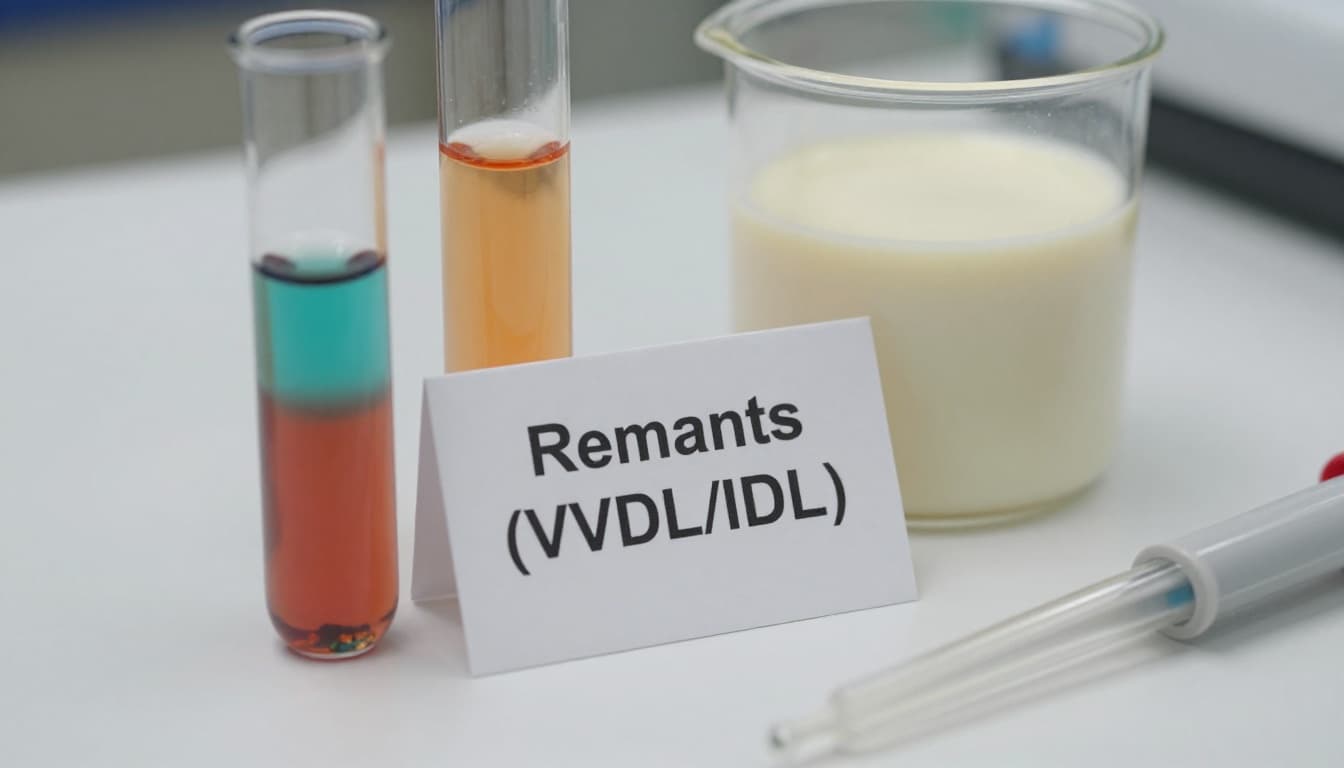
The practical takeaway is simple: remnant cholesterol is closely tied to the mix of carbs, fats, and habits that push triglycerides up, and that mix can quietly speed up plaque buildup.
If you like tracking markers, it may also help to understand the bigger family of “atherogenic particles.” A useful companion read is ApoB vs LDL: which predicts heart risk better, since ApoB reflects the number of particles that can cause trouble.
A 2-week food swap plan that targets remnants (no perfection required)
Lowering remnant cholesterol works best when you stop trying to “eat clean” and start making repeatable swaps. Picture your bloodstream like a sink. The goal isn’t to scrub once. The goal is to stop clogging the drain every day.
This 2-week plan focuses on three levers: fewer refined carbs and added sugars, better fat quality, and more viscous fiber (the gel-forming fiber in oats, beans, and many fruits). It fits a healthy food diet because it’s filling, not punishing.
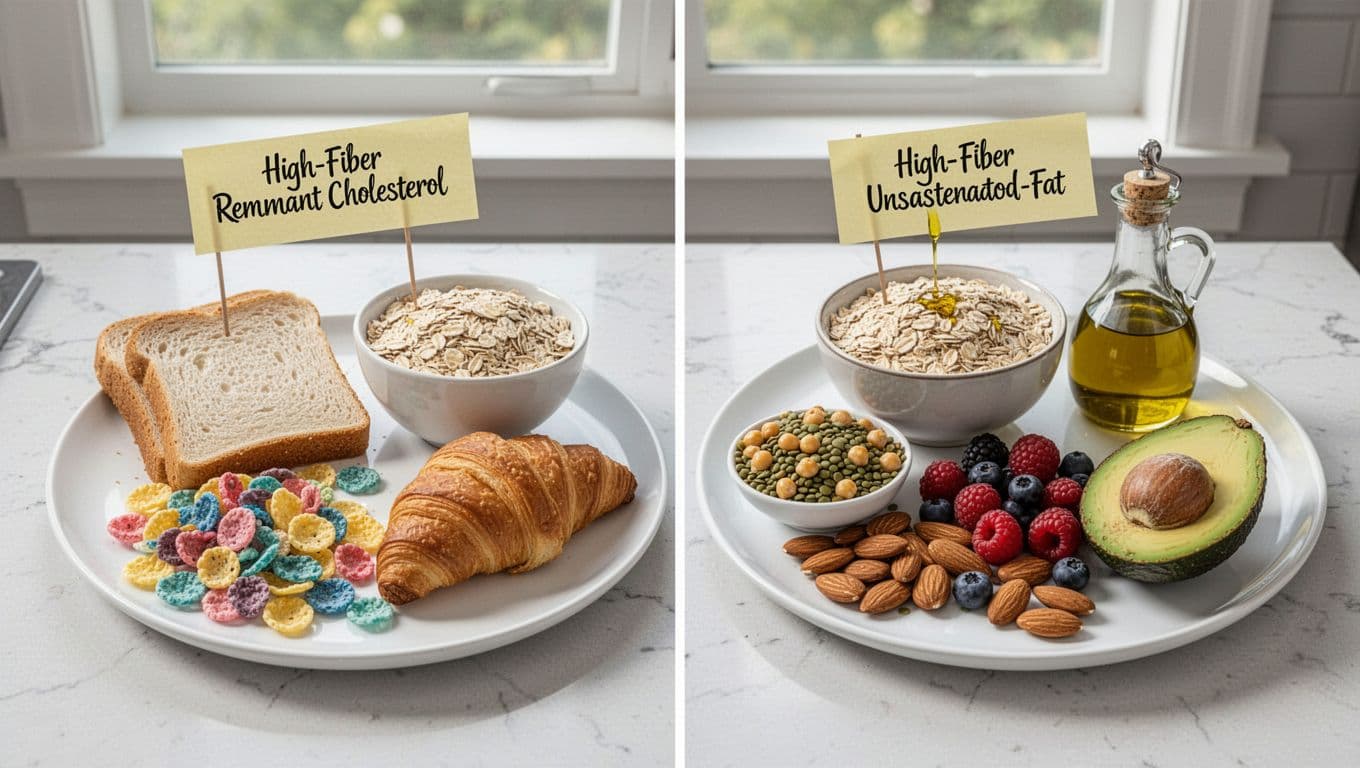
Here’s the structure. Keep portions realistic, and aim for “most days,” not “every day.”
| Days | Main focus | Do this most days |
|---|---|---|
| 1 to 4 | Remove the obvious triglyceride boosters | Replace sweet drinks with water or unsweetened tea, swap pastries and candy for fruit plus nuts |
| 5 to 7 | Build the fiber base | Add oats or barley once daily, include beans or lentils once daily |
| 8 to 10 | Swap the fats | Use olive oil instead of butter, choose nuts or seeds instead of chips |
| 11 to 14 | Lock in a simple rhythm | Repeat 2 breakfasts and 3 lunches you enjoy, keep dinner “protein plus plants plus fiber” |
A few swaps do most of the work:
- Breakfast: sugary cereal to oats with berries and plain yogurt (or soy yogurt).
- Lunch: white-bread sandwich to a bean and veggie bowl with olive oil and lemon.
- Dinner: fatty processed meat to salmon, tofu, or lentils, plus roasted vegetables.
- Snacks: crackers and sweets to apples, carrots with hummus, or a small handful of walnuts.
Food alone matters, yet movement helps your body handle triglycerides better. Pair the plan with a healthy living diet and exercise routine you can repeat: brisk walking after meals, two weekly strength sessions, and one longer easy workout on weekends. That’s what sports and exercise for long life looks like in real life, calm and consistent.
For more meal ideas built from the same staples, use this guide as a shortcut: heart-healthy foods grocery list and meals. If your lab report also shows a high non-HDL number, this related plan may fit well: 2-week food plan to lower non-HDL cholesterol.

This is healthy nutrition with a purpose: steady energy today, and nutrition to prevent illness over the long run.
Conclusion
Remnant cholesterol is easy to miss, yet it can help explain “hidden” heart risk, especially alongside high triglycerides. A few targeted swaps, more fiber, better fats, and fewer refined carbs can shift the pattern fast. Keep your meals simple, repeat what works, and treat your next lab check as feedback, not a verdict. Above all, remnant cholesterol improves when your daily routine becomes quieter, steadier, and easier to keep.


0 Comments