Your cholesterol results can look “fine,” yet still feel unsettling. That’s because the usual LDL number doesn’t always show the full story. Small dense LDL, a key factor in cardiovascular disease and atherosclerosis, is one of the reasons why.
Think of your bloodstream like a hallway. Big, fluffy particles bump along and get noticed. Small, dense ones slip through gaps, hang around longer, and can contribute to atherosclerosis quietly.
The good news is that you can often nudge this pattern in a better direction to lower coronary heart disease risk with a short, practical reset. Below is a 3-week food focus built around meals you can repeat, plus a simple movement layer.
What small dense LDL is, and why it matters for your arteries

LDL isn’t one single thing. It’s a group of particles that carry cholesterol. Some are larger and less dense. Others are smaller and denser, often shortened to sdLDL.
Why does size matter? Because small dense LDL particles, characterized by their smaller LDL particle diameter and particle size, tend to slip into the vascular endothelium more easily. They also oxidize more readily into oxidized LDL, which can irritate the lining of the artery. Over time, that irritation contributes to plaque build-up and the process of atherosclerosis. Due to their heightened atherogenicity, these small particles pose a greater threat to artery health. In plain terms, they behave a bit like fine sand that gets into every crack, not like pebbles you can sweep away.
This pattern shows up a lot alongside higher triglycerides, insulin resistance, belly fat, and type 2 diabetes. So you might see “not terrible” LDL-C, yet still have a more risky mix of particles.
Testing can be confusing. Many standard lipid panels don’t report small dense LDL directly. As an emerging risk factor, small dense LDL requires advanced tests like nuclear magnetic resonance (NMR) or gradient gel electrophoresis to identify lipoprotein subclasses and phenotype pattern B, though they’re not routine everywhere. If you want a clear, patient-friendly rundown of what it is and how it relates to risk, this Medical News Today explainer on small dense LDL lays it out well.
Quick takeaway: when triglycerides run high and HDL runs low, small dense LDL is more likely to be part of the picture, even if LDL-C looks “okay.”
The common lifestyle pattern behind small dense LDL (and what to watch on labs)
 Photo by Public Domain Pictures
Small dense LDL doesn’t usually come from one “bad” food. It’s more like a soundtrack on repeat: lots of refined carbs and refined sugars, not enough fiber, too many ultra-processed snacks, and movement that keeps getting postponed. This lifestyle pattern of high carb intake and low physical activity often ties into metabolic syndrome and insulin resistance, which encourage the formation of small dense LDL.
When carbs are mostly white flour and sweets, triglycerides often rise. Then the body tends to remodel lipoproteins into small dense LDL forms. Alcohol can add fuel too, especially when it’s frequent or paired with sugary mixers. Poor sleep and chronic stress don’t help either, because they can push appetite and blood sugar in the wrong direction.
On your lipid panel, watch for rising triglycerides and falling HDL cholesterol. A few clues often travel together:
- Triglycerides trending up
- HDL cholesterol (“good” cholesterol) trending down
- Non-HDL cholesterol elevated
- Signs of insulin resistance (your clinician may look at glucose, A1c, fasting insulin)
Lifestyle changes are the first line of defense for shifting this pattern.
If you’ve ever wondered whether LDL-C is the best lens, it helps to learn how particle count fits in. Even with statin therapy or lipid-lowering therapy managing LDL-C, small dense LDL can represent a residual risk for coronary artery disease. This internal guide on ApoB vs LDL for heart risk assessment explains why “how many particles” can matter as much as “how much cholesterol.”
For grounded nutrition context, Cleveland Clinic’s overview of how foods impact cholesterol is a solid reference.
This is where healthy nutrition becomes practical, not perfect. You’re aiming for fewer spikes, steadier fuel, and more fiber in the gut, because that’s the direction that supports nutrition to prevent illness over the long run.
A simple 3-week food focus to shift the pattern (without strict tracking)
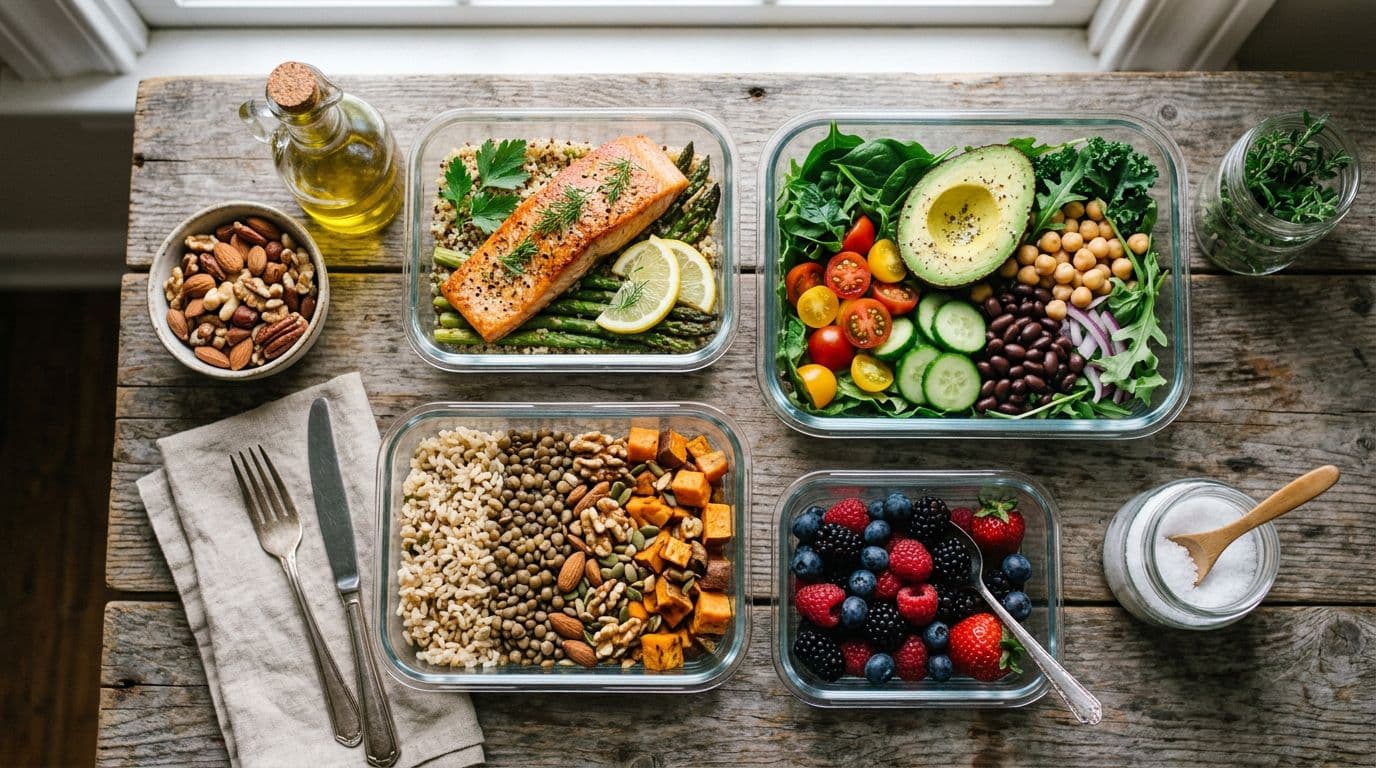
You don’t need a new personality to improve small dense LDL. You need a short runway, then repeatable meals. This 3-week structure keeps the goal clear: lower triglycerides, raise fiber, swap fats, and improve carb quality. That combination supports a more heart healthy diet pattern to help reduce small dense LDL.
Here’s the plan at a glance to lower triglycerides and shift small dense LDL patterns:
| Week | Food focus | What to do most days | Example day (simple, repeatable) |
|---|---|---|---|
| 1 | Fiber base | Add oats or beans daily | Oatmeal with berries, lentil salad, salmon plus roasted vegetables |
| 2 | Fat swaps | Replace butter and fatty meats with olive oil, nuts, seeds | Greek yogurt plus walnuts, chickpea bowl with olive oil, tofu stir-fry |
| 3 | Carb quality | Keep carbs, but choose high-fiber ones and cut sugary extras | Eggs plus sautéed greens, tuna-bean salad, chicken plus quinoa and broccoli |
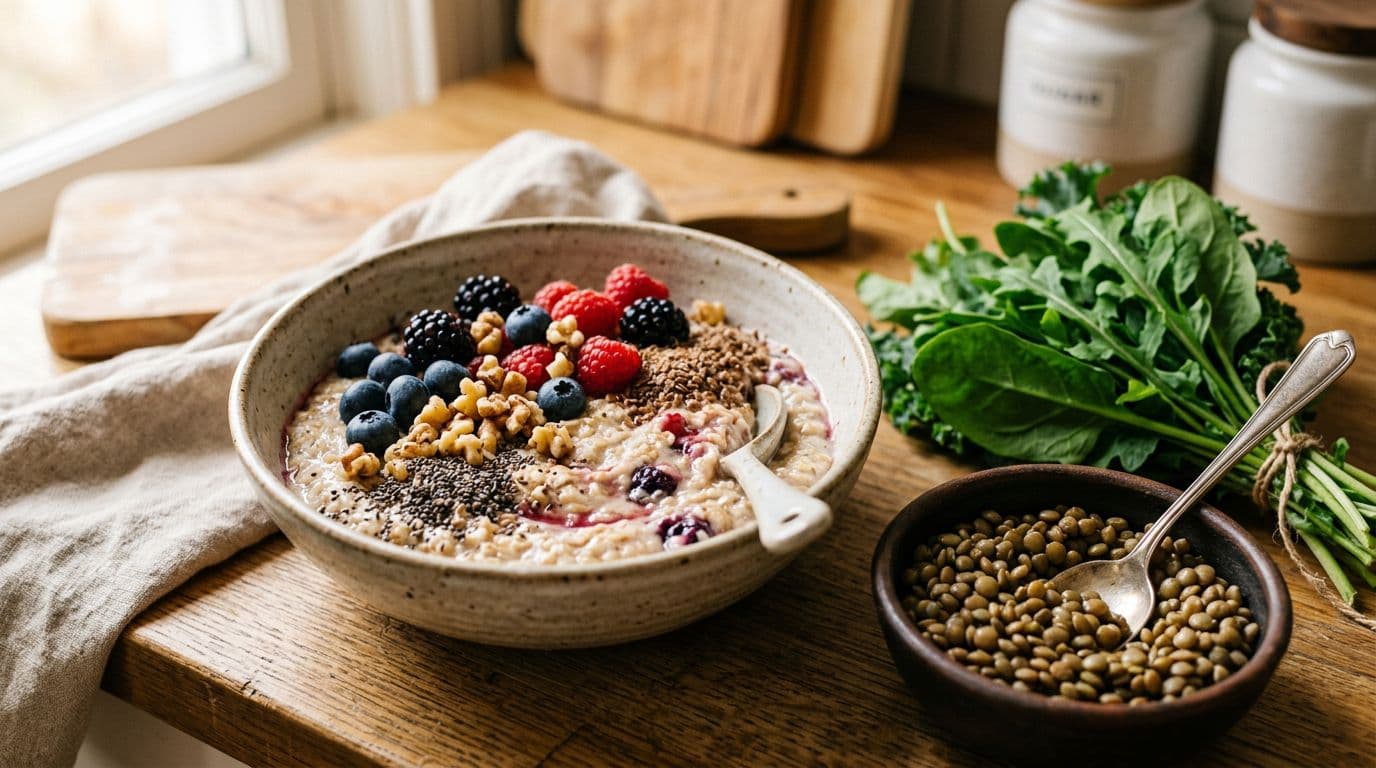
If you want extra structure, borrow a menu and make it yours. This internal high-fiber meal plan for heart health gives a ready-made week that pairs well with Week 1. For shopping ideas and easy meal templates, this heart healthy foods guide can keep your kitchen set up for wins.
One “don’t overthink it” rule helps: build meals from real healthy food, then repeat what you like. That’s how a healthy food diet becomes a routine that improves small dense LDL instead of a project.
A deeper science overview of how eating patterns shift lipids is covered in this Endotext review on diet and lipoproteins, which is dense but trustworthy.
The short “limit list” that helps triglycerides calm down
Keep this simple for three weeks, then reassess:
- Sugary drinks (including sweet coffee drinks)
- Refined sugars in snacks (chips, pastries, candy)
- Heavy saturated fat most days (processed meats, lots of butter, frequent fried foods)
Gotcha: “Low-fat” packaged foods often replace fat with sugar and starch. Your triglycerides can notice fast.
While this whole food approach takes center stage, for some people clinicians might recommend omega-3 fish oil or fibric acid derivatives alongside the diet to help lower triglycerides.
Add movement that your body will repeat

Food works better when your muscles keep using glucose. Aim for a healthy living diet and exercise rhythm that feels almost boring: a brisk 20 to 40-minute walk most days, plus two short strength sessions per week. This pattern supports prevention of myocardial infarction and coronary heart disease while cutting broader cardiovascular disease risk. That’s the backbone of sports and exercise for long life, because it’s realistic and sustainable.
Conclusion
Small dense LDL can feel like a hidden detail on a report, but it often responds well to simple, steady lifestyle changes. These habits effectively reduce the risk of coronary heart disease and atherosclerosis. While statin therapy is common, managing particle size through better daily choices offers additional protection against cardiovascular disease. Focus for three weeks on fiber, better fats, and higher-quality carbs, then layer in repeatable movement. Keep it practical, because consistency is the point. If you’re tracking progress with your clinician, ask which markers matter most for your risk, including small dense LDL, then let your next labs reflect your new heart healthy diet pattern.



0 Comments