A stubborn LDL number can make breakfast feel like a math problem. The good news is simple: soy protein can help lower LDL a little, and the daily target is practical.
Research through April 2026 still points to the same sweet spot, about 25 grams of soy protein a day. That won’t act like a statin, but it can give your heart healthy diet a steady push in the right direction. Here’s how to use it without turning meals into a chore.
Why soy protein helps lower LDL
When people look up soy protein LDL guidance, they usually want one straight answer: does it work? Yes, but think of it as a daily nudge, not a rescue rope. Research summaries through early 2026 show soy protein lowers LDL by about 3 to 4 percent on average. A large review of 46 trials found that a median intake of 25 grams a day for about six weeks cut LDL by roughly 4.76 mg/dL.
That drop is small, but it’s real. Over months and years, small shifts matter, especially when they stack with other smart habits.
Part of the benefit comes from replacement. Swap sausage, cheese, or fatty meat for tofu, tempeh, edamame, or soy milk, and you usually cut saturated fat at the same time. Part may also come from the soy protein itself. An American Heart Association review on soy and cardiovascular disease helped set the stage, and a newer evidence summary on soy protein and heart health shows the basic finding still holds.
Researchers are also studying soy fractions such as B-conglycinin, which may affect how the body handles fats. That’s promising, yet the best human evidence still comes from everyday meals. In other words, the bowl beats the gimmick.
Soy works best inside a bigger pattern. In a healthy food diet, soy pairs well with oats, beans, fruit, vegetables, and olive oil. That’s why it fits naturally in the Portfolio Diet for Lower LDL and other plant-forward plans. Think of soy as one oar in a boat. It helps, but you move faster when fiber, sleep, and daily movement pull with it.
Daily serving goals that work in real life
If lowering LDL is your goal, the clearest daily target is simple.
Aim for about 25 grams of soy protein a day, spread across meals if that feels easier.
You don’t need giant portions. A cup here, a half-cup there, and dinner does the rest. If 25 grams feels far away, start with 10 to 15 grams a day for a week or two. A habit that sticks beats a perfect plan that fades by Friday.

Photo by Polina Tankilevitch
Common soy foods and rough protein counts
These rough serving sizes make the math easier.
| Soy food | Typical serving | Approx. soy protein |
|---|---|---|
| Unsweetened soy milk | 1 cup | about 7 g |
| Tofu, firm | 3 ounces | about 8 to 10 g |
| Tempeh | 3 ounces | about 15 to 16 g |
| Edamame, shelled | 1/2 cup | about 8 to 9 g |
| Soy nuts | 1 ounce | about 11 to 12 g |
The takeaway is clear: you can reach the target with ordinary food, not powders alone. Labels vary by brand, so a quick look at the package helps.
One cup of soy milk plus 3 ounces of tofu already gets you near the halfway point. Add a half-cup of edamame as a snack and the target stops looking huge. The goal is less like climbing a wall and more like walking a few steady blocks.
A simple day might look like oats cooked with soy milk at breakfast, a salad topped with edamame at lunch, and a tofu stir-fry at dinner. That’s healthy food with a job to do. If you use soy protein powder, treat it like backup, not the whole plan. Whole soy foods usually bring more fullness, and they fit healthy nutrition more naturally.
One more point matters. Sweet soy desserts, deep-fried mock meats, and salty processed patties can muddy the water. In a heart healthy diet, the best soy picks are the least fussy ones, plain soy milk, tofu, tempeh, edamame, and roasted soy nuts.
How to make soy part of a lasting heart-healthy routine
Soy works better when it joins the rest of your plate, not when it sits there like a lonely health promise. Pair tofu with brown rice and broccoli. Blend soy milk into a berry smoothie with oats. Add edamame to grain bowls, soups, or chopped salads. Those choices support nutrition to prevent illness because they change the whole meal, not only the protein.
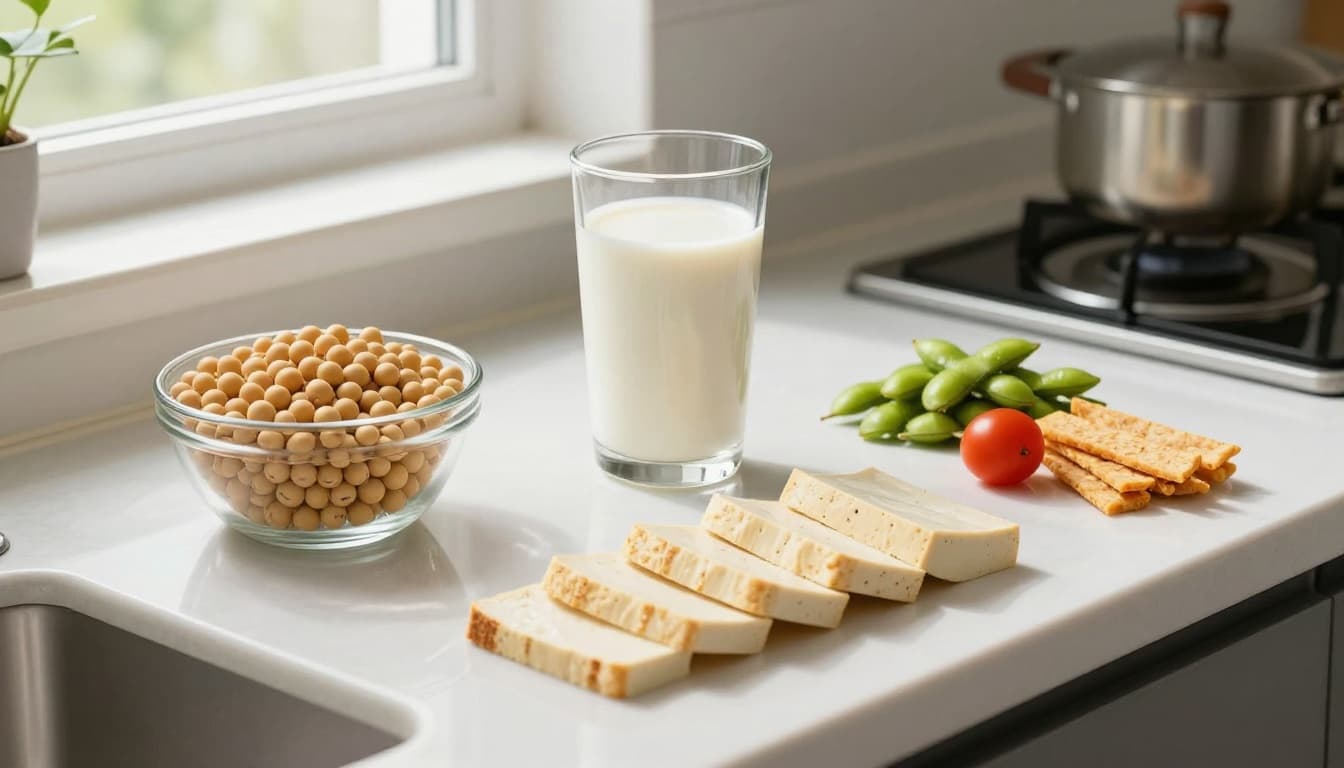
Try to keep soy choices plain when you shop. Unsweetened soy milk is usually a better pick than flavored versions loaded with sugar. Tempeh and tofu soak up ginger, garlic, citrus, and herbs well, so they don’t need heavy creamy sauces.
There’s also a strong pairing with fiber. Soy plus oats or beans is like putting two steady hands on the same wheel. If you want more meal ideas, see this guide to Soluble Fiber to Lower LDL and this practical Heart-Healthy Foods Guide. Newer population research in the Journal of Lipid and Atherosclerosis also keeps exploring how different soy foods connect with lipid patterns.
Food works best when movement backs it up. Pair soy choices with a healthy living diet and exercise routine, not a weekend burst of effort. A brisk walk after dinner, regular strength training, and enough sleep all help your body handle cholesterol better. That’s the quiet rhythm of sports and exercise for long life. It’s not flashy, but it lasts.
A small daily swap can move the needle
Soy won’t wipe out high LDL overnight. Still, a daily 25-gram habit can nudge your numbers down and make your healthy food choices more consistent.
Start with one swap this week, maybe soy milk at breakfast or tofu at dinner. Then repeat it until it feels normal, because the best healthy nutrition often looks ordinary on the plate.
0 Comments