Ever get a blood pressure reading at home that feels “off,” then a different number at the clinic? That swing usually isn’t mystery blood pressure. It’s technique.
If you want to take blood pressure at home and trust the number, you need the basics lined up: the right cuff size, the right timing, a steady posture, and a simple tracking routine you can repeat. Think of it like weighing flour for bread. A small error becomes a whole different loaf.
This guide walks you through the details people skip, then gives you a 7-day tracking sheet you can copy into a notebook or notes app.
Start with the cuff, because “close enough” isn’t close enough
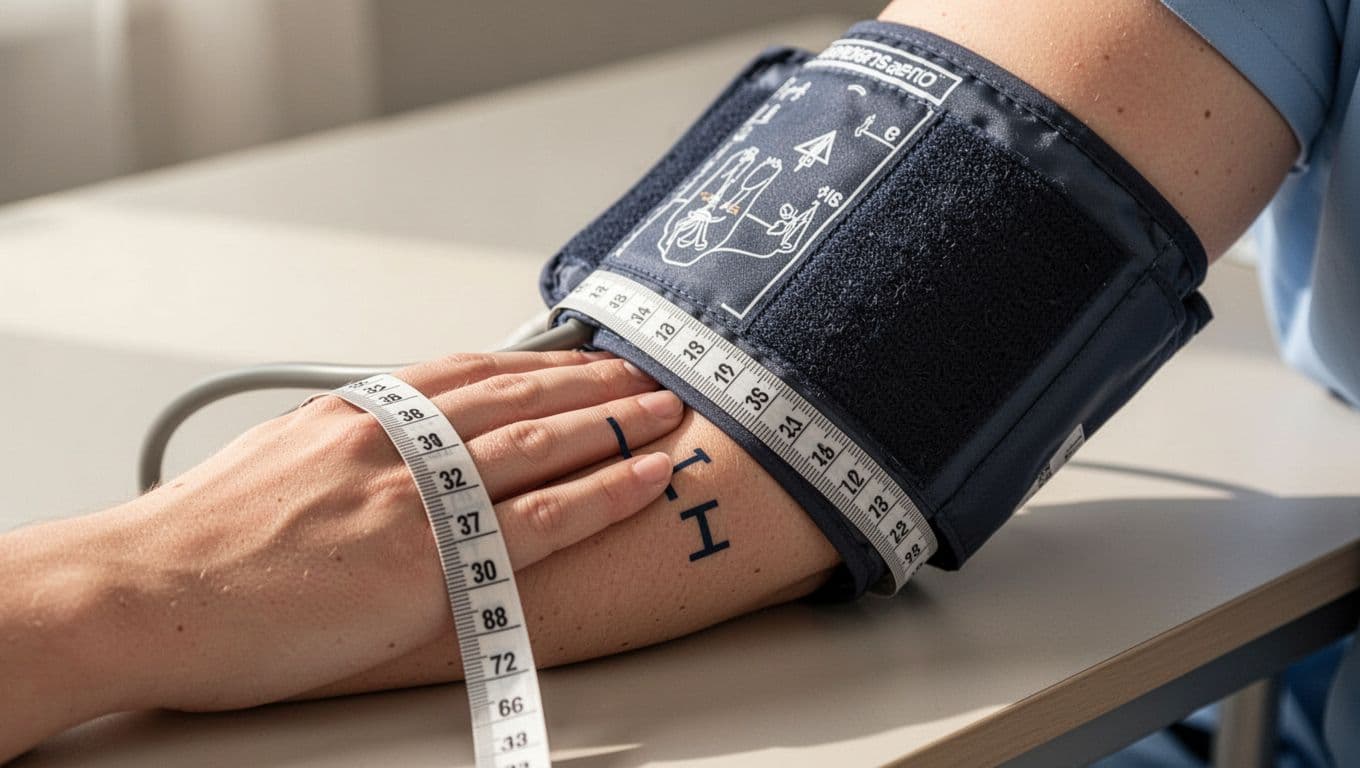
A home monitor is only as accurate as its cuff fit. A cuff that’s too small can read high. A cuff that’s too big can read low. It’s like wearing shoes a size off and wondering why your feet hurt.
First, use an automatic upper-arm cuff monitor when possible. Major guidelines favor upper-arm devices for home use, and the American Heart Association explains why and how to do it in their guide to home blood pressure monitoring.
Next, match the cuff to your arm:
- Measure around your upper arm’s midpoint (halfway between shoulder and elbow).
- Check the monitor’s cuff range in centimeters, then pick the size that includes your number.
- If your arm size sits between two cuff ranges, choose the larger cuff.
Research keeps pointing to cuff sizing as a common weak spot in real-world measurement. If you want context on why this matters, see this Hypertension Research overview on appropriate cuff size and accuracy gaps.
Finally, place the cuff on bare skin. Don’t wrap it over a sleeve, even a thin one. Fabric changes how the cuff tightens.
If your cuff pinches, slides, or leaves deep marks, the fit or placement needs a reset.
Timing and routine: the calm 5 minutes that change the reading
Good home readings come from boring consistency. When you take blood pressure at home at random times, your results often reflect your day, not your baseline.
Most people do best with a simple schedule: morning and evening, around the same times each day. Morning usually means after using the bathroom and before caffeine, breakfast, or meds (unless your clinician told you otherwise). Evening often works before dinner or before bed, after you’ve been sitting quietly.
Before you measure, set the stage:
- Sit quietly for 5 minutes
- Avoid caffeine, alcohol, nicotine, or exercise for 30 minutes
- Empty your bladder
- Skip conversation, texting, or scrolling during the rest period
Mayo Clinic’s practical checklist is a helpful cross-check if you want more detail on routine and device choice: getting the most out of home blood pressure monitoring.
One more timing tip: don’t “chase” a number. If you’re anxious and keep rechecking, your body hears the alarm. Instead, take two readings properly (next section), write them down, then move on.
Posture and arm position: build a stable “photo frame” for your body
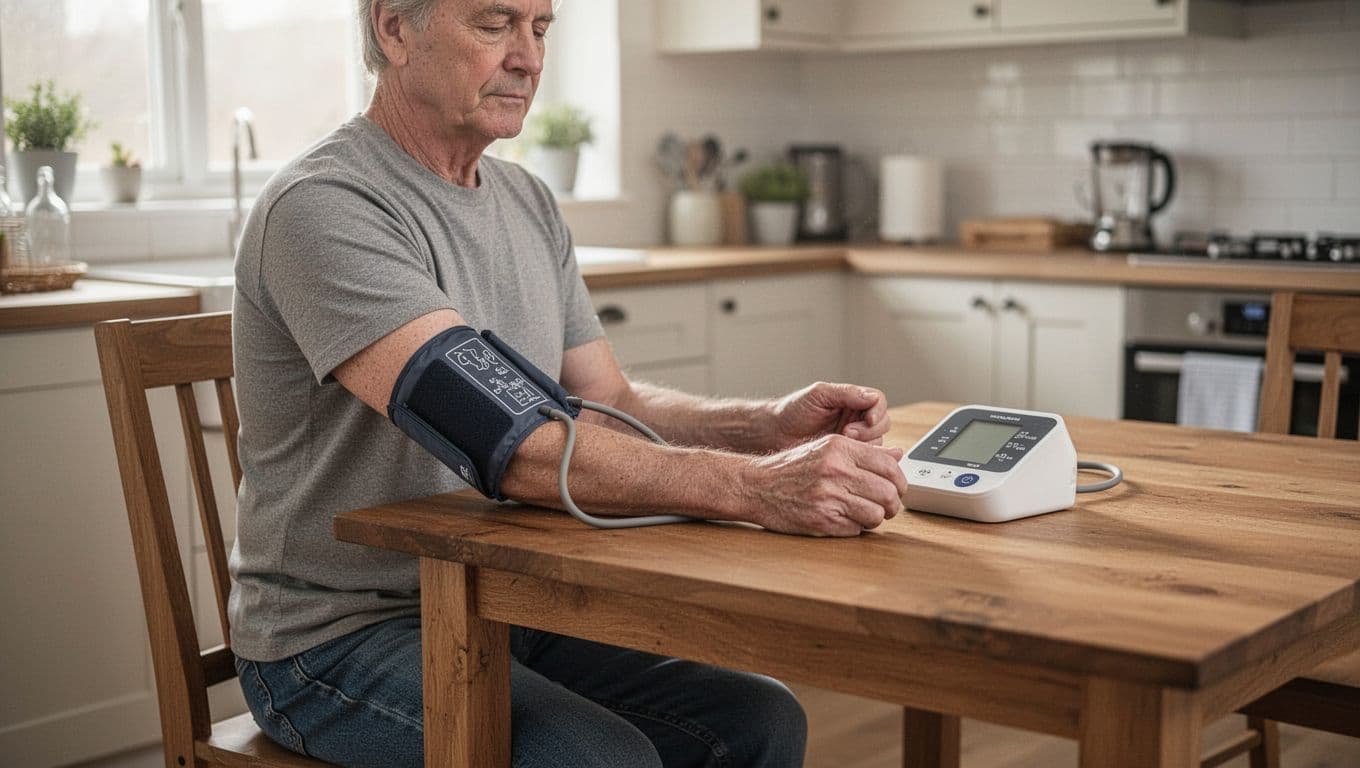
When posture changes, pressure changes. Your goal is to make your body as still and supported as a parked car.
Use this step-by-step setup each time:
- Sit in a chair with your back supported (not perched on the edge).
- Place both feet flat on the floor, legs uncrossed.
- Rest your arm on a table so the cuff sits at heart level.
- Turn your palm up and let your shoulder relax.
- Wrap the cuff 1 inch above the elbow bend, tubing facing down the inner arm (follow the cuff’s marker if it has one).
- Press start, then stay still and silent.
- Take two readings, 1 minute apart, and record both.
If you want a simple government-backed overview of positioning and common mistakes, the CDC lays it out clearly in measuring your blood pressure. Harvard also shares practical technique reminders in tips to measure your blood pressure correctly.
A small but important choice: use the same arm each time unless your clinician asked you to compare arms. Consistency makes your trend easier to read.
A 7-day tracking sheet (and how to use it without obsessing)
A week of clean data beats one “perfect” reading. Use this sheet for 7 days, then look for patterns. Many clinicians like home averages because they reduce one-time stress spikes.
Write both readings each time (morning and evening). If you want a simple habit, circle the lower of the two only after you’ve recorded both, or jot the average beside them.
Here’s a simple 7-day layout:
| Day | Date | Morning (2 readings) | Evening (2 readings) | Pulse | Notes (sleep, stress, salty meal, workout) |
|---|---|---|---|---|---|
| 1 | ____ | ____ / ____ and ____ / ____ | ____ / ____ and ____ / ____ | ____ | ____ |
| 2 | ____ | ____ / ____ and ____ / ____ | ____ / ____ and ____ / ____ | ____ | ____ |
| 3 | ____ | ____ / ____ and ____ / ____ | ____ / ____ and ____ / ____ | ____ | ____ |
| 4 | ____ | ____ / ____ and ____ / ____ | ____ / ____ and ____ / ____ | ____ | ____ |
| 5 | ____ | ____ / ____ and ____ / ____ | ____ / ____ and ____ / ____ | ____ | ____ |
| 6 | ____ | ____ / ____ and ____ / ____ | ____ / ____ and ____ / ____ | ____ | ____ |
| 7 | ____ | ____ / ____ and ____ / ____ | ____ / ____ and ____ / ____ | ____ | ____ |
If your readings are repeatedly high, share the week with your clinician. The American Heart Association also explains categories and what numbers mean on their blood pressure readings and home monitoring page.
Lifestyle still matters here, because your cuff reads your daily choices. A heart healthy diet that’s built on healthy food, potassium-rich produce, and lower sodium can support steadier numbers. For practical meal ideas that fit a real schedule, see this internal guide to heart-healthy foods for steady blood pressure, and keep your staples in check with easy swaps to cut sodium and support BP.
Movement helps too. Pair a healthy food diet with healthy living diet and exercise, then keep it consistent. Walking, cycling, and strength work all count toward sports and exercise for long life, and safe lifting form matters if you’re watching BP. This internal plan on strength training routines for heart health and BP can help you stay steady.
Conclusion
Accurate home readings come from a repeatable routine, not luck. Get the cuff size right, measure at the same times, sit like you’re posing for a still photo, and track for 7 days before judging the trend. Then support those numbers with healthy nutrition that fits your life, including nutrition to prevent illness through simple meals and regular activity. The goal isn’t perfect blood pressure, it’s a clear signal you can act on.


0 Comments