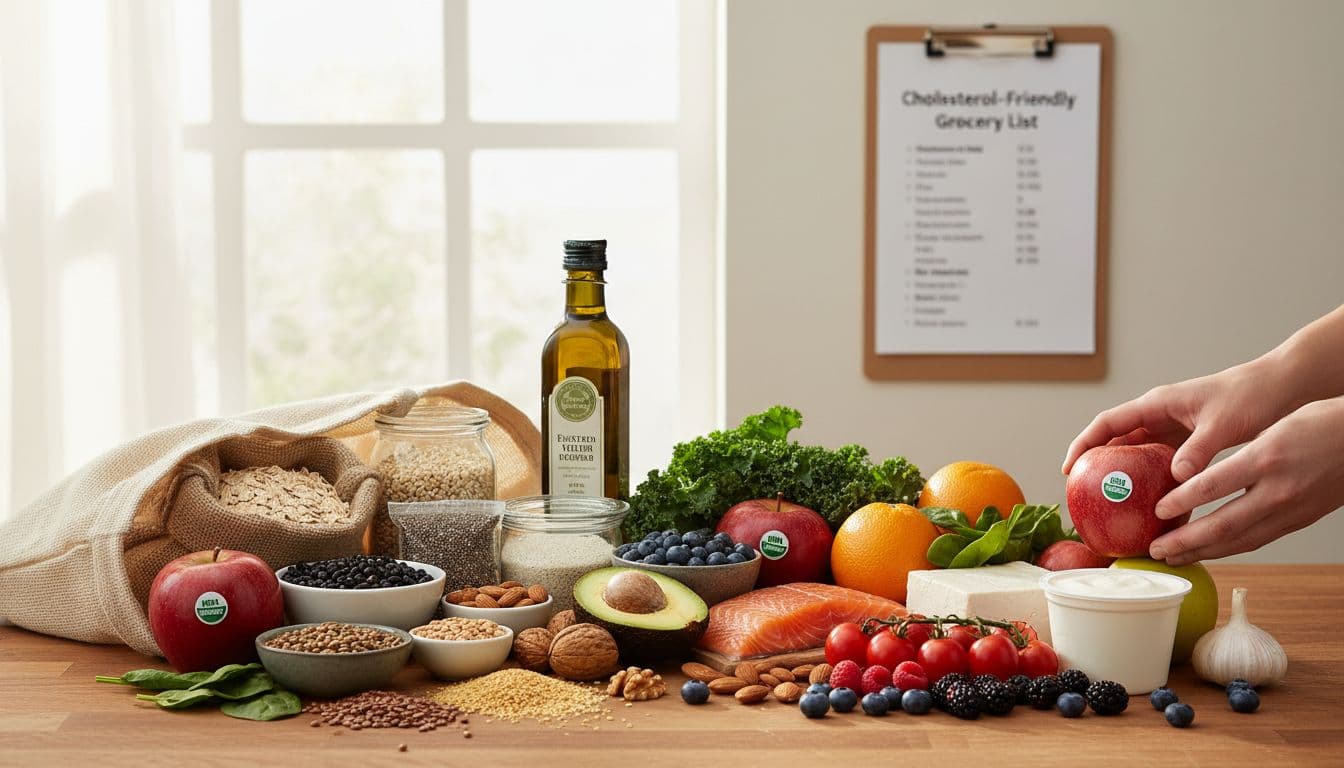
The most useful cholesterol-friendly groceries are oats and barley, beans and lentils, nuts and seeds, fatty fish, fruit and vegetables, and extra-virgin olive oil. They work through two mechanisms: soluble fibre that removes cholesterol from the body, and unsaturated fat that replaces the saturated fat raising your LDL in the first place.
A cholesterol-friendly grocery list helps because it turns “eat better” into something practical: a cart you can push, a receipt you can repeat. The goal is not perfect meals — it’s steady swaps that add up week after week.
Below are 25 foods to buy more often, grouped by aisle, plus what to limit so the effort is not quietly undone by hidden saturated fat.
How these foods actually lower LDL
Lowering LDL is not about one magic ingredient. Two things are doing most of the work.
First, soluble fibre acts like a soft sponge. In the gut it binds bile — which your body makes out of cholesterol — and carries it out. When you eat soluble fibre regularly, your body pulls more cholesterol from the blood to replace that bile. That is why oats, barley, beans, psyllium and many fruits appear on nearly every heart-healthy list.
Second, replacing saturated fat with unsaturated fat improves LDL over time. Think of butter, fatty and processed meats, and many packaged baked goods as the fats that push LDL up. Then think of olive oil, nuts, seeds, avocado and fish as the fats that take their place. The word replace matters — adding olive oil on top of an unchanged diet does far less than using it instead of butter.
25 foods to put in the cart
Grains and breakfast (1–5)
- Rolled or steel-cut oats — the best-evidenced everyday option. Around 3 g of beta-glucan a day is the amount used in studies showing meaningful LDL reduction.
- Barley — same soluble fibre as oats, and it works well in soups and grain bowls where rice would go.
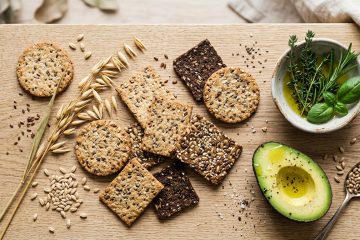
- Whole-grain bread — check that a whole grain is the first ingredient, not “wheat flour”.
- Whole-grain, low-sugar cereal — at least 5 g fibre and no more than 6 g added sugar per serving.
- Psyllium husk — a concentrated soluble fibre; a small daily dose stirred into water or porridge is an easy addition.
Beans, pulses and soy (6–10)
- Canned no-salt-added black beans — drain and rinse to cut the sodium further.
- Chickpeas — for salads, roasting, or blending into hummus.
- Lentils — dry lentils cook in about 20 minutes and need no soaking.
- Edamame — frozen, and one of the easier high-protein snacks to keep on hand.
- Tofu or tempeh — soy protein in place of fatty meat changes both sides of the equation at once.
Nuts, seeds and fats (11–15)
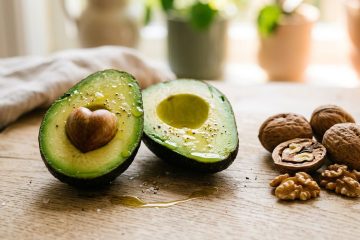
- Almonds or walnuts — about an ounce a day is the amount that shows up in the trials.
- Ground flaxseed — ground, not whole; whole seeds pass through largely undigested.
- Chia seeds — high in soluble fibre and easy to stir into yoghurt or oats.
- Extra-virgin olive oil — your default cooking and dressing fat.
- Avocado — useful mainly as a replacement for butter, mayonnaise or cheese.
Protein (16–19)
- Salmon — fresh, frozen or canned; two servings of oily fish a week is the long-standing recommendation.
- Sardines or mackerel — inexpensive, shelf-stable, and among the richest omega-3 sources.
- Skinless poultry — a reasonable swap for red and processed meat.
- Plain Greek yoghurt — high protein with no added sugar; buy plain and add fruit yourself.
Produce (20–25)
- Apples — pectin is a soluble fibre, and they travel well as a default snack.
- Berries — frozen counts fully and costs less.
- Citrus — oranges and grapefruit add soluble fibre when eaten whole rather than juiced.
- Leafy greens — spinach, kale and similar; bagged is fine if it means you actually eat them.
- Aubergine and okra — both unusually high in soluble fibre for a vegetable.
- Frozen mixed vegetables — the cheapest way to bulk out any meal and crowd out something else.
What to limit
The subtraction list is short, and none of it needs to be eliminated — moving from daily to occasional captures most of the benefit.
- Processed meat — bacon, sausage, salami, deli meats. High in both saturated fat and sodium.
- Butter, cream and high-fat cheese — the main saturated-fat sources in most kitchens.
- Commercial baked goods — pastries, biscuits and cakes usually combine saturated fat with added sugar.
- Fried takeaway food — the cooking fat is the problem more than the food itself.
- Sugary drinks — they do little for LDL directly but raise triglycerides, which travel with it.
One caution worth knowing: “low-fat” is not the same as heart-healthy. When fat is removed from a product, sugar and salt are often added to compensate, so a low-fat dressing or yoghurt can be a worse choice than the ordinary version. Read the panel rather than the front of the pack — our guide to reading saturated fat on food labels covers what to look for.
A simple way to shop this list
You do not need all 25 in one trip. A workable pattern is to pick one item from each group each week: a grain, a pulse, a nut or seed, a fish, and two kinds of produce. That is six items, it fits any budget, and it changes what the rest of the week is built on.
Then make one replacement rather than one addition — olive oil instead of butter, beans instead of mince in one meal, oats instead of a sugary cereal. Replacements are what move the number.
Frequently asked questions about a cholesterol-friendly grocery list
What foods should I buy to lower cholesterol?
Buy oats, barley, beans, lentils, nuts, seeds, oily fish, fruit, vegetables and extra-virgin olive oil. These deliver soluble fibre and unsaturated fat, the two things that lower LDL most reliably. Their bigger effect comes from replacing butter, processed meat and packaged baked goods rather than simply being added.
How quickly can diet changes lower cholesterol?
Most people see measurable LDL changes within four to twelve weeks of consistent change, which is why doctors usually re-check a lipid panel about three months after recommending dietary changes. How much it moves depends on how much saturated fat and soluble fibre actually shifted.
How much oatmeal do I need to lower cholesterol?
Around 3 grams of beta-glucan per day is the amount used in studies showing meaningful LDL reduction — roughly one and a half cups of cooked oatmeal, or a large bowl of an oat-based cereal. Consistency matters more than any single large serving.
Are eggs allowed on a cholesterol-friendly diet?
For most healthy adults, moderate egg intake of about one a day is not linked to meaningfully higher heart risk in current evidence. Dietary cholesterol raises blood cholesterol less than saturated fat does. What accompanies the eggs — bacon, sausage, buttered toast — usually matters more than the eggs.
Is a low-fat diet the best way to lower cholesterol?
No — the type of fat matters more than the total. Replacing saturated fat with unsaturated fat lowers LDL, while replacing it with refined carbohydrate generally does not. Low-fat products often carry added sugar and salt to compensate for flavour, which can make them the worse choice.
Keep reading
For the full picture, see our heart-healthy foods hub with serving targets by food group, or the low-sodium eating guide if blood pressure is also a concern. Related: how much oatmeal lowers cholesterol, best beans for lowering LDL, best nuts for lowering LDL and the Portfolio Diet starter plan.
Living Healthy Advice publishes general educational information, not medical advice. Talk with your doctor or a registered dietitian before making significant dietary changes, and do not change or stop cholesterol medication based on diet alone.

0 Comments