Cheese can make a simple meal feel rich and comforting, yet it can also hide more salt than most people expect. If you want better blood pressure and a stronger heart, you don’t need to swear off cheese. You need smarter choices.
A good low-sodium cheese gives you flavor without loading your plate with extra salt and saturated fat. Once you know which styles are lighter, shopping gets much easier.
Why sodium in cheese matters for heart health
Cheese is one of those foods that feels harmless in small bites. Then the sodium adds up. A slice here, a handful there, and one sandwich can turn into a big chunk of your daily salt intake.
That matters because sodium can raise blood pressure. Over time, high blood pressure strains the heart and blood vessels. Cheese also brings saturated fat, so the best pick is usually one that stays lower in both.
Still, cheese doesn’t need a “do not touch” label. It can fit inside a guide to heart-healthy eating when the rest of your meals lean toward beans, fish, fruit, vegetables, nuts, and whole grains. That is the shape of a heart healthy diet, not a plate built around restriction.
Fresh and less processed cheeses often do better here. Many aged, salty, or crumbly cheeses bring stronger flavor, but they also tend to carry more sodium. That is why a calm, mild cheese can be the better buy for your heart.
The best cheese for heart health is often the one that gives enough flavor in a small portion.
A healthy food diet leaves room for pleasure. It simply asks you to stop treating cheese like the main event. Put it beside tomatoes, lentils, roasted vegetables, or a slice of whole-grain toast, and it becomes part of healthy nutrition instead of a salty overload.
If you’re trying to lower risk over time, think in patterns. One smart cheese choice won’t fix a poor diet. But repeated choices, made week after week, are real nutrition to prevent illness.
The best low-sodium cheeses to buy first
When shoppers ask for the best low-sodium cheese, one answer comes up again and again: part-skim fresh mozzarella. It is usually milder in sodium and saturated fat than many aged cheeses, and it still feels satisfying. According to Banner Health's cheese guide, other strong options include low-fat cottage cheese and low-fat ricotta. Harvard Health's look at cheese and heart health also makes room for cheese in a sensible eating pattern.
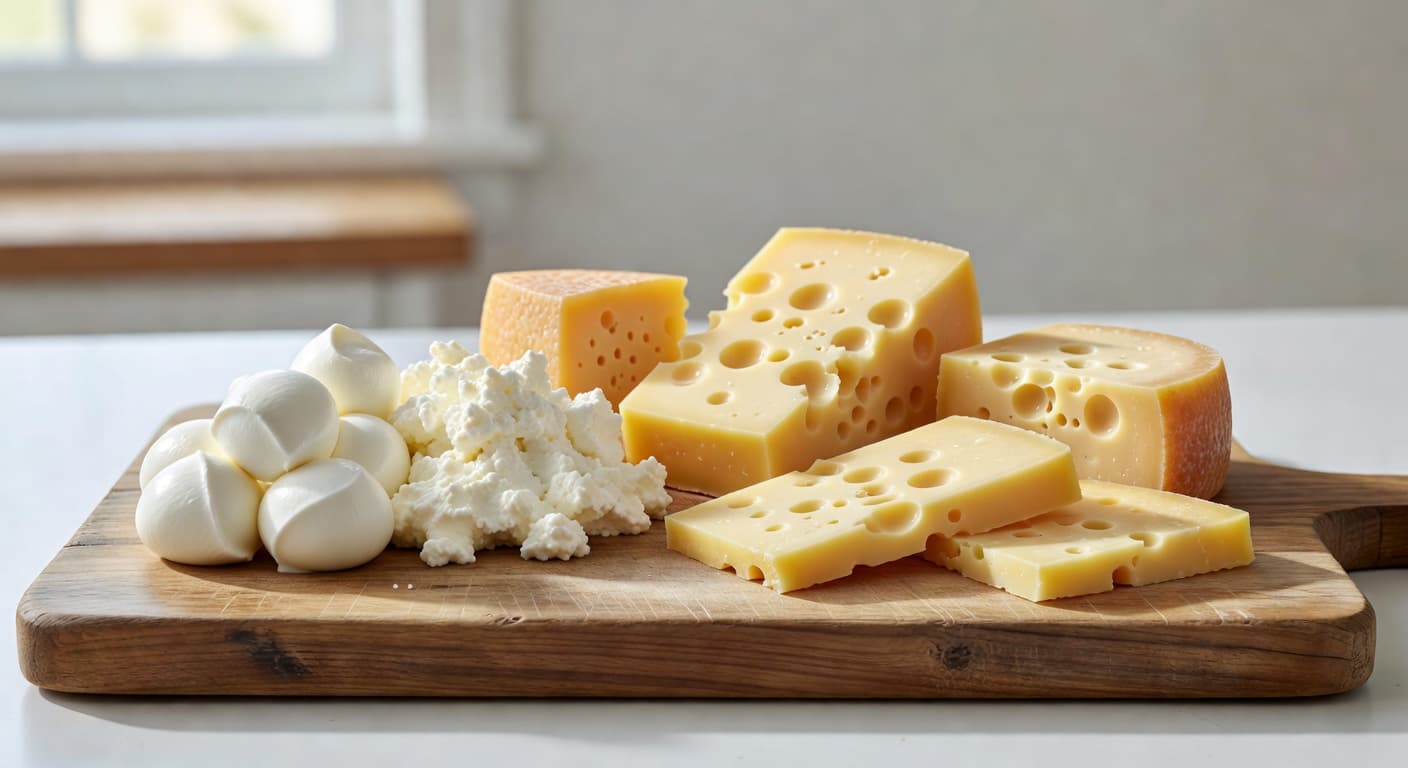
Fresh mozzarella, Swiss, ricotta, and other simple cheeses often beat heavily aged options when sodium matters.
This quick table makes the best bets easier to compare.
| Cheese | Why it works | Best use |
|---|---|---|
| Part-skim fresh mozzarella | Often lower in sodium and saturated fat | Salads, tomato slices, grain bowls |
| Swiss cheese | Usually one of the lower-sodium sliced cheeses | Sandwiches, wraps, omelets |
| Low-fat ricotta | Soft, mild, and lighter than many creamy cheeses | Toast, pasta, stuffed vegetables |
| Low-sodium cottage cheese | High in protein, easy to portion | Breakfast bowls, fruit, lunch plates |
Fresh mozzarella is the easiest place to start. It has a clean taste and doesn’t need much else. A few slices with tomatoes, basil, olive oil, and beans make a meal that feels generous without going heavy.
Swiss is another smart pick, especially if you want sandwich cheese. It often comes in thinner slices, which helps with portion control. That matters more than people think. One slice may fit well, while three can undo the whole point.
Ricotta and cottage cheese need a little more label reading. Some versions are fairly moderate, while others can be salty. Look for cartons that say “low sodium” or compare brands side by side. Plain varieties are usually the safer bet.
The best low-sodium cheese is rarely the flashiest one. It is the cheese you can use in a small amount, enjoy fully, and repeat in a steady routine.
Cheeses that can raise sodium fast
Some cheeses hit your tongue like fireworks. That sharp, salty punch usually comes with a price. Feta, Parmesan, blue cheese, and many processed cheese slices often carry much more sodium than mild fresh cheeses.
That doesn’t mean they are forbidden. It means they work better as accents. A tablespoon of Parmesan over roasted broccoli is different from a thick layer over a giant bowl of pasta. The same goes for feta. A small crumble can brighten a salad, while half a block can push sodium sky-high.
Processed cheese spreads, cheese dips, and flavored cheese snacks deserve extra caution. They often combine salt with additives, and they disappear fast because they are made for easy eating. If you are trying to protect blood pressure, these are weak bargains.
Mayo Clinic's heart-healthy diet steps stress a bigger point that matters here: food choices work together. A salty cheese on top of deli meat, white bread, and chips is hard on the heart. A small amount of cheese with vegetables, fruit, and high-fiber foods is a different story.
A few habits help at the store:
- Compare labels between brands, because sodium varies more than many shoppers expect.
- Check the serving size, because some labels look low until you notice how small the portion is.
- Skip heavily seasoned or smoked versions when you want the lighter choice.
Flavor intensity can fool you. Stronger cheese seems efficient because a little goes far, yet strong flavor often travels with strong sodium. For everyday use, softer and simpler cheese usually wins.
How to fit cheese into a heart-friendly plate
Cheese works best as a partner, not the center of the plate. That shift sounds small, but it changes everything. Once cheese moves into a supporting role, you can enjoy it without crowding out the foods your heart wants most.
Start with volume from plants. Add cheese to a salad packed with cucumber, tomatoes, chickpeas, and herbs. Spoon ricotta onto whole-grain toast with sliced peaches. Melt a thin slice of Swiss over a turkey and avocado sandwich with a side of crunchy carrots. These meals feel generous because the base is strong.
This is where a healthy food pattern becomes practical. The most useful meals are repeatable, not fancy. If you need ideas, a 7-day high-fiber heart health meal plan can help you build meals around oats, beans, vegetables, fruit, and grains, with cheese used in smaller touches.
Portion still matters. For many people, one ounce is enough to bring texture and taste. That is a small cube, a thin slice, or a modest spoonful. When you add more, ask what it replaces. If it replaces vegetables or fiber-rich foods, your plate gets less helpful.
A healthy food diet also works better when your routine is active. Many people treat healthy living diet and exercise like separate tasks, but they belong together. Walking after dinner, strength training twice a week, or regular cycling all support heart health. Food does its part, and movement helps carry the load.
The same goes for sports and exercise for long life. Activity supports blood pressure, weight control, blood sugar, and mood. Cheese choices won’t do all that alone. But better cheese, better meals, and regular movement form a pattern you can keep.
That is the quiet power of healthy nutrition. It doesn’t ask for perfection. It asks for a plate you can repeat on an ordinary Tuesday.
Final thoughts
The best low-sodium cheese for heart health is usually simple: part-skim fresh mozzarella first, then Swiss, low-fat ricotta, or a lower-sodium cottage cheese. These choices give you flavor without turning every meal into a salt trap.
What matters most is the full plate. When cheese sits beside beans, vegetables, fruit, whole grains, and steady movement, it fits into a lasting heart healthy diet with room for enjoyment.


0 Comments