Potlucks can turn good intentions into sad casseroles fast. If a dish looks dry, bland, or fussy, it stays on the table long after the brownies disappear.
The good news is that heart-healthy potluck foods don’t have to feel like punishment. You can bring something colorful, filling, and full of flavor that still fits a heart healthy diet.
The sweet spot is simple: make the food taste generous first, then make the ingredients work harder for your heart.
What makes a potluck dish both heart-smart and crowd-friendly
People don’t line up for nutrition labels. They line up for food that smells good, looks fresh, and feels worth a second scoop. That matters at a potluck, where every dish competes with cheesy dips and bakery desserts.
A strong potluck dish also has to travel well. It should hold up for an hour, taste good warm or cool, and survive a serving spoon. Delicate greens wilt, and plain steamed vegetables go flat fast.
The best heart-smart dishes follow a simple pattern. They lean on beans, vegetables, fruit, whole grains, nuts, seeds, olive oil, yogurt, and modest portions of lean protein. That same pattern lines up well with a balanced heart healthy plate method, which keeps half the plate focused on produce and leaves less room for heavy add-ons.
Flavor matters just as much as structure. A healthy food dish wins when it has contrast, creamy with crisp, sweet with tart, warm spices with bright herbs. A healthy food diet falls apart at parties when the food tastes thin or joyless.
The goal isn’t perfection for one meal. The goal is a potluck plate that supports healthy nutrition and still makes people say, “Who brought this?”
The ingredients that disappear first
The easiest way to build heart-healthy potluck foods is to start with ingredients people already like. Chickpeas, black beans, roasted sweet potatoes, cherry tomatoes, cucumbers, berries, corn, citrus, herbs, and whole grains all feel familiar. They don’t need a sales pitch.
Fiber helps a lot here, because it adds substance without making food heavy. Beans and lentils carry dressings well, whole grains add chew, and vegetables bring volume and color. That balance is part of what makes a heart healthy diet feel satisfying instead of spare.
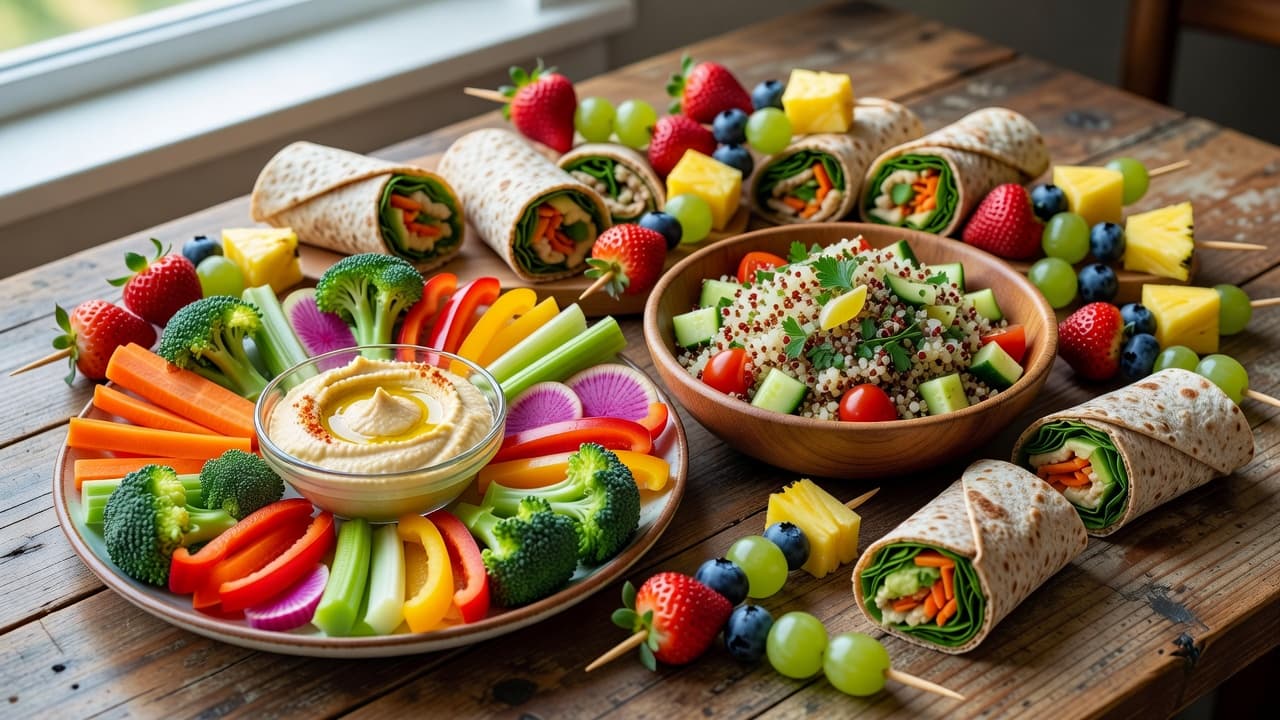
A little fat also makes food feel complete. Olive oil, avocado, tahini, nuts, and seeds bring richness that keeps people interested. You don’t need much. You need enough to carry flavor and help the dish feel finished.
Acid is another quiet hero. Lemon juice, red wine vinegar, lime, yogurt, and quick-pickled onions wake up grains and vegetables that might otherwise feel dull. Fresh herbs do the same job. Cilantro, parsley, dill, basil, and mint can make a bowl taste like it came from a real kitchen, not a diet plan.
If you need ideas for stocking the basics, a practical heart healthy grocery list can help you build dishes without relying on processed shortcuts. For recipe inspiration with a low-salt, higher-fiber bent, Heart & Stroke's recipe collection is a solid place to browse.
What tends to get ignored? Plain raw vegetables with no dip, skinless chicken with no sauce, and salads drowned in bottled dressing. People want healthy food, but they still want real flavor.
Potluck dishes people go back for
Some dishes work because they hit the middle of the plate. They’re familiar enough to feel safe, but fresh enough to feel worth choosing. That’s why Mediterranean-style ideas and DASH-style meals often shine at gatherings. If you’re weighing both patterns, this Mediterranean vs DASH diet comparison shows why each works so well for a healthy food diet.
This quick table shows the kind of dishes that usually come home empty.
| Dish | Why people eat it | Heart-smart move |
|---|---|---|
| White bean and tomato salad | Bright, juicy, easy to spoon | Use olive oil, herbs, and low-sodium beans |
| Quinoa tabbouleh with chickpeas | Fresh texture and lemony bite | Load it with parsley, cucumber, and extra vegetables |
| Yogurt slaw with cabbage and apple | Crunchy and cool, not heavy | Swap mayo for Greek yogurt and mustard |
| Roasted sweet potato platter | Sweet edges and soft center | Roast with olive oil, cumin, and a little smoked paprika |
| Turkey meatballs in tomato sauce | Familiar comfort food | Use lean turkey, oats, and a no-sugar-added sauce |
| Berry oat crisp | Dessert that still feels festive | Cut sugar, keep oats and fruit high |
Notice what these dishes have in common. None of them taste like “light” food. They taste seasoned, textured, and complete.
Cold dishes often do best because they travel well, but warm dishes can work too. Turkey chili, baked meatballs, or lentil stuffed peppers hold up better than fragile fish or creamy casseroles. If you want more crowd-tested ideas, these dietitian potluck dishes are useful because they focus on food people will gladly eat, not food they merely tolerate.
Dessert deserves a place as well. A fruit crisp, yogurt-based dip with strawberries, or dark chocolate-covered fruit can satisfy the sweet tooth without turning the table into a sugar sprint.
How to make healthy dishes taste like party food
Many healthy potluck misses come down to weak seasoning. People cut salt, cut fat, and then forget to add anything back. The result tastes flat.
If a dish tastes thin, add acid, herbs, garlic, spice, or crunch before adding more salt.
Roasting helps more than steaming. High heat caramelizes vegetables and gives them sweet edges, which makes them more appealing to everyone at the table. Meanwhile, a handful of toasted seeds or nuts adds the kind of crunch that keeps each bite awake.
Texture matters as much as flavor. Creamy hummus needs crisp vegetables or seeded crackers. Grain salads need juicy vegetables and fresh herbs. Slaws need something sweet, tart, and crunchy all at once. When those parts meet, heart-healthy potluck foods stop feeling like a compromise.
This is also where the larger picture comes in. For many people, healthy living diet and exercise all point in the same direction, food that gives steady energy and doesn’t weigh you down. If you care about sports and exercise for long life, a lighter, fiber-rich potluck plate often feels better than a greasy one an hour later.
Good party food shouldn’t fight your body. It should leave room for the rest of your day.
Serve it in a way that helps people choose it
Presentation changes what people eat. A bright platter with visible color gets picked first. A brown scoop in a deep slow cooker often gets ignored, even if it tastes great.
Use wide bowls and shallow platters when you can. Garnish with herbs, citrus wedges, chopped nuts, or pomegranate seeds. Cut vegetables into easy pieces, and keep serving utensils small enough to guide portions without making people feel policed.
Labels help too. If a dish is vegetarian, high-fiber, low-sodium, or made with yogurt instead of mayo, people often appreciate knowing that. It also helps guests with food limits move with less guesswork.
Food safety matters at potlucks, especially with dairy, meat, and seafood. Keep cold foods cold, and don’t let creamy dishes sit out for hours. Simple care goes hand in hand with nutrition to prevent illness, because a healthy dish should also be safe to eat.
A potluck won’t define your health by itself. Still, one smart dish on a crowded table can push the whole meal in a better direction.
The takeaway
The dishes people remember are rarely the ones with the longest ingredient list. They are the ones with bright flavor, good texture, and enough substance to satisfy.
That is why heart-healthy potluck food works when it feels generous, not strict. Bring something colorful, season it well, and make it easy to serve. When healthy nutrition tastes this good, empty bowls follow.

0 Comments